
Central Sierra: Smart Water-Saving Tips for Tahoe Gardens
Beat the Heat: Smart Water-Saving Tips for Tahoe Gardens
Jen Cressy, South Tahoe PUD Water Efficiency Technician and UC Master Gardener
Gardening in Tahoe is rarely simple. High elevation, sandy and rocky soils, low humidity, intense sunlight, and summer heat waves can all place stress on landscape plants. During drought and watering restrictions, success depends on more than simply using less water. It requires thoughtful irrigation, healthy soil, mulch, proper lawn care, and plants that are well suited to

local conditions. With the right strategies, homeowners can conserve water while still supporting healthy trees, shrubs, flowers, vegetables, and turf.
Smart Watering and Landscape Strategies
Successful Tahoe gardening starts with learning how to water deeply, efficiently, and strategically. Smart watering practices encourage stronger root systems and help plants handle periods of heat and drought far better than shallow, frequent watering.
Use Efficient Irrigation Methods
One of the most effective ways to deliver water is through drip irrigation. Drip systems apply water slowly and directly to the soil near plant roots, minimizing evaporation and runoff. This method works especially well for trees, shrubs, perennials, vegetable gardens, and container plantings. It distributes water evenly while keeping foliage dry, which can help reduce disease problems.
Water Lawns More Effectively
For turf areas, rotary nozzles or high-efficiency sprinklers are generally more effective than traditional spray heads because they apply water more slowly and uniformly. Watering early in the morning, ideally between 4 a.m. and 8 a.m., reduces evaporation and wind drift, helping more water reach the root zone.
Another smart strategy for lawns and planted areas is cycle soak irrigation, sometimes called pulse irrigation. Instead of applying all the water in one long run time, irrigation is divided into shorter cycles with soak-in periods between them. This gives water time to move into the soil more slowly, reducing runoff on slopes and in compacted areas while keeping moisture in the root zone longer. Cycle soak watering also helps prevent deep percolation below the root zone, where water is wasted and unavailable to plants.
Water Deeply and Infrequently
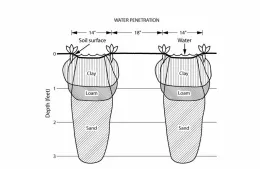
In Tahoe’s well-drained soils, deep, infrequent watering is far more beneficial than daily shallow watering. Most lawns need only about 1.5 inches of water per week during summer, including rainfall. Trees and shrubs benefit from slow, infrequent
soaking that reaches deep into the root zone. Water until the soil is moist 6 to 12 inches deep. Letting the surface dry slightly between watering cycles encourages roots to grow deeper and improves drought tolerance.
Use Mulch to Protect Soil Moisture
Mulch is one of the simplest and most valuable tools for conserving soil moisture and protecting plants during heat waves. A 2- to 4-inch layer of organic mulch, such as bark, wood chips, or compost, helps moderate soil temperature, reduce evaporation, and suppress weeds that compete for water. As it breaks down, mulch also improves soil structure over time.
Adjust Lawn Care During Heat
Proper lawn maintenance can significantly reduce turf stress during hot weather. One of the most important practices is mowing high. Keeping grass about 3 to 4 inches tall shades the soil surface, reduces moisture loss, and encourages deeper root growth. Avoid cutting more than one-third of the grass blade at a time, especially during periods of extreme heat.
Build Healthier, More Water-Retentive Soil
Improving soil health is another important step toward water efficiency. Many Tahoe soils are naturally low in organic matter and drain quickly. Adding compost to planting areas before planting improves water retention while still allowing adequate drainage. Healthy soil acts like a sponge, storing moisture for plant roots to use between watering cycles.
Group and Place Plants Wisely
Plant placement also plays an important role in conserving water. Plants with similar water needs should be grouped together in a practice known as hydrozoning. Drought-tolerant native plants and low-water ornamentals should be separated from thirstier turf or vegetable gardens so irrigation can be tailored to each area. Placing heat-sensitive plants where they receive afternoon shade can further reduce stress and water demand.
Choose Plants Suited to Tahoe Conditions
Choosing the right plants for Tahoe’s climate is equally important. Native and adapted species generally need less water once established and are better suited to local conditions. Many mountain perennials, sage varieties, penstemons, yarrow, and native grasses perform beautifully with limited irrigation.
Conclusion
Ultimately, water-efficient gardening is about working with Tahoe’s environment rather than against it. By combining efficient irrigation, healthy soil, mulch, proper mowing, and thoughtful plant selection, homeowners can maintain attractive, resilient landscapes even during drought and dry summer heat. Careful water management not only protects plant health but also helps preserve Tahoe’s precious water resources.
South Tahoe Public Utility District customers are encouraged to sign up for a free Water Wise Landscape Consultation to learn more about landscape water-use efficiency practices at STPUD.us.