
Be Aware! Invasive Glassy-Winged Sharpshooter Found on Grapevines Sold at Northern California Costco Locations
I’ve got tough news folks. If you or someone you know recently purchased a grapevine plant at a Costco, please be aware of a detected invasive insect. Glassy-winged Sharpshooter has been identified on grapevine shipments sold at Northern California Costco locations between April 21 and May 19, 2026. Read more to learn how you can assist in helping to limit the spread of this invasive insect and the plant pathogen it transmits.
EXTERNAL IMAGE
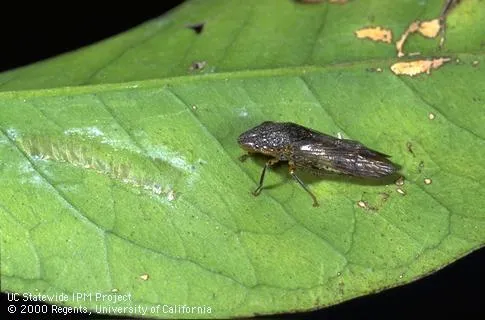
Glassy-winged Sharpshooter female next to an egg mass on lower leaf surface (on left). Credit: Jack Kelly Clark, UC IPM
GWSS (Homalodisca vitripennis) is an invasive leafhopper (~0.5 inch long) that transmits a bacterium, Xylella fastidiosa, that causes Pierce’s Disease of grapevines. This is a devastating plant pathogen that is a major threat to California vineyards across the state and is concerning for vineyards and wine production in Monterey, Santa Cruz, and San Benito counties. Early detections and collaboration with local and state agricultural officials is critical to prevent the pest from spreading further.
EXTERNAL IMAGE
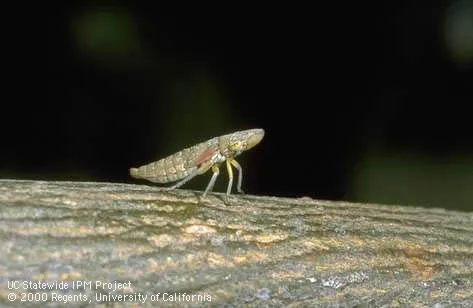
Glassy-winged sharpshooter nymph. Credit: Jack Kelly Clark, UC IPM
Thankfully, state and local agricultural officials have begun response and containment efforts after this detection. The infested nursery stock was associated with Burchell Nursey in Fresno. Costco is also notifying customers, issuing refunds, and helping to connect purchasers with local county agricultural commissioner offices for inspection and disposal guidance.
Although inspectors and officials are still working to confirm positive GWSS samples from various impacted Costco locations, the following counties received grapevines connected to the problematic shipment:
- Alameda County
- Butte County
- Contra Costa County
- Humboldt County
- Kings County
- Marin County
- Mendocino County
- Merced County
- Monterey County
- Napa County
- Placer County
- Sacramento County
- San Joaquin County
- San Mateo County
- Santa Clara County
- Santa Cruz County
- Shasta County
- Solano County
- Sonoma County
- Stanislaus County
- Yolo County
Yuba County
If you purchased a grapevine from Costco in an affected county between April 21 and May 19, please take the following steps:
Isolate the Plant
- Keep the plant in its original pot or container and away from other plants.
- Do not put the plant in the ground if you have not already done so.
- If possible, place the plant inside two trash bags, one inside the other, and seal them closed.
- Do not return, transport or relocate the plant.
- Do not place the plant in the trash or compost bin.
Contact your local County Agricultural Commissioner’s Office right away
- Monterey County or call 831-759-7325
- Santa Cruz County or call 831-763-8080
- San Benito County or call 831-801-9225
- For additional county contact information, click here.
- An agricultural inspector will come to examine the plant and nearby host plants.
- If inspectors find GWSS on the grapevine, they will safely remove and dispose of the plant.
- GWSS monitoring traps may be placed on or near the property.
Please help share about this issue and the response effort widely among your friends, neighbors, and networks.
For up to date information on the current GWSS response and containment efforts, please refer to the California Department of Food and Agriculture Costco Response website. Although your local Ag Commissioner’s office should be first to contact regarding Costco grapevine shipments and GWSS, you can reach out to me via email (djbeal@ucanr.edu) for additional info on GWSS. I have over 6 years of experience directly working with the insect vectors of Pierce’s Disease from my PhD and other research work.