
Alocasia macrorrhizos-A Plant of Giant Nature!
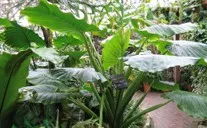
I have a good friend who has an online plant business who happens to be from the Philippines. We regularly exchange plants with one another. She recently gifted me a large Elephant Ear plant. Being unfamiliar with this plant, I started my research and learned that this plant was native to the Philippines. I was intrigued! This plant has many names: Giant upright elephant ear, Giant alocasia and Giant Taro, just to name a few. It is a species of flowering plant that has been cultivated in South Asia, the Philippines and many Pacific Islands for tens of thousands of years. It became a staple of Pacific Islanders and was used primarily as a food starch. The leaves and stems are edible once cooked through, but still cause itching. The flower of this plant is the most edible part. Another practical use of the plant is as a natural umbrella during the many tropical rains.[1] Between this fact alone and its many names, it tips you off to the fact that these easy-to-grow plants can grow quite large.
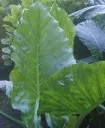
Alocasia macrorrhizos is known for its overall size and heart-shaped leaves. In ideal conditions, outside, it can reach heights of 15’ with leaves that span several feet across. Growing the plant indoors keeps the size much more manageable, typically growing between 4 and 6 feet. It is important to note that indoor plants (which mine was initially until we planted it on our hillside, where it currently resides and thrives!) still need maintenance. This consists of pruning, removing yellowing leaves and repotting every couple of years, allowing space for its ever-expanding root system. One point of note is that ingesting any part of this plant is toxic, so curious children and pets beware![2] Even just handling the plant exposes you to toxicity, so wearing gloves is suggested.
The two major care aspects that need addressing are light and watering. Elephant Ears like bright, filtered light, so an east or west-facing window is perfect for indoor growth. When growing outdoors, find a spot with partial shade. Keep in mind that this plant is a water lover. It is important to allow the top few inches of the soil to dry out before watering again. The plant can get root rot or fungal infections if overwatered, so using a moisture meter is highly recommended. These plants thrive on humidity, so misting or a humidifier indoors works best.
In terms of fertilization, Elephant ears are heavy consumers. They thrive with balanced fertilizers like a 20-20-20 ratio in liquid form, which should either be diluted to half-strength monthly or bi-monthly. The other alternative is using a slow-release form of fertilizer every six weeks to two months. As with most plants, fertilizing should stop during the winter months of dormancy.
Plant your Alocasia in a well-draining, loose peat-based potting mix with a pH that ranges from 5.5 to 6.5. If soil amendments are needed, use perlite or orchid bark.
In terms of potting, while not a fan of plastic pots, they provide the even moisture this plant thrives on. You can repot, or if outdoors, move if necessary, in the spring or summer, while the plant is actively growing. Depending on your variety, a potted Alocasia will probably need repotting every year and a half. If living in a pot, remember to pick a pot that is two to four inches larger in diameter than the existing pot. Repotting these plants is easy by clump or rhizome division.
You do need to watch for certain pests. Elephant ears are susceptible to the usual suspects- spider mites, aphids and mealybugs. These pests can be addressed with regular inspections and treatments with Neem or insecticidal soap if needed.
Here’s the beauty of this Alocasia: with regular repotting, appropriate care and propagation through division, your plant will thrive and give you decades of enjoyment.[3]