
High school students try their hands as livestock vets to fill need in rural areas
Tulare County interns experience ‘eye-opening’ range of veterinary health careers
Farmers, ranchers and anyone else who raises cows, horses and other large animals in the Central Valley and across the U.S. face a major problem – not enough veterinarians to care for their animals.
“There are way fewer vets than we need,” said Sharif Aly, professor at the University of California, Davis Weill School of Veterinary Medicine. “For livestock, especially in rural areas, there are areas with little or no service at all; farms are having to go out of business because they don’t have veterinary health care expertise available.”
The urgent need for large-animal veterinarians was a major topic of discussion among stakeholders at a 2020 retreat convened by the UC Davis School of Veterinary Medicine. In response, Gaby Maier, Cooperative Extension specialist for beef cattle herd health and production at UC Davis, applied for funds from the U.S. Department of Agriculture’s Veterinary Services Grant Program.
Aly added to the grant proposal the high school internship as an educational pipeline component – pinpointing a crucial age when, all too often, childhood dreams of becoming a vet are extinguished.
“It’s amazing; if you just mention vet school to anybody from grade three-ish to grade eight or nine, they all want to be vets,” Aly said. “But then something happens in the last three years of high school.”
In many cases, aspiring vets are deterred by the socioeconomic barriers of eight years of post-secondary schooling (four for an undergraduate degree and four for veterinary school).
Maier, Aly and several colleagues in the vet school were awarded the USDA grant to highlight opportunities for financial aid and illuminate pathways into vet school and diverse careers within veterinary health. For the past two years, Maier and Aly – both UC Agriculture and Natural Resources-affiliated academics – have led a “FarmVet2B” high school internship program at the UC Davis Veterinary Medicine Teaching & Research Center in Tulare County to help address the veterinary workforce shortage in rural California.
“There are these psychological barriers where young people are often told by their teachers and their parents that this is not for you, you shouldn’t even think about it. We wanted to show them that that’s not necessarily the case,” Maier said. “There’s no sugar-coating it; vet school does require diligence and persistence – but there’s a lot you can do to still make it happen.”
Damien See, a rising senior at Tulare Western High School, said the internship was the first he ever had in agriculture.
“The whole experience really set my direction in stone,” he said. “Now, for sure, I’m really interested in the vet path.”
UC Davis and Cooperative Extension scientists, industry partners present opportunities for high schoolers
See had been among the six juniors at high schools across Tulare County who participated in a five-day internship program during their spring break this year.
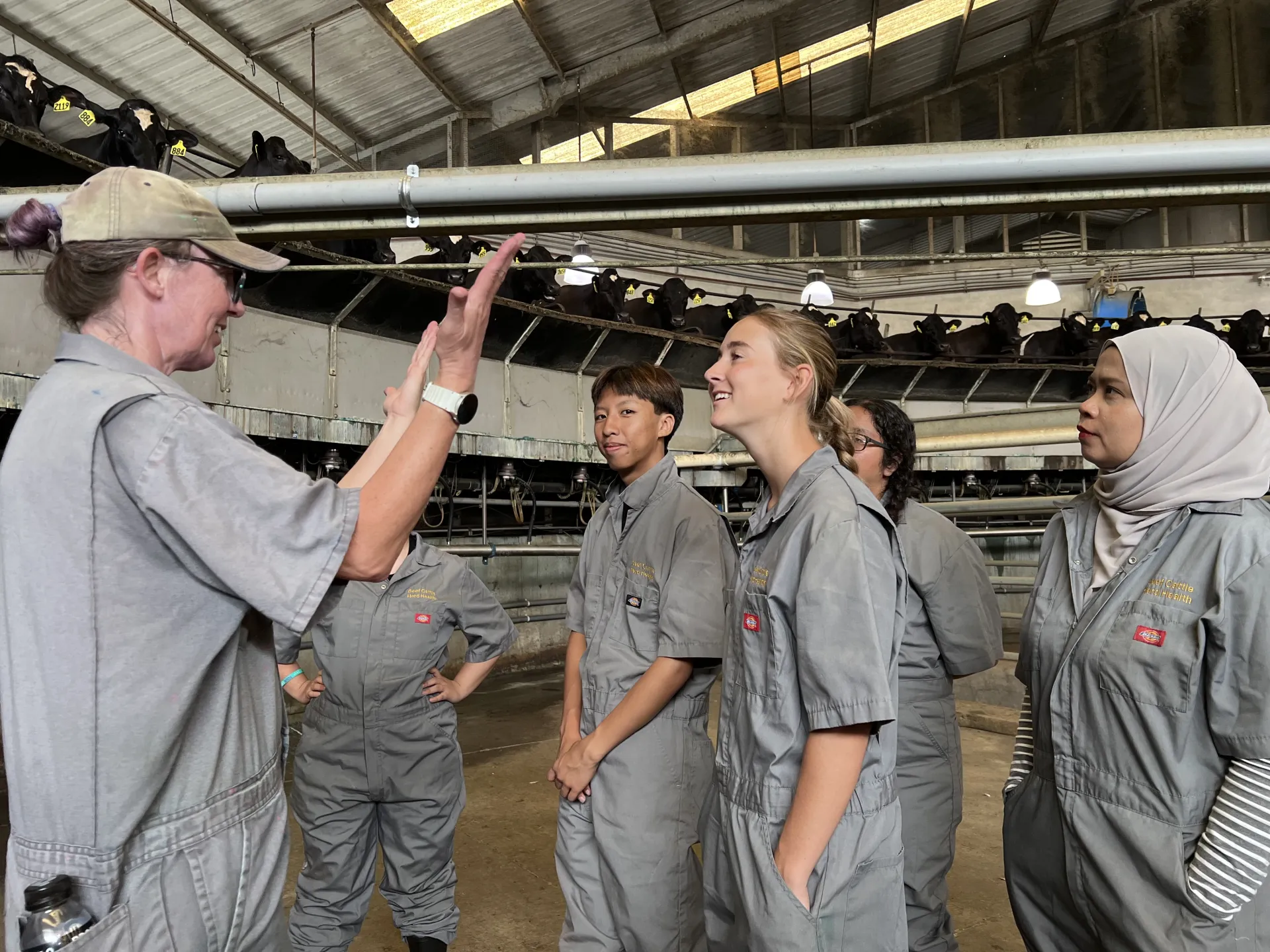
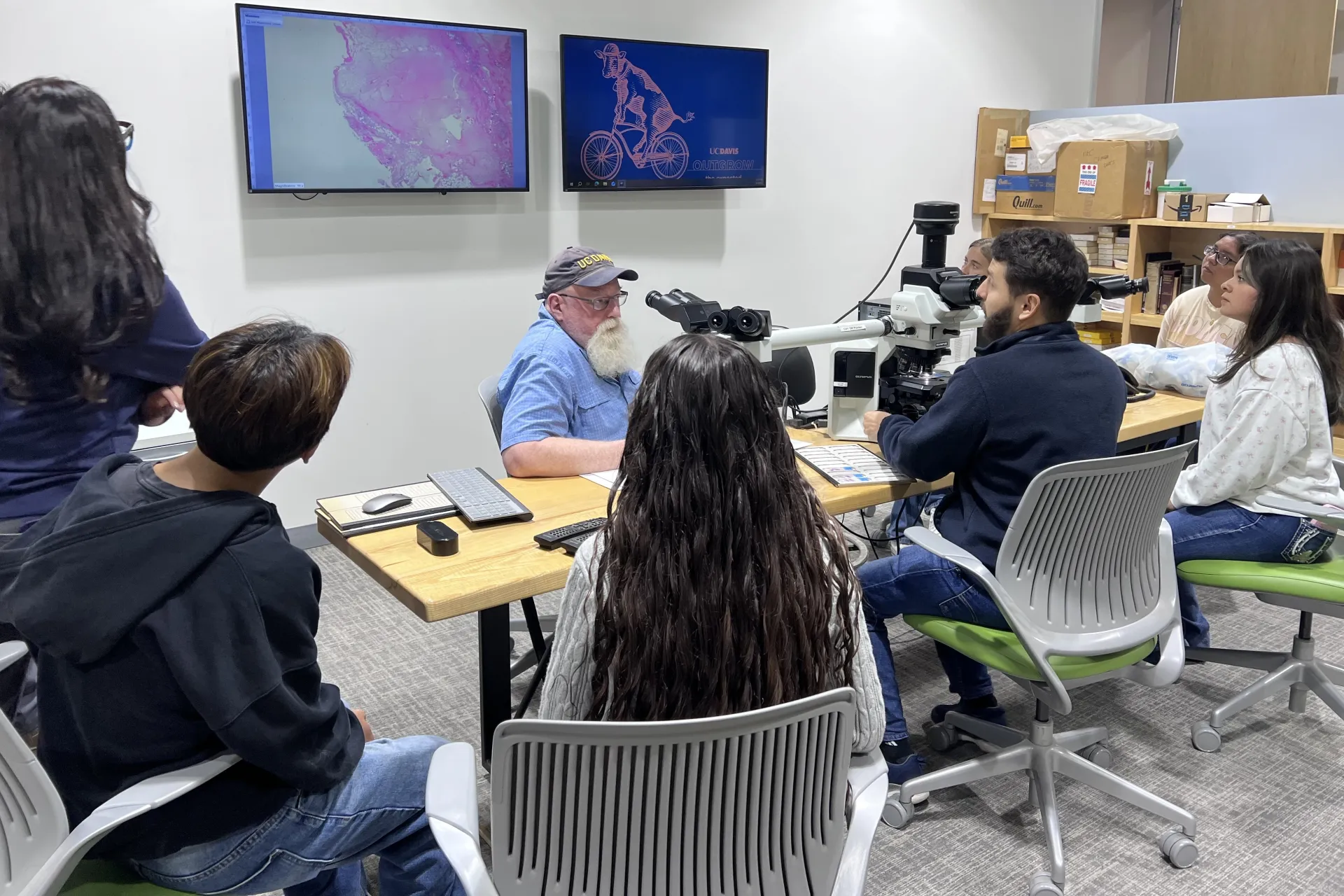
The program mixes hands-on activities with visits to local farms and dairies. Participants also got an extensive tour of the VMTRC, as well as a presentation by admissions staff from the UC Davis School of Veterinary Medicine.
UC Davis staff member Nusaybah Nijem helped coordinate the program, from reviewing and interviewing applicants to organizing the agenda and logistics.
“It’s probably one of the most hands-on internships for students in that age range,” Nijem said. “We tried to give them, in one big package, the whole experience of what it’s like to be a veterinarian.”
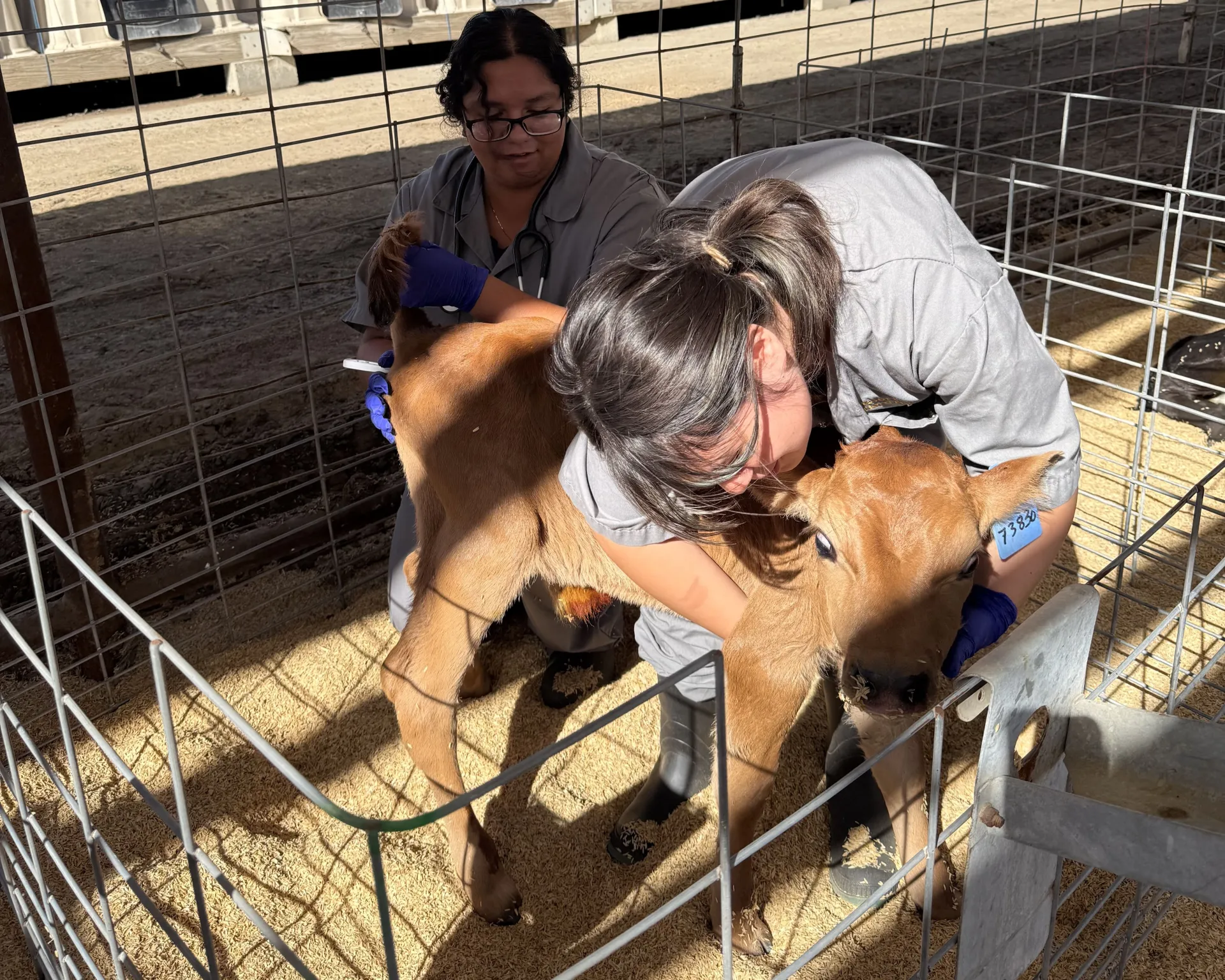
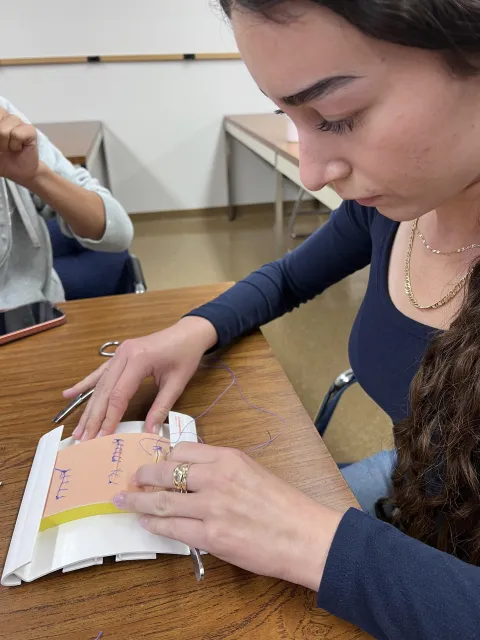
Although See originally envisioned a career as a medical assistant, he began taking agriculture classes at his high school and found he had a natural knack for handling the animals. He had worked with dairy cows before, but many aspects of the internship program were new to him – including practicing suture patterns and applying tattoos on the ears of calves as proof of vaccination.
Those experiences confirmed his intention to pursue animal sciences at a school like UC Davis or UC Merced, enter and finish vet school, and help address the shortage of vets in his hometown.
“The speaker from Valley Vets, the local vet clinic, was talking about how they’re understaffed, because most people go into caring for small animals and it’s difficult finding vets for livestock,” See recalled. “It’s important that we try to go fill that space because it’s not the animals’ fault that there’s a lack of people to take care of them.”
Student aims to add to family’s legacy in Central Valley agriculture
For Graciela Lozano, the internship program was “eye-opening” and revealed to her the wide variety of opportunities in the veterinary health field.
“After this program, I’ve been encouraged a lot more to go the veterinary route,” said Lozano, a rising senior at Mission Oak High School in Tulare. “We got introduced to all these new careers that I didn’t even know existed.”
Maier emphasized that prospective veterinarians should expand their concept of what that career might look like. For example, instead of treating an individual pet, livestock veterinarians treat the herd as their patient, educating and training the people who care for the animals to ensure better overall health.
“As a livestock veterinarian, your main goal is not to be a firefighter, coming in and saving that one animal,” Maier said. “It’s helping to create the conditions so you don’t have to do that.”
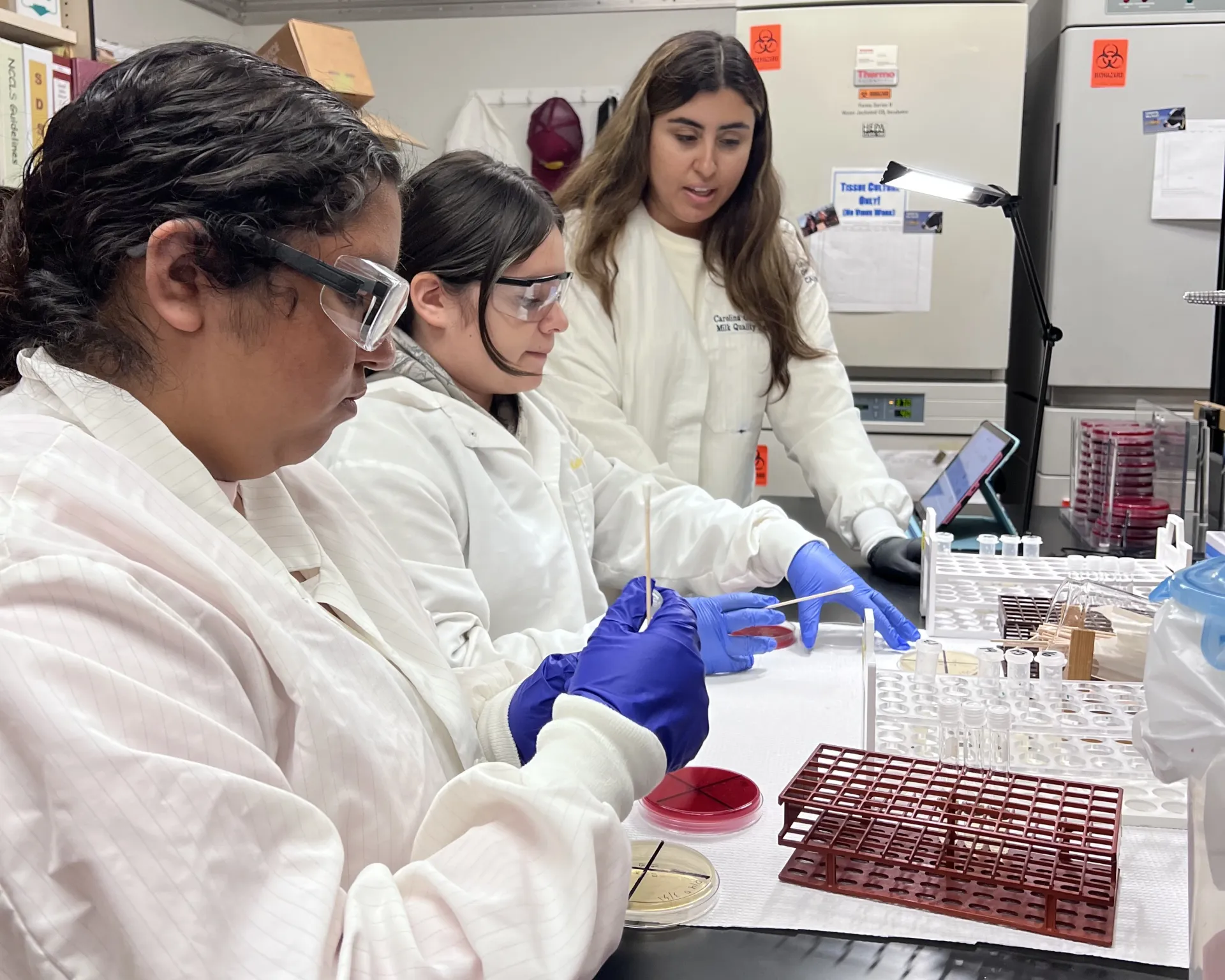
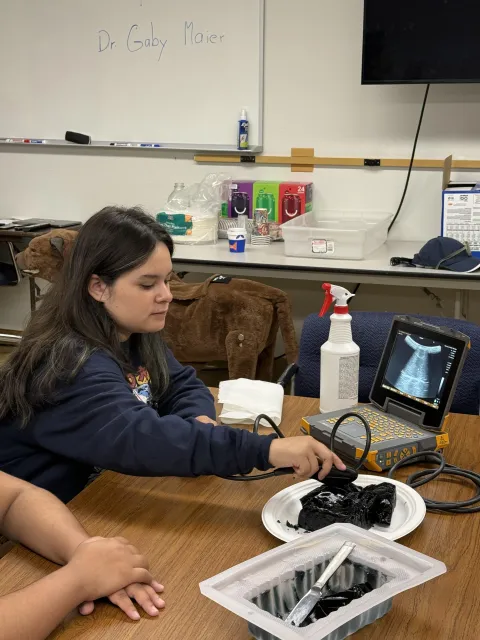
At the VMTRC, Lozano and her peers got a 360-degree view of veterinary medicine. They saw everything from the Milk Quality Lab to the necropsy floor of the California Animal Health and Food Safety Laboratory. They also tried their hand at several practical tasks, such as preparing culture plates with milk samples to examine their microbiology and practicing with an ultrasound by detecting fruits embedded in jello molds.
“They met Deniece Williams and Wagdy ElAshmawy in the UC Davis clinical service, Carolina Gonzalez-Banuelos and Laura White in the Milk Quality Lab, Melissa Macias Rioseco of the California Animal Health and Food Safety Lab, and Jennifer Crook who led the lab training of students,” Maier said.
The experience that left the greatest impression on Lozano was watching a vet administer Brucella vaccinations to dairy heifers.
“There’s just something unique about it – only a veterinarian can perform that task, and that’s really cool,” Lozano explained.
After seeing the pros and cons of veterinary work and hearing the perspectives of professionals in the industry, Lozano is more excited than ever to contribute to her family’s legacy in California agriculture. Her father hauls feed grain to dairies and her older sister majored in agribusiness at Fresno State.
“I really like my community, and I feel like Tulare as a city is expanding immensely,” she said. “This whole San Joaquin Valley is where these rural vets are most needed and are in demand, so obviously I would love to come back after school.”
Cornell-bound student: Internship program grew my love of veterinary science
Ezekiel Ceballos, on the other hand, had to convince his father about the promise of his career vision. A recent graduate of Tulare Western High School, Ceballos lived on or near dairies for most of his life while his father worked milking cows and performing farm tasks.
“I still remember to this day, he used to tell me, ‘I never want to see you on a dairy,’” Ceballos recalled.
Nevertheless, as someone who enjoyed being around animals even as a youngster, he decided that he wanted to be a veterinarian – when he was in sixth grade.
“I just kind of stuck with it ever since,” Ceballos said. “I’ve found opportunities and I’ve never been disappointed a single time.”
He went through the FarmVet2B internship program in 2025, when a cohort of 10 high schoolers participated in a longer summer slate of activities.
“It made that love for veterinary science even bigger for me,” Ceballos said.
He added that the visits during the program were invaluable in that they helped confirm his interest in dairies (he ruled out poultry as a potential path because of the specialized biosecurity protocols and processes specific to poultry flocks). And one of his cohort-mates decided – as a result of the internship – that veterinary medicine was not for her.
“I believe she’s still pursuing her interest in lab work, although it may not be directly related to vet med,” said Aly, noting that the internship program still provided the benefit of focusing her post-high school endeavors.
UC academics continue to nurture pathway for future livestock veterinarians
With the FarmVet2B internship on his resume and his range of diverse experiences working for Lawrence Family Farms, Ceballos was accepted at Cornell University. He plans to major in animal sciences and minor in agribusiness before going to vet school. Ceballos chose Cornell due to its strength in embryology and reproductive sciences for dairy cattle, and he hopes to gather new perspectives on his field from western New York.
“I feel like it’s important to get education and skills in faraway places,” he explained. “Cornell is a very different environment, and they manage dairy cattle differently, so my goal is to go over there and get as much as I can to bring back to Tulare.”
His aim to bring trusted expertise to his rural hometown speaks to the core mission of the FarmVet2B program.
“When you go to a doctor and find out they’re born and raised around here, you’re more likely to trust that person,” Ceballos said. “One of the most important things about being a veterinarian is that you’re trusted, and you’re able to not just relate with the animals, but relate with the people too. You have to have that connection with people.”
Given the initial successes among a relatively small number of participants, Maier and Aly hope additional funding can support similar internship programs beyond the San Joaquin Valley.
While continuing the Tulare-focused program, Maier said they have applied for another grant to fund a “pathway to practice” initiative – a more holistic approach to supporting a young person on their journey to becoming a livestock veterinarian.
“We want to follow them and support them at every level, from high school to undergrad and through vet school,” Maier said. “It just keeps the pipeline going.