
From Waste to Resources. How Compost Supports Food Production and Water Conservation
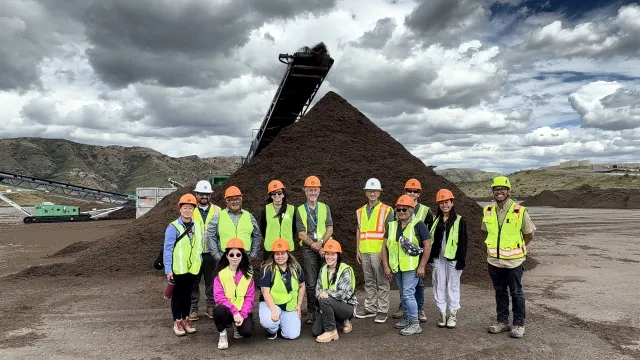
When you arrive at the Irvine landfill and see the enormous brown mounds stretching across the landscape, the last thing you might imagine is that they will one day help grow food, conserve water and restore damaged soils.
At first glance, the towering piles of compost and mulch look like little more than heaps of dirt. But behind them lies a process that plays a vital role in agriculture, soil health and the reduction of organic waste.
To provide a closer look at that process, Natalie Levy, Cooperative Extension soil health and organic materials management advisor serving Los Angeles, Orange and San Diego counties, organized a tour of the Frank R. Bowerman Landfill, located just minutes from the South Coast Research and Extension Center in Irvine.
The setting comes as a surprise. Tucked behind modern housing developments, the landfill lacks the odors and atmosphere many people associate with waste facilities. From the top of the site, visitors can even see the Pacific Ocean and portions of Orange County’s urban landscape.
Among the tour participants were nutrition educators from Riverside and San Bernardino counties, Master Gardener volunteers and other community educators.
During the visit, participants learned how yard trimmings, tree branches, shredded wood and other organic materials are transformed into compost and mulch that are later used in gardens, urban landscapes and agricultural systems.
“We are feeding microorganisms. Composting is really a microbial process,” Levy explained.
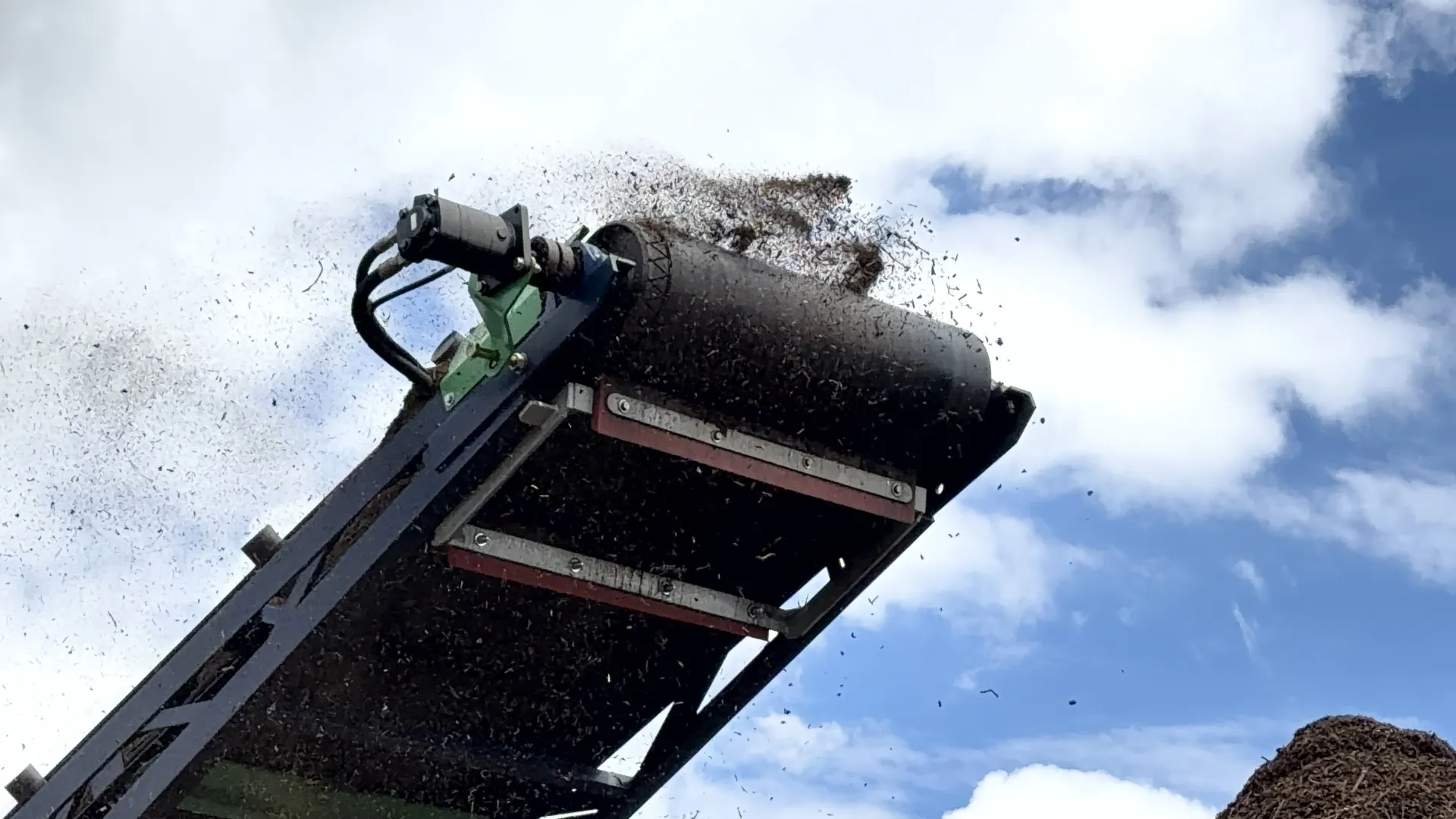
Bacteria and fungi break down carbon-rich materials such as shredded branches and cardboard, along with nitrogen-rich materials such as grass clippings and coffee grounds, creating a nutrient-rich product that can significantly improve soil health.
According to Levy, one of compost’s greatest benefits is its ability to improve soil structure and increase water retention.
“When we incorporate compost into the soil, it can hold more water and reduce the need for frequent irrigation,” she said.
In Southern California, where water conservation remains a constant concern, that benefit can make a significant difference for both farmers and home gardeners.
From Nutrition Education to Composting
For nutrition educators, the tour provided an opportunity to better understand what happens to food after it leaves the kitchen and how families can reduce food waste at home.
Daniela Vega, an adult nutrition educator with the Expanded Food and Nutrition Education Program (EFNEP) in San Bernardino County, said the experience expanded her understanding of composting and will help her answer questions she frequently receives from families about food waste.
“I learned that from home we can all do a little bit to take care of the world we live in,” Vega said. “It’s important to understand what happens to the food we throw away and how we can reduce waste.”
She noted that food waste is a topic that often comes up during nutrition and food safety workshops. Understanding how organic materials can be transformed into compost will allow her to provide additional tools and resources to families interested in reducing their environmental footprint.
It All Starts at Home
The success of composting, however, begins with something simple: properly separating waste at home.
David Tieu, administrator of the Frank R. Bowerman Landfill, explained that organic material recovery starts long before those materials arrive at a composting facility.
“It all starts with proper waste separation at home,” Tieu said. “Materials need to be placed in the correct containers so they can be collected and processed appropriately. Otherwise, they end up in the landfill, which is exactly what we want to avoid.”
When organic materials are not separated properly, they become mixed with general trash and lose the opportunity to be transformed into compost that can benefit gardens, landscapes and agricultural operations.
For Levy, the growing public interest in composting is encouraging.
“I think more and more people understand what compost is and how to use it,” she said. “Compost is an important tool for improving soil health, conserving water and building more resilient systems.”
By the end of the tour, many participants agreed that compost is far more than decomposing organic matter.
Behind every brown pile is a chain of efforts that begins in homes, continues through recycling and composting facilities, and ultimately helps improve soil health, conserve water and support food production.
What some people see as waste, others see as an opportunity to restore soil, conserve resources and build more resilient communities for the future.