
Douglas Iris Adds Color to Shady Garden Areas
Douglas iris (Iris douglasiana) is a great foundational plant for a sunny or shady part of your garden. The foliage is green all year round, and when in bloom in the spring, it is a welcome spot of color in shaded areas.
While they can tolerate full sun, a good location for Douglas iris in a garden is one that gets some filtered sun in the early morning but is in bright shade most of the day. Keep in mind, there will be less blooms if they are in deep shade.
Douglas iris bloom faithfully every spring, and can be separated and spread out to fill a garden bed. And they are quite good at outcompeting most weeds, including oxalis -- a few weeds can grow through the iris foliage, but nothing compared to the number that would be there without the iris, and the weeds are also easier to spot and pull.
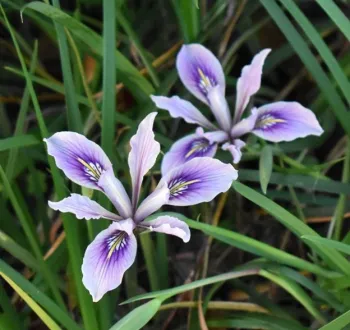
Douglas iris flowers in the wild have a wide range of colors from white to light blue, dark blue, lavender, and deep purple. Pt. Reyes National Seashore in the spring is a great place to observe the variation of bloom color in wild iris.
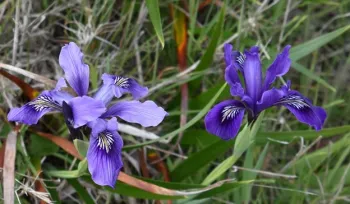
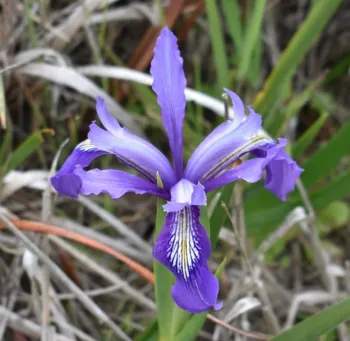
Douglas iris are easy to grow from seed, which will generally result in a deep blue/purple flower. Because the seeds will have their own unique, varied genetics, you might be surprised at the beautiful and distinct shade of blooms that emerge.
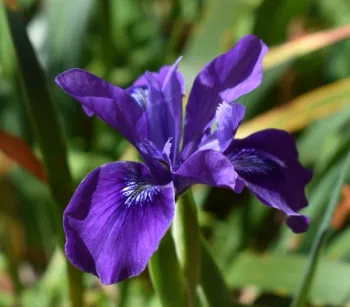
Some interesting varieties have been bred from the native iris, with many interesting and unusual colors. Some to look for in nurseries include "Canyon Snow", which has a white flower, and "Canyon Sunshine", which has a butter-yellow flower.
Douglas iris requires very little, if any, summer water, although it is probably good to add supplemental water if the spring rains have been sparse..
Calscape ( https://calscape.org/loc-California/Douglas'%20Iris%20(Iris%20douglasiana) says that Douglas iris prefer slow-draining soil, including heavy clay, which is the soil type of many gardens. With heavy soil, the recommendation is to be careful not to overwater the plants.
Douglas iris is a wonderful, long-lived perennial that remains green year-round. It's a great choice as a border plant or for planting in a lightly shaded area of your garden.
And fall is the time to plant any native plant, including Douglas Iris.
Resources
Here are some previous articles about planting natives in the fall.
- Calscape description for Douglas Iris
https://calscape.org/Iris-douglasiana-(Douglas-Iris) - Plant Natives this Fall
https://ucanr.edu/site/uc-master-gardener-program-contra-costa-county/article/plant-natives-fall - Native Plants for Summer Bloom
https://ucanr.edu/site/uc-master-gardener-program-contra-costa-county/article/native-plants-summer-bloom - Native Plant Resources
https://ucanr.edu/site/uc-master-gardener-program-contra-costa-county/article/native-plant-resources - Plant Native Shrubs Now for Winter and Spring Bloom
https://ucanr.edu/site/uc-master-gardener-program-contra-costa-county/article/plant-native-shrubs-now-winter-and - Now Is the Time to Plant Natives in Your Garden!
https://ucanr.edu/site/uc-master-gardener-program-contra-costa-county/article/now-time-plant-natives-your-garden