
The E.L. Niño Bee Lab, UC Davis Department of Entomology and Nematology, today launched a UC Davis Crowdfund effort to fund The Great Native Bee Count: Mapping California’s Bee and Plant Connections, a project to begin next spring that would "engage Californians of all ages as community scientists documenting the relationships between bees and the flowering plants that sustain them."
The crowdfunding ends Oct. 31. This is the link to donate to the Bee Research Fund to make this all happen.
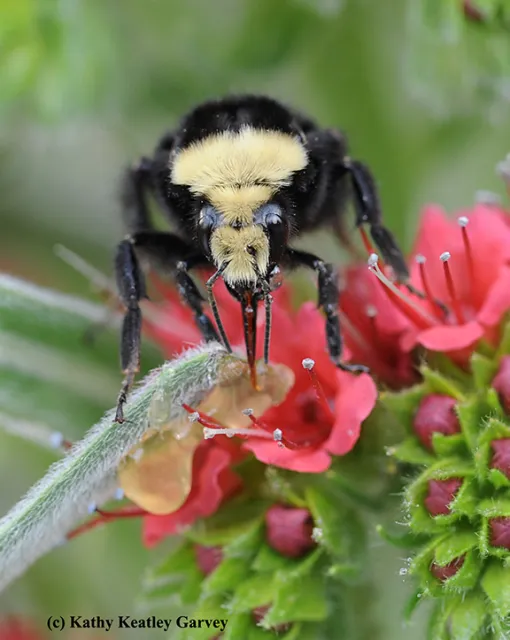
More than 1600 species of native bees call California their home. The number of native bee species throughout the United States totals more than 4,000. Throughout the world: more than 20,000.
The native bee project, linked to the UC Davis Bee Haven, involves "putting community science tools into people’s hands to generate valuable bee and floral resource data."
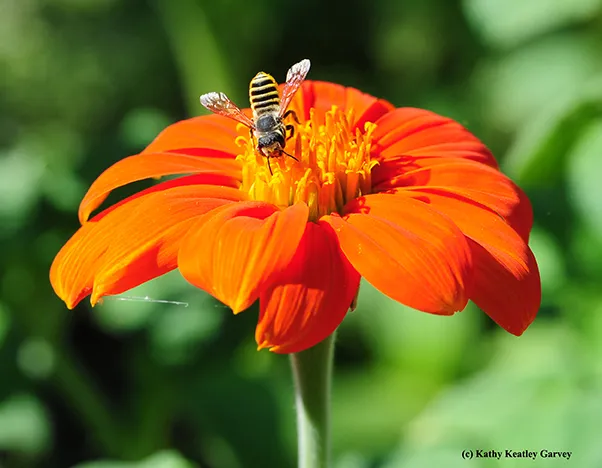
As explained on the crowdfund page, "The project will guide participants in using their phones to record flowering plants, when and where they see them, and, when possible, photograph visiting bees. Together, these observations will help answer a simple question: "What bee is visiting what plant, where, and when?"
Excerpts from the crowdfund page: "Our goal is to contribute useful observations to existing biodiversity and community science databases while building a richer picture of California’s bee and plant interactions across regions and seasons," the website relates. "The project builds on UC Davis Bee Haven’s network of more than 5,000 community members, providing a strong foundation for statewide participation."
"Your support will help put practical tools and science-based guidance into people’s hands while contributing to a growing understanding of California’s bees, flowering plants, and forage landscapes. This knowledge can benefit pollinators, native bee stewards, beekeepers, growers, researchers, land managers, educators, and communities statewide."
"Our goal is to contribute useful observations to existing biodiversity and community science databases while building a richer picture of California’s bee and plant interactions across regions and seasons."
The UC Davis Bee Haven, a half-acre demonstration garden installed in the fall of 2009, is directed by bee scientist Elina Niño, professor of Cooperative Extension, Apiculture ,and a member of the Department of Entomology and Nematology faculty. She founded and directs the California Master Beekeeper Program.
The garden, open to the public from dawn to dusk (free admission), is located next to the Harry H. Laidlaw Jr. Honey Bee Research Facilty on Bee Biology Road. Samantha Murray serves as the education and garden coordinator.
The late UC Davis Distinguished Emeritus Professor Robbin Thorp (1933-2019) identified more than 80 different species of native bees in the garden. The bee families: Andrenidae, Apidae, Colletidae, Halictidae, and Megachilidate. For more information on the Bee Research Fund or the haven, contact beehaven@ucdavis.edu.
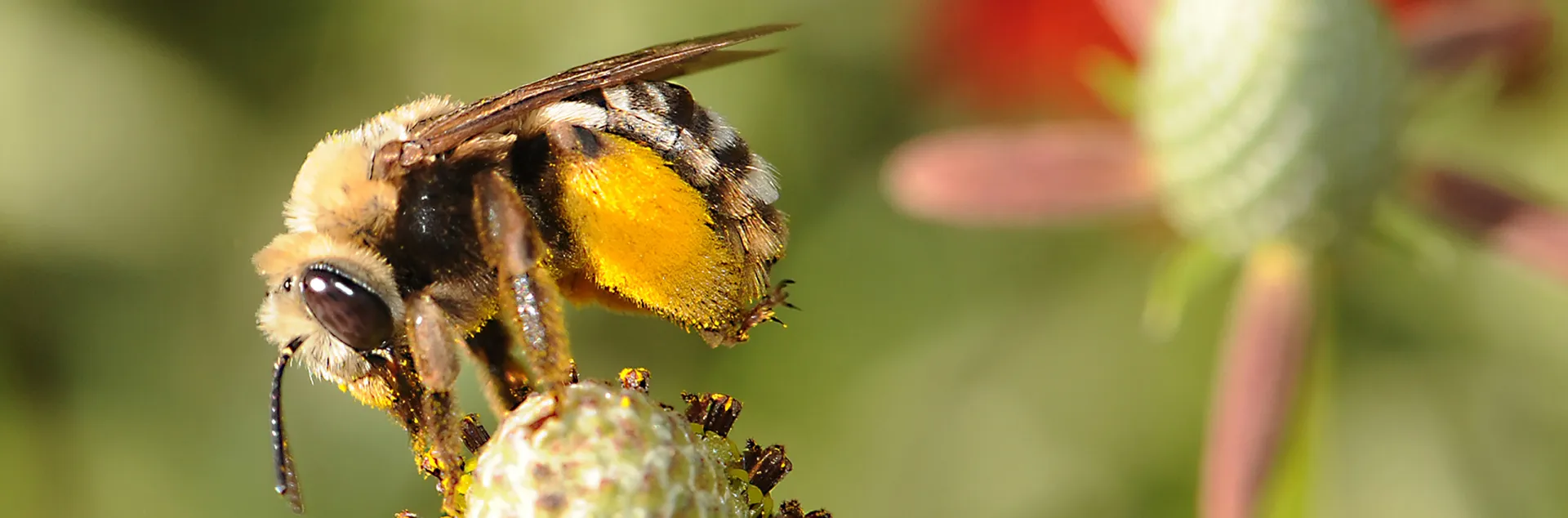
Cover image: A sunflower bee, Svastra obliqua expurgata, on a purple coneflower. (Photo by Kathy Keatley Garvey)