
UC ANR is pleased to announce and congratulate 17 recipients of the 2026 Distinguished Service Awards. Sponsored by UC ANR and Academic Assembly Council, the Distinguished Service Awards recognize service and academic excellence in UC Cooperative Extension over a significant period of time. The awards highlight the use of innovative methods and the integration of research, extension and leadership by UC ANR academics.
Award categories include Outstanding Research, Outstanding Extension, Outstanding New Academic, Outstanding Team, Outstanding Leader and Reaching New and Diverse Audiences.
Outstanding Research – Peter Larbi
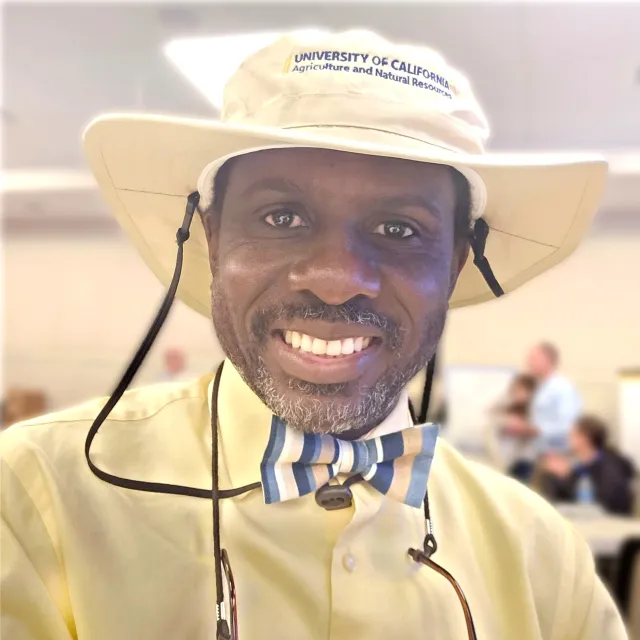
Peter Larbi, associate Cooperative Extension specialist in agricultural application engineering, is based at Kearney Agricultural Research and Extension Center. His research addresses a critical challenge in perennial specialty crop systems: achieving effective pest control while minimizing pesticide overuse, drift and off-target environmental impacts.
Highlights of his work include pioneering the application of mechanistic and data-driven modeling approaches to airblast spray application and drift assessment under commercial orchard and vineyard conditions, advancing novel canopy modeling methods, validating spray decision-support tools, co-developing a robotic sprayer prototype, and initiating a nozzle selection system to reduce applicator exposure and enhance safety.
Not only does his research contribute to the scientific realm, but his program also demonstrates the intent of clientele to adopt the research and best practices. Larbi’s outstanding research has environmental and economic impact with field data and extension-integrated research showing how improved application efficiency reduces spray waste and repeat applications, as well as promotes air and water quality, enhanced community health and improved production efficiency and profitability for California agriculture.
Outstanding Extension – Tracy Schohr
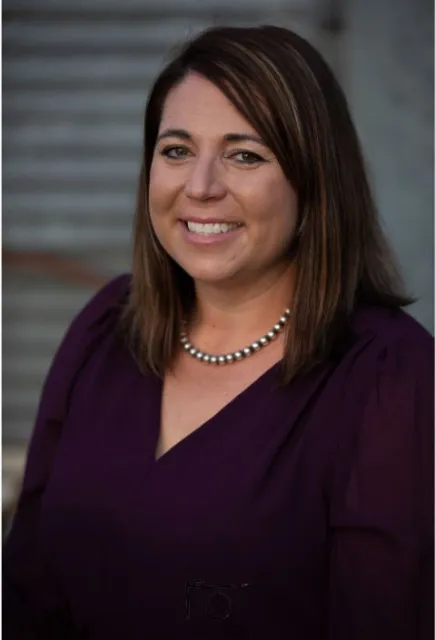
Tracy Schohr is an associate UCCE livestock and natural resources advisor for Plumas, Sierra and Butte counties. Her program exemplifies the highest standard of Outstanding Extension through a portfolio that is academically rigorous, community-centered and uniquely responsive to the complex challenges facing rural livestock and natural resource communities.
Over 8½ years, she has delivered more than 110 extension events reaching over 7,000 participants; built trusted relationships with ranchers, agencies and local governments; and developed programs that have directly influenced management practices, policy decisions and community resilience.
Her leadership during the wolf depredation crisis – facilitating unprecedented cross-agency coordination, supporting 40 ranchers managing 120,000 acres, and co-authoring peer-reviewed economic analyses – demonstrates exceptional impact and adoption.
She created statewide models such as the Ag Pass Program – now used across California and internationally – and developed curricula adopted in 106 schools. Her Cattle Health Webinar Series has reached 1,308 participants with documented practice adoption and her Ag Legacy Planning program has already led to succession planning for ranching families representing more than $42 million in assets.
Schohr’s work consistently integrates research, evaluation, innovation and outreach to underserved and geographically isolated communities. Her program is a model of how extension should be planned, delivered, evaluated and shared, and her impact on clientele, agencies and community resilience is both measurable and profound.
Outstanding New Academic - Cassandra Swett and Whitney Brim-DeForest
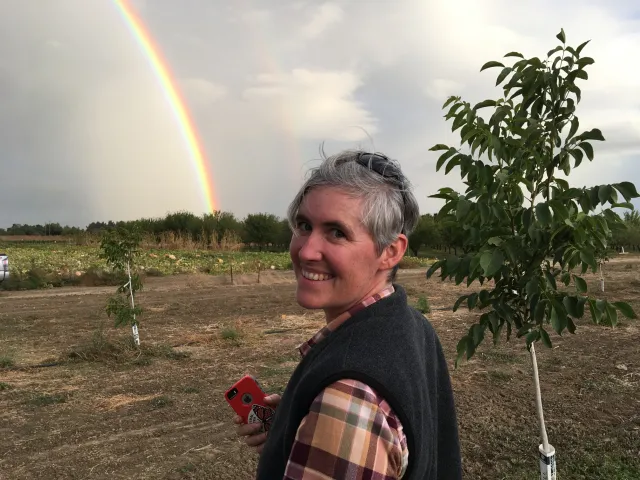
While the award is usually presented to an individual, the program committee determined two people were equally deserving of the Outstanding New Academic Award.
Cassandra Swett is an associate Cooperative Extension specialist in the Plant Pathology Department at UC Davis, with 9 years and 3 months of service at the time of nomination. During that period, she has developed an innovative, responsive and diverse research program to tackle emerging and persistent issues in the pathology of vegetable and field crops.
Her program is commendable for its ability to integrate collaborators across the research-extension continuum and to engage with stakeholders throughout the process, from development of priorities to delivery of project findings. Particularly notable are her unique work and achievements in community- and organismal-scale studies of disease pressure under drought conditions, which have informed mitigation and adaptation strategies.
Swett’s work on Fusarium wilt in alliums is an example of dedication to a persistent but underappreciated and confounding issue for local growers that also has global impact. By providing monitoring and diagnostic support for new, emerging and persistent pathogens, Swett promotes accurate identification and etiological understanding, which are essential to implement efficient and effective mitigation. She engages in multidisciplinary collaborations to address complex, multifaceted issues, such as sanitizing farm equipment to reduce the spread of weeds and pathogens. Swett’s program is supported by diverse funding sources, including federal, state and industry.
Swett has a robust publication record with senior or lead authorship on peer-reviewed publications in leading journals in her field. Her outreach program deserves recognition not only for her direct outreach but also for her commitment to uplifting and meaningfully engaging with vegetable and field crop advisors across the state. The training opportunities and durable educational tools resulting from these collaborations support effective decision-making for the vegetable and field crop industries. In summary, Swett has achieved exceptional accomplishments in research and extension in pathology of vegetable and field crops, engaging with academic colleagues and industry to detect, understand and mitigate the impacts of diseases.
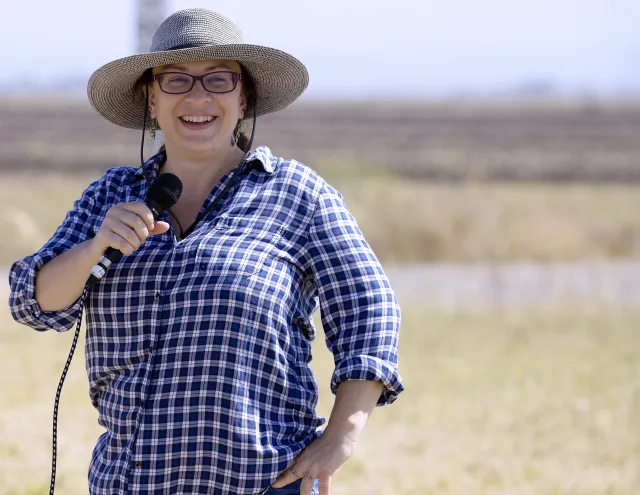
Whitney Brim-DeForest is a UC Cooperative Extension rice and wild rice advisor for Sutter, Yuba, Placer and Sacramento counties. She has developed an impactful statewide research and extension program focused on rice production systems, invasive species management and sustainable agriculture in California. Her work addressing weedy rice and other emerging production challenges has significantly improved grower and industry awareness and adoption of best management practices throughout California rice-producing regions.
Brim-DeForest’s program strongly integrates applied research with extension and outreach. Through collaborations with growers, industry representatives, commodity groups and regulatory agencies, she has developed practical, science-based management strategies with measurable impacts on clientele behavior and statewide rice management practices. Her extension program uses workshops, field days, webinars, newsletters and direct stakeholder engagement to broadly disseminate research findings and recommendations.
The committee was particularly impressed by Brim-DeForest’s leadership in addressing the emerging threat of weedy rice in California, as well as her ability to combine scientific rigor, innovative extension approaches and stakeholder collaboration to address complex agricultural challenges. Her accomplishments, academic productivity and statewide impact exemplify UC ANR’s mission and values and make her highly deserving of this recognition.
Outstanding Team - Advanced Microirrigation School for Crop Production team
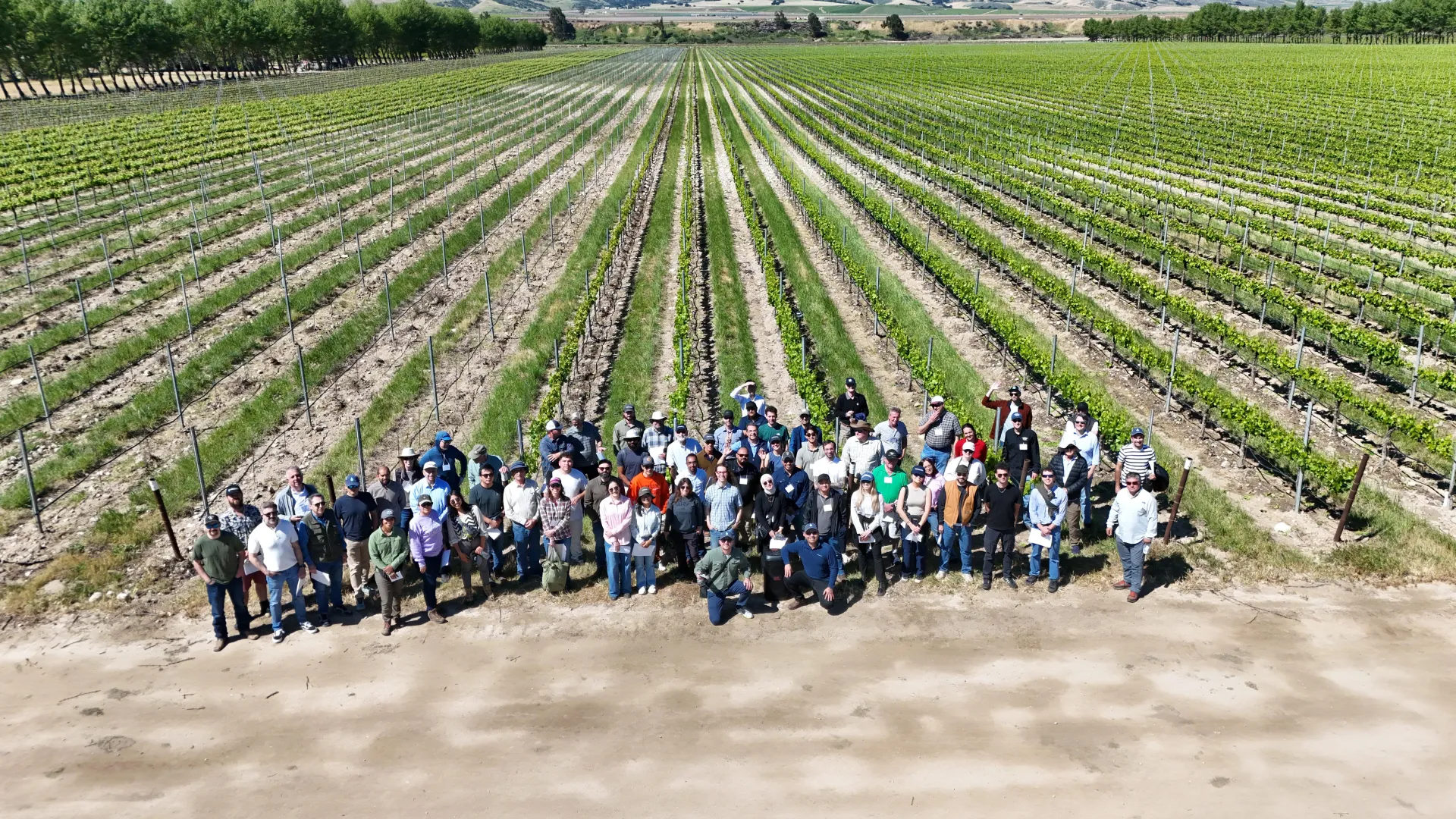
The Advanced Microirrigation School for Crop Production team is composed of Daniele Zaccaria, Khaled Bali, Michael Cahn, Mae Culumber, Andre Biscaro, Zheng Wang, Ben Faber, Matthew Fidelibus, Luis Octavio Lagos, James Ayars and Mary Ann Dickinson.
The team developed a comprehensive, interdisciplinary curriculum that integrates expertise in irrigation engineering, crop production, soil science and water resource management. It filled an important need for extended training that combined classroom instruction based on cutting-edge research with field experiences. It was a successful example of a collaborative and international event that demonstrated UC ANR’s leadership across the globe in promoting science for improved agricultural resilience. Each team member played a key role in designing and delivering a robust training program covering topics such as irrigation system design, soil-water dynamics, soil-plant-water relations, crop water requirements and irrigation scheduling, among others.
The team also shared responsibility for stakeholder engagement, successfully recruiting participants from across the agricultural sector, with strong representation from irrigation technology and water management professionals. In addition, team members coordinated field demonstrations at irrigation districts, commercial automation providers and production farms across multiple regions, offering participants direct exposure to real-world irrigation challenges and innovative solutions.
By aligning closely with the UC ANR mission, the team successfully translated cutting-edge research into practical knowledge and tools that directly address California agriculture’s urgent need for improved water management under increasing resource constraints.
Outstanding Leader - David Lewis
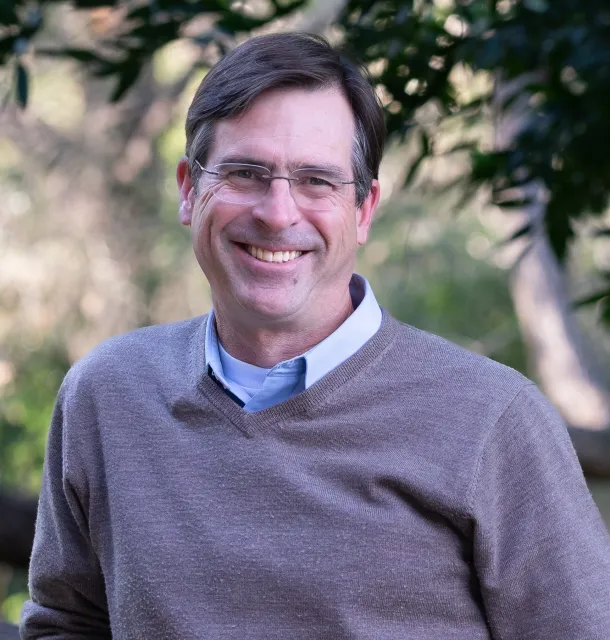
David Lewis has served UC Cooperative Extension since 2000 as a watershed management advisor. Lewis served as a county director for nearly 15 years, guiding and supporting more than 40 individuals. The impact of his mentorship to UC ANR staff and academics is apparent in the admiration shown by his colleagues, who mention Lewis’s ability to support them during challenging times, such as the unexpected death of a colleague. His professional areas of expertise focus on seven of UC ANR’s priority areas, where he is a leading figure in his communities.
Lewis’s published works in areas of water quality, riparian habitat and stormwater management have provided the cornerstone of numerous tools used by partners throughout Marin County. One of his community partners said, “David’s leadership is defined by a rare ability to translate complex water quality science into practical, on-the-ground solutions. As the UC Cooperative Extension watershed management advisor in Marin County, he built new programs from the ground up, catalyzing major advances in dairy water quality management, rangeland conservation and watershed restoration.”
Outstanding Excellence in Extension Programming: Reaching New and Diverse Audiences - Steven Worker
Steven Worker is a 4-H youth development advisor for the San Francisco North Bay Area. His extension program expands access to 4-H by redesigning how Cooperative Extension reaches youth and families who are not well-served by traditional delivery models. Worker developed a diversified “spark–deepen–sustain” pathway that connects free public engagement events, short-term skill-building programs and sustained partner-based delivery in afterschool settings, libraries, schools and community organizations, which broadens participation while maintaining educational quality, positive youth development and clear public value.

The model is also transferable. It is defined by structure rather than by any single program, so other educators can adapt it to different geographic settings, populations and disciplinary areas. Its key features are replicable: identify local barriers, create accessible entry points, build follow-up opportunities and work through trusted partners to extend reach. In this way, the innovation is both programmatic and organizational. It provides a practical framework for modernizing extension delivery so that Cooperative Extension can reach new and diverse audiences while maintaining educational quality, developmental relevance and long-term community value. Worker’s program demonstrates clear, measurable outcomes at the family, community and organizational levels.
Worker’s commitment to reaching youth underrepresented in STEM is not merely academic; it is rooted in authentic relationship building. He has successfully extended STEM access into schools and communities that historically have been disconnected from enrichment systems, particularly within Latino and multilingual communities. He does this not by simply “expanding” a program, but by redesigning delivery to meet families where they are.