
Small-scale growers invited to save money, try new techniques by checking out equipment and engaging with UC research
Everything starts with a tractor. That’s the mantra of grape grower Albert Smith, whose family has been farming in southwest Fresno for generations.
“ Everything you do starts with a good machine,” Smith said.
Purchasing new equipment, however, can be an exorbitant expense, especially for small-scale farmers like Smith. Modern tractors can cost hundreds of thousands of dollars. But what if growers could borrow or test out machines, rather than risk a big purchase?
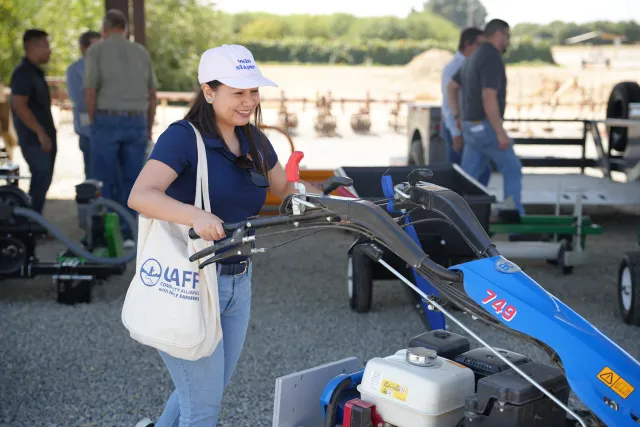
That’s the idea behind an equipment-lending library that opened this month at the Kearney Research and Extension Center in Parlier. The concept was developed and funded through the F3 Local grant, which stands for Food, Farm and Innovation. F3 Local is a regional initiative working to build a more inclusive and resilient food economy in California’s San Joaquin Valley.
The team behind the lending library includes Tracy Celio, regional director of F3 Local Farm and Food Innovation, Amber Butland, F3 Local Equipment Lending Library coordinator and Jose Ramiro Ortiz Pellegrin, the Local Equipment Lending Library agricultural technician.
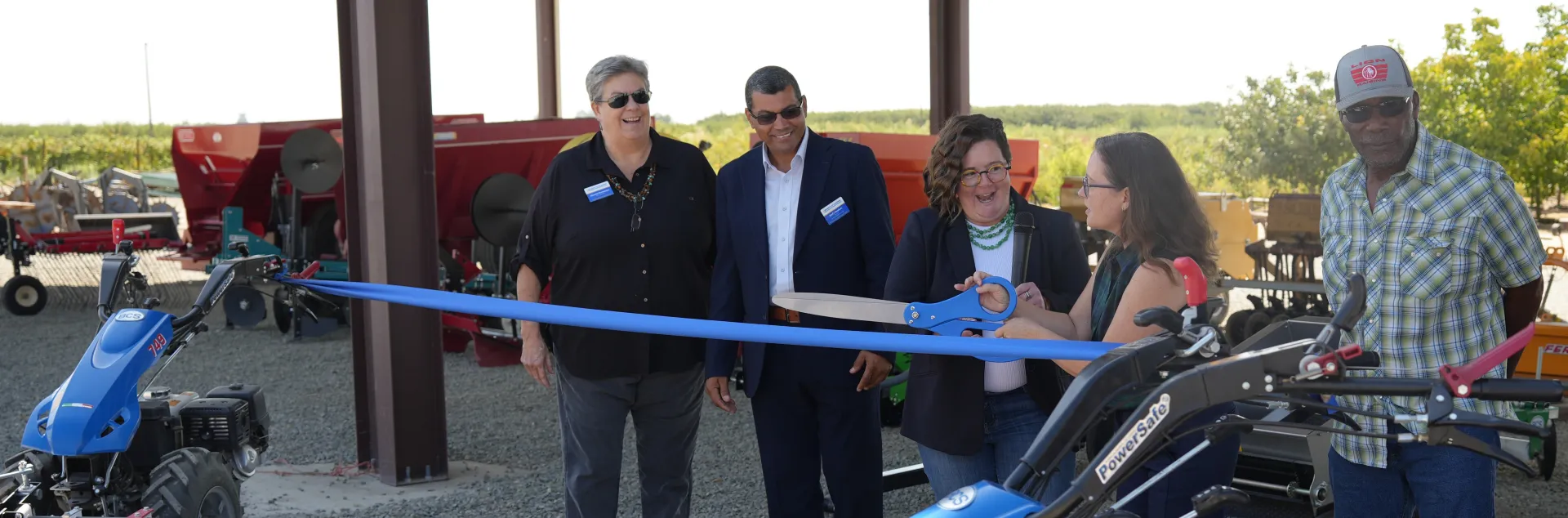
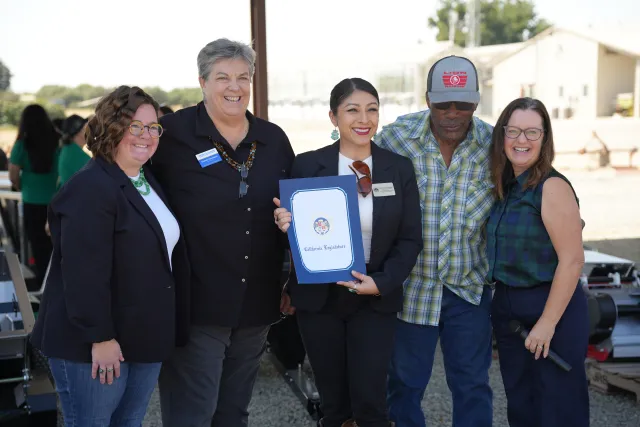
During a ribbon-cutting ceremony on Sept. 1, over 50 attendees browsed the library’s catalog of brand-new equipment available for checkout. The 33 items include tractors, spreaders, mowers, transplanters, weeders and seeders, all available at highly subsidized rates – between $10 and $50 per day, depending on size. Specific details on the items are available on the library webpage.
The launch event drew elected officials, nonprofit partners, government regulators and local growers. Smith and fellow grape farmers chatted excitedly as they perused the shiny machines.
“I look at all the pretty green, yellow, orange colors and imagine: ‘Wow, what could I do if I had that equipment at my disposal?’” Smith said. “This loan of equipment is really like a godsend thing.”
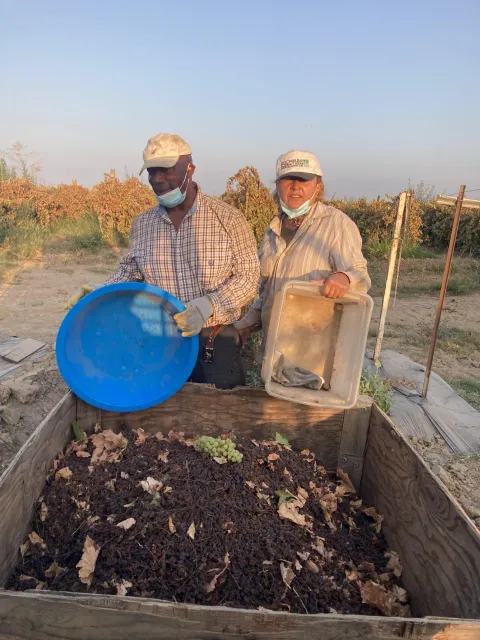
Smith has already checked out a compost spreader delivered directly to his operation, S&A Farms, helping enhance his soil health. He estimates the lending library has already saved him thousands of dollars.
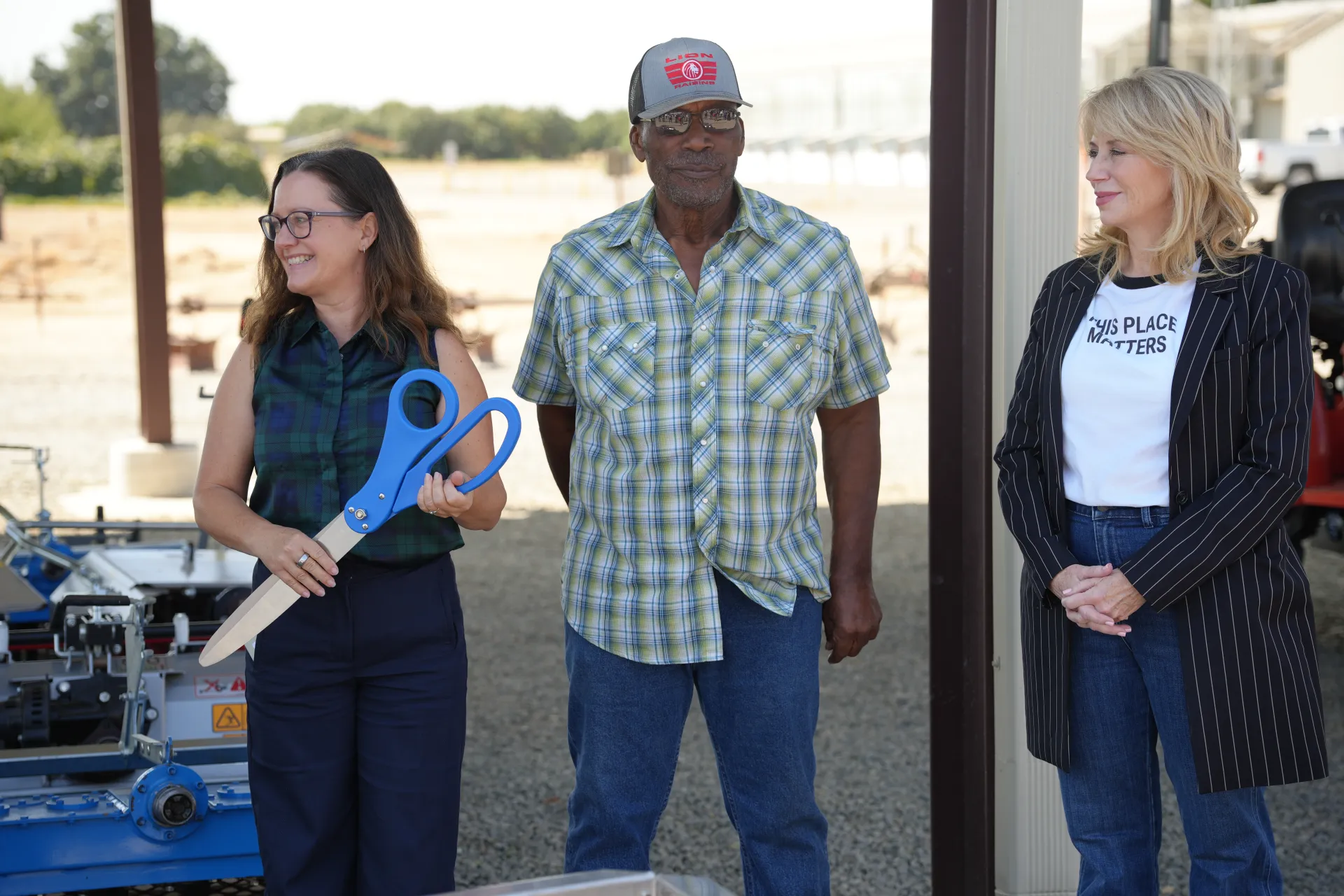
Glenda Humiston, University of California vice president for agriculture and natural resources, helped kick off the ribbon-cutting, congratulating the library team and partner organizations on the launch that’s been a decade in the making.
“We are committed to this particular lending library being successful… because it is going to be the template for more of these all over the state,” Humiston said.
Future library sites could include UC Agriculture and Natural Resources’ other nine Research and Extension Centers in growing regions throughout California, as well as community colleges or county fairgrounds.
According to Humiston, housing the library at a research site is strategic, providing a space for growers and UC scientists to connect face-to-face. Those interactions could inspire product development or research based on farmers’ feedback.
“ We’re trying to help these farmers be able to do their job better, more cost-effectively and also help us design new technologies,” Humiston said. “There’s nothing like having a farmer working with a researcher, experimenting to figure out how to improve something.”
The lending library is available to growers who farm under 80 acres in Fresno, Tulare, Kings, Madera or Merced counties. After completing a classroom and hands-on training session, borrowers can check out equipment for up to four days. The next classroom trainings are scheduled for Sept. 16 and Oct. 7. The next hands-on training will be on the cover crop seeder and is scheduled for Sept. 30. All classes are currently open to new registrants.