
With the heat that we have been experiencing recently, it might be pure folly to try growing fall crops of vegetables this year, but having had success a couple of years ago, I decided to give it a try using various techniques to modify the temperature in the areas to be planted. The seed packets of those varieties that I chose stated that they could be planted in July for a fall crop, but in view of the fact that our maximum temperatures were well over 100ºF on a daily basis then, it seemed a poor time to start. However, by August, I noticed that various weed seeds had begun to germinate and grow quite vigorously, so I decided to give it a try when we had a few cooler days in the middle of the month.
It is a good idea to grow vegetables that have the shortest number of days to maturity and those that can cope with a light frost, too. By mid-October, the temperature can get down into the mid-30s. If you sow sugar peas rather than shelling peas, the pods can be eaten before the peas swell, and dwarf varieties are easier to cover, either to protect them from scorching sun or frost, as the case may be. I have planted a low-growing snap pea variety called Sugar Daddy against a 4 ft. field wire support and have attached a length of shade cloth to the top of this, pulling the base well away from the plants and anchoring it with a couple of rocks. I also covered the seedbed with a strip of heavy-duty bird netting to prevent the seeds from being dug up by voles or mice.
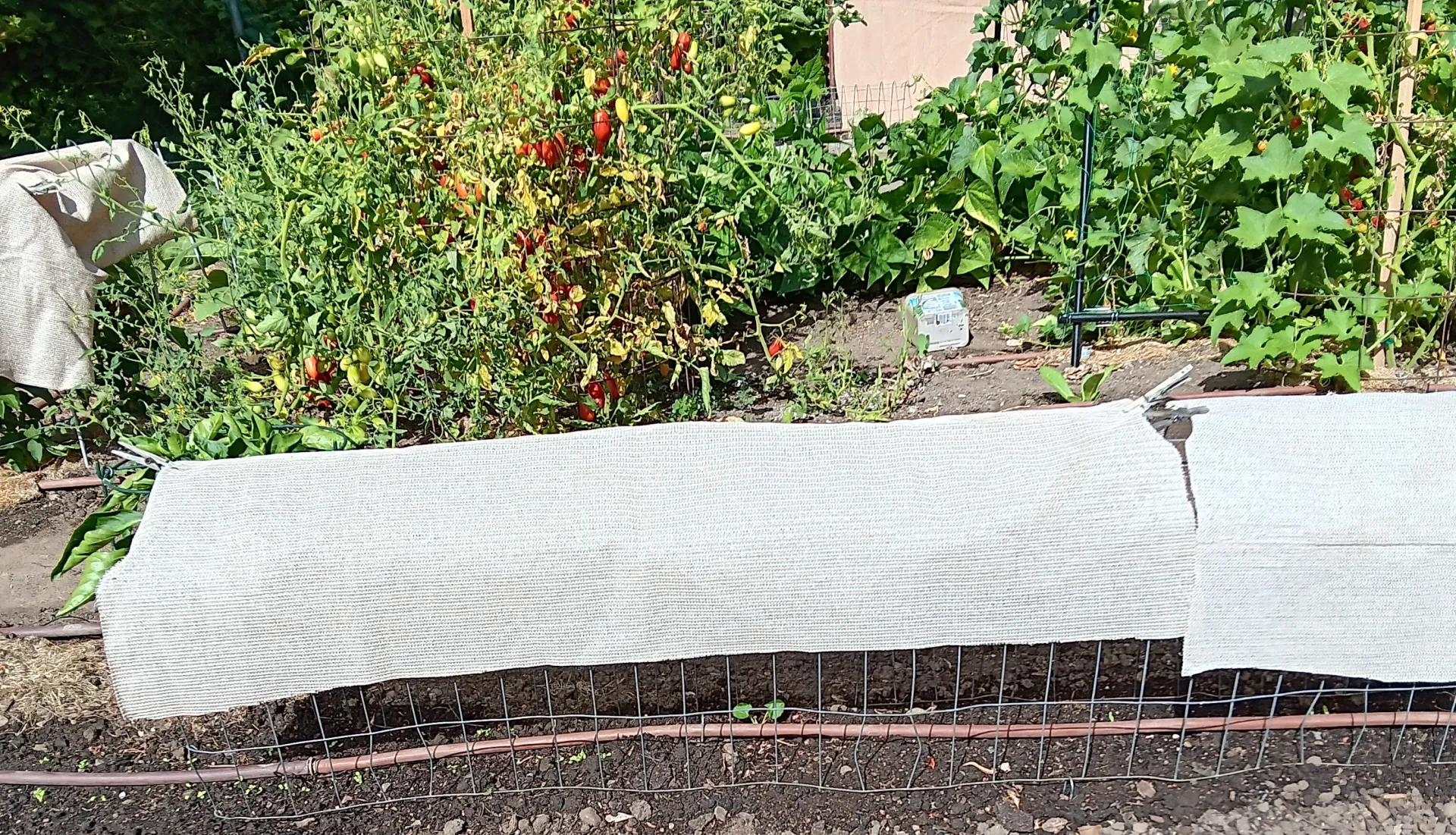
I planted beets, lettuce, rutabaga, parsley, and cilantro, too. I had recently removed my abysmal crop of onions, and the soil in those rows looked to be in good shape, so I hoed deeply, adding compost as I went, raked the soil to a fine tilth, drew out rows for the seeds, and planted the seeds a little deeper and more thickly than I do in the spring. I only sowed about 6–8 ft. of the main choices—peas, beets, and rutabaga—with just small areas of such things as the herbs and lettuce. I gave the rows a good soak with a watering can and covered them with tunnels of 4 ft. field wire bent in half longitudinally and stapled securely into the ground in a couple of places. Then I stretched shade cloth over the length, clipping the ends to the wire with clothespins, but I didn't take it right to the ground so that the seedlings would get sun in the early morning when it was not too hot, but shade during the times when the sun was at its fiercest. It is also possible that this amount of cover will modify any sudden drops in temperature overnight, but I have not checked this.
I have been running the drip irrigation twice a day for 10 minutes in order to keep the soil damp, but I have had to resort to supplementing it with some extra hand watering on the hottest days.
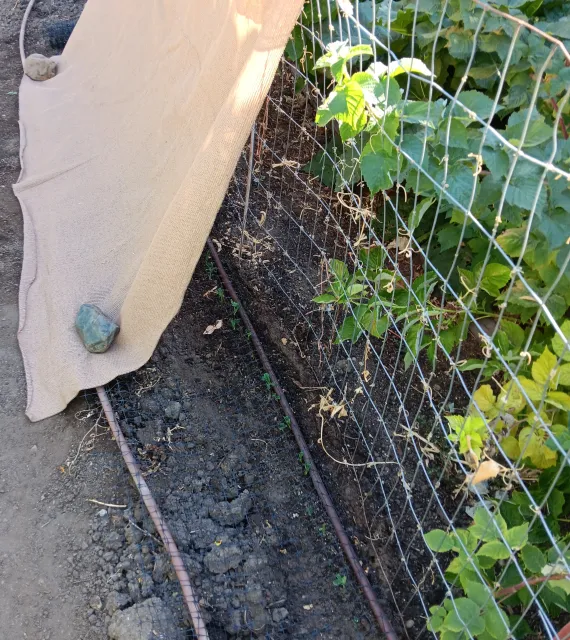
I planted on August 12, and the Black-Seeded Simpson lettuce germinated in four days. By August 19, many of the seeds were up, apart from the cilantro and parsley. The peas are now almost 1" tall and look healthy.
Time will tell whether I will reap the fruits of my labors.