
Welcome, Ms. Monarch!
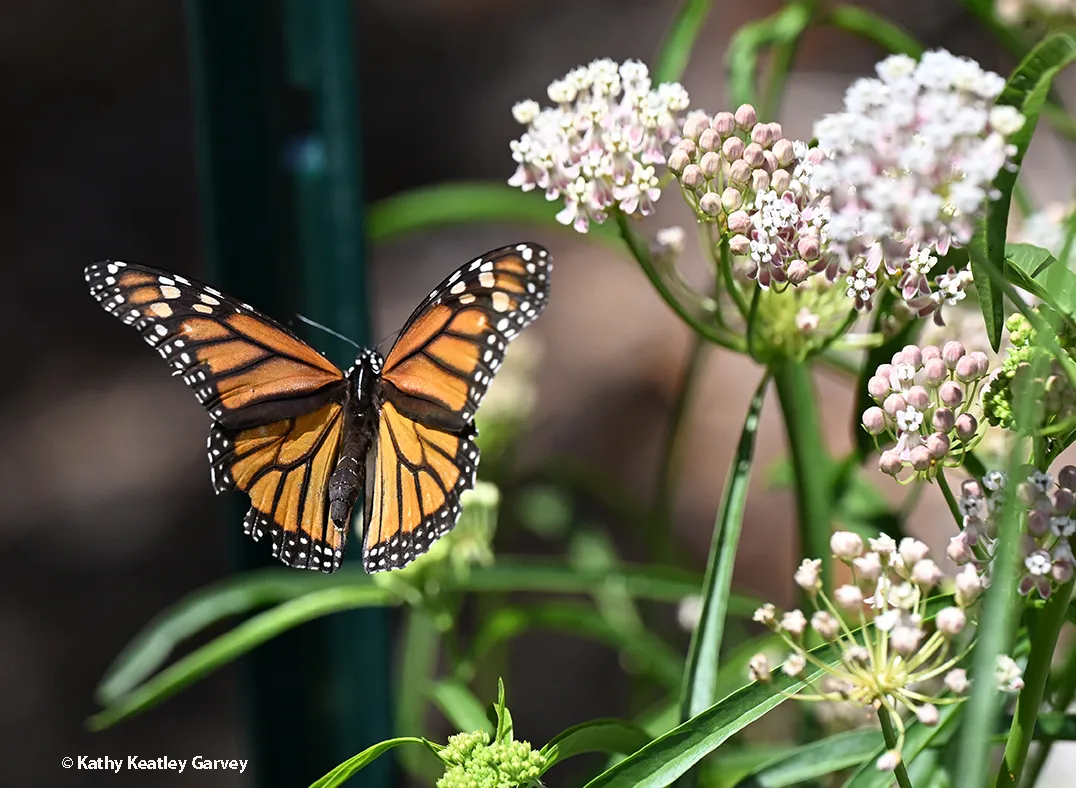
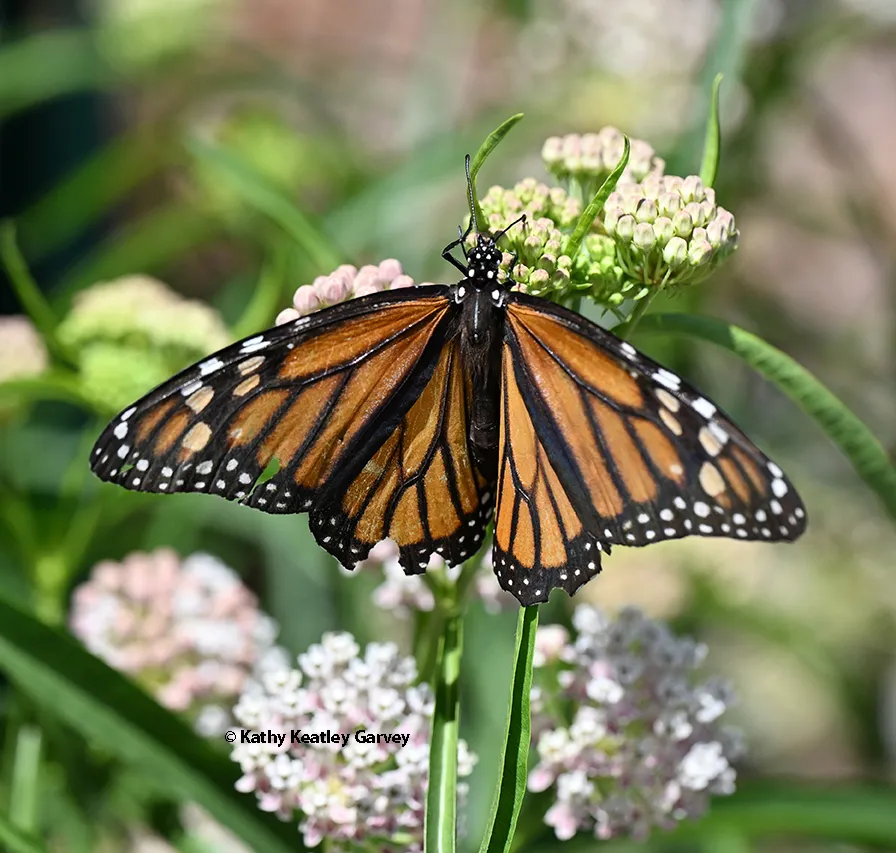
Finally, the first monarch butterfly of the year fluttered into our pollinator garden on Thursday morning, July 2 and began laying eggs on our native milkweed, Asclepias fascicularis.
"Where have you been?" we wanted to ask her.
She did not respond, but monarchs have been here more than a million years. Our nation's 250th birthday, our Semiquincentennia, is a mere dot in comparison.
"The monarch butterfly species, Danaus plexippus, has existed for an estimated one million years," according to the National Park Service website. "Long before that, the monarch’s ancestors had similar traits that would allow for long-distance flight, suggesting that butterfly migration is even older than the monarchs themselves. It wasn’t until 20,000 years ago, however, that monarchs dispersed from their origin in North America to Central America, South America, and the Caribbean. After the peak of the last ice age, receding glaciers and a warmer climate allowed milkweed to colonize new areas. The monarch butterfly followed milkweed around the world, and its range now includes the North Atlantic coast of Africa, Europe, and the South Pacific."
The dwindling population of monarchs floods the national news. "In July 2022, the IUCN listed the migratory monarch butterfly as endangered on its Red List of Threatened Species," the National Park Service reminds us. "On a national level, the Endangered Species Act (ESA) provides United States government agencies the authority to evaluate species conservation status and offer legal protections to those listed as endangered or threatened. In 2014, the USFWS accepted a petition to list the monarch butterfly as a threatened species under the ESA; at this time, however, the monarch is waiting in the wings as a candidate for official protection while species considered to be at more immediate risk are prioritized."
How did the butterfly acquire its common name, "monarch?" Credit entomologist Samuel Hubbard Scudder (1837-1911), a native of Boston, Mass., for that. He suggested the name back in 1874, noting its "large size" and that it "rules a vast domain."
Sadly, the monarch does not rule a vast domain any more, and may, as some scientists predict, be on the road to extinction unless we take action.
Since the 1980s, the western monarch butterfly population numbers have plunged by more than 99 percent. The latest annual tally of the overwintering monarchs along the California coast by the Xerces Society recorded just 12,260 butterflies across 249 sites, one of the lowest counts on record. Scientists say the collapse is primarily driven by habitat loss, climate change, and widespread pesticide use.
All the more reason to treasure a monarch fluttering into your garden.
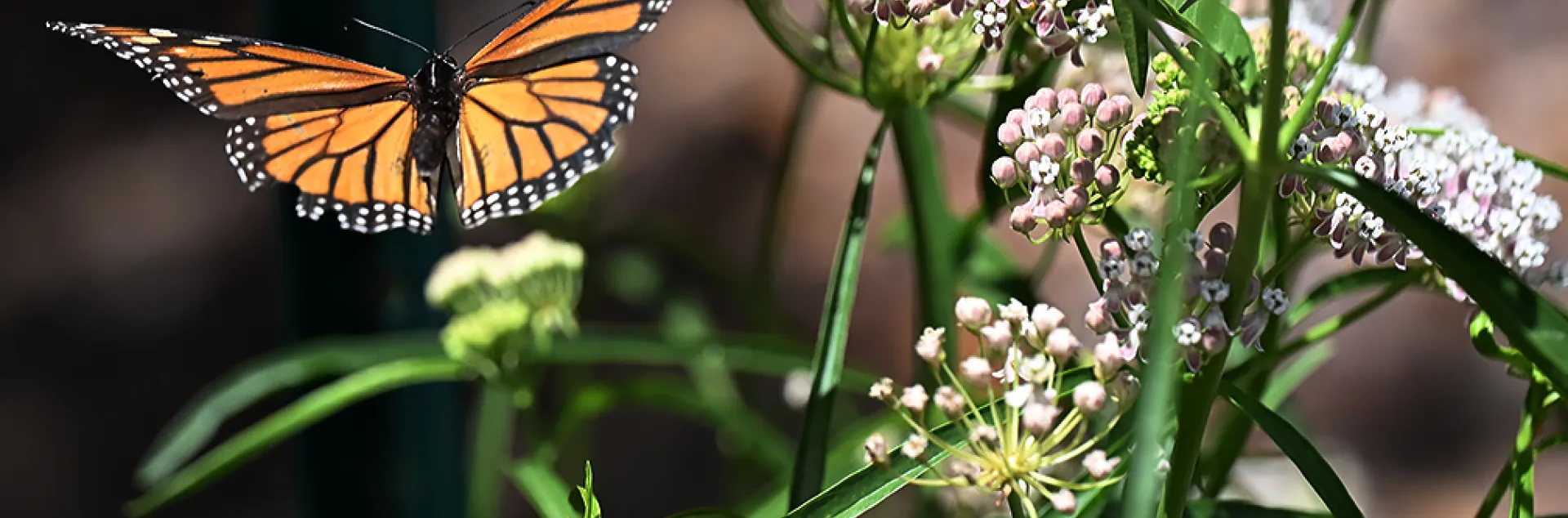
Cover image: A monarch butterfly takes flight in a Vacaville garden. (Photo by Kathy Keatley Garvey)