
How are you celebrating National Pollinator Month?
Every June is National Pollinator Month, a time to raise awareness about bees, butterflies, birds and other species that sustain our ecosystems and agriculture.
"National Pollinator Month originally started as National Pollinator WEEK, a grassroots effort that was given national visibility through the efforts of a handful of key organizations and individuals," according to the website, Insect Lore. "The original driving force behind this was the Pollinator Partnership, founded in 1997 by researchers and advocates including philanthropists, beekeepers and scientists. These associated nature lovers helped to drive concern about declining pollinator populations, culminating in a first-ever report by a national scientific body!"
Then in 2007, the U.S. Secretary of Agriculture issued a proclamation to designate the week of June 24–30 as National Pollinator Week. "Since then, the week has been endorsed annually by federal agencies, state governors, and countless environmental organizations, helping to grow and transform awareness of pollinator-conservation issues and simultaneously inspiring habitat protection, research, and public engagement," according to Insect Lore.
This year's National Pollinator Week is June 22-28, a week to focus on native plants, create public awareness of pollinators, and what we can do to protect them. That includes avoiding the use of pesticides (which we should do year-around).
Check out the Pollinator Partnership website, which initiated and manages this special week. The 2026 Pollinator Poster, “Life on a Leaf: Celebrating Caterpillars and Host Plants" showcases the vital host plants that support Lepidoptera (butterfly and moth) larvae, the website says.
Check out the National Wildlife Federation website, which lists 5 ways to celebrate this month. You can also find native plants in your area simply by entering your zip code.
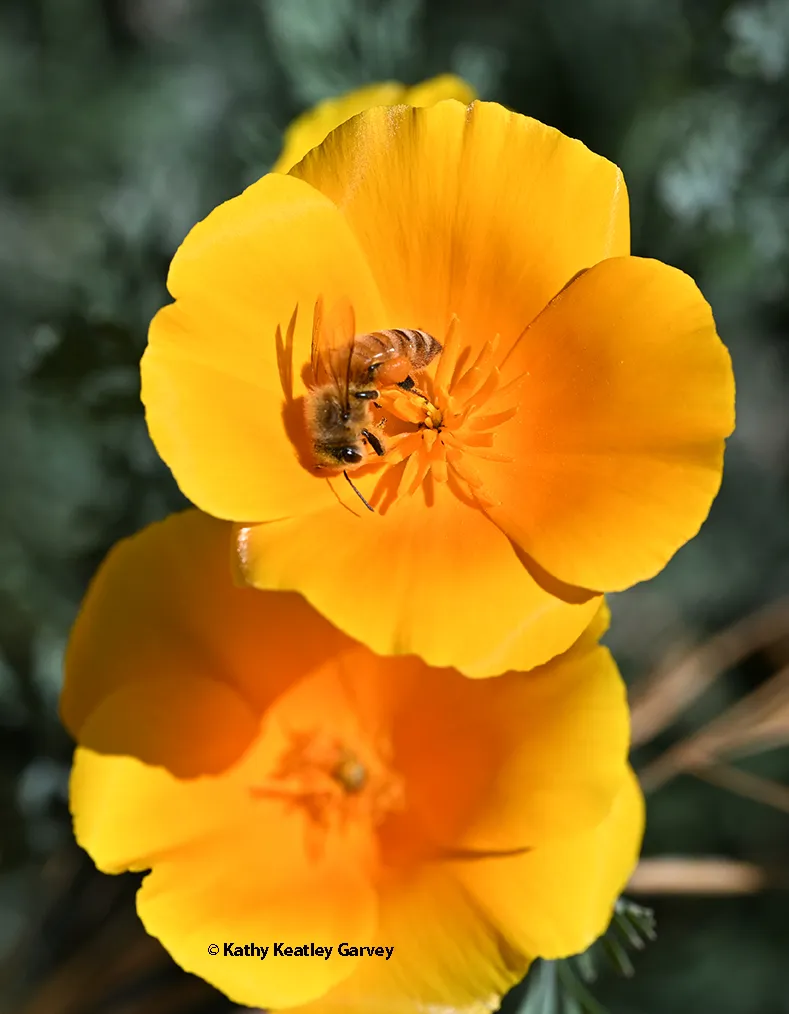
Meanwhile, let’s play tribute to the California golden poppy, Eschscholzia californica, the state flower. Bees love it! The plant is a member of the family Papaveraceae. It thrives in its native habitat of California and extends to Oregon, Washington, Nevada, Arizona, New Mexico, Sonora and northwest Baja California (Mexico). It became the official state flower of California in 1903.
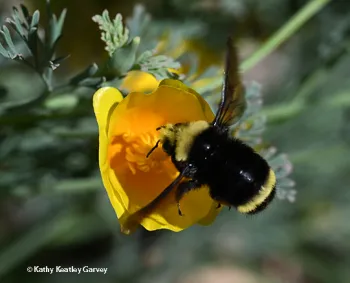
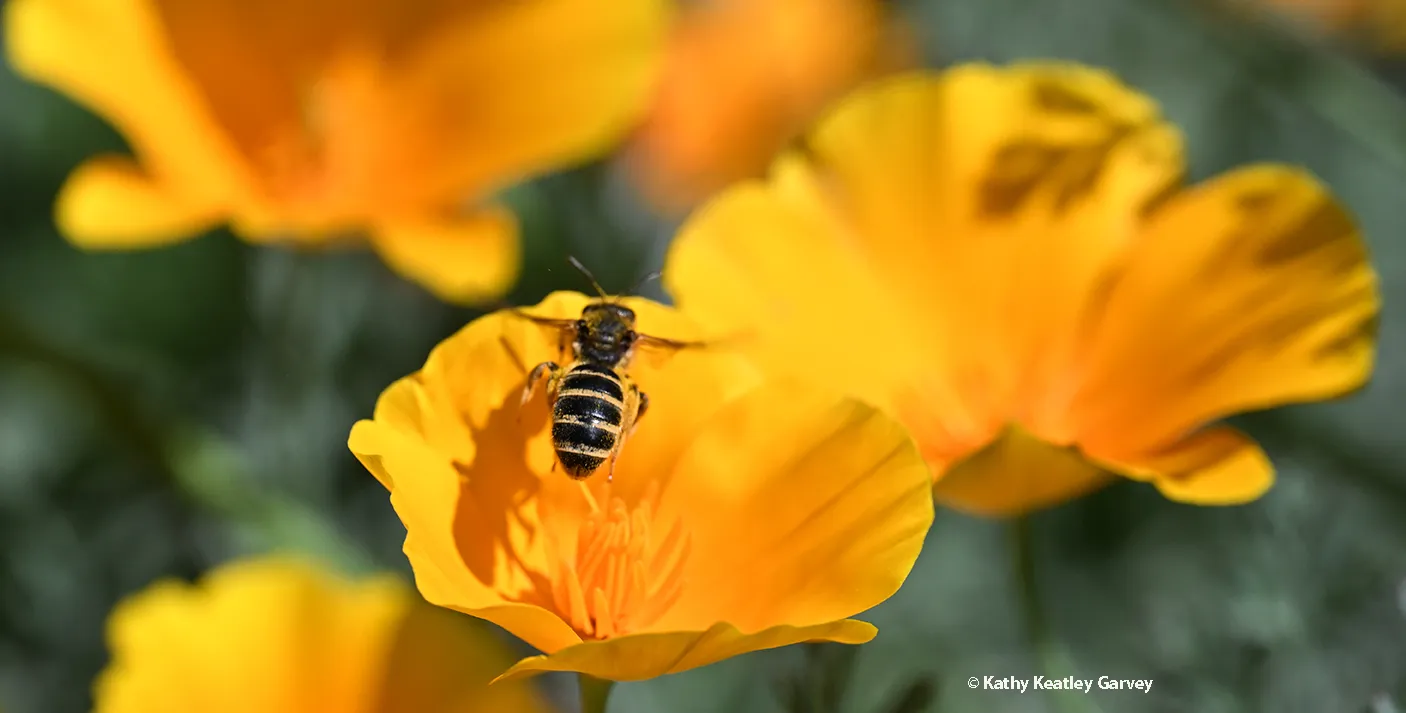
We observed assorted bee species foraging on the golden poppies, including several native bumble bees, Halictus bees, and (non-native) honey bees during a recent visit to the UC Davis Ecological Garden, which is part of the Agricultural Sustainability Institute.
There's gold in that garden! (Not all gold is at Fort Knox or is in our rocks, rivers and creeks.)
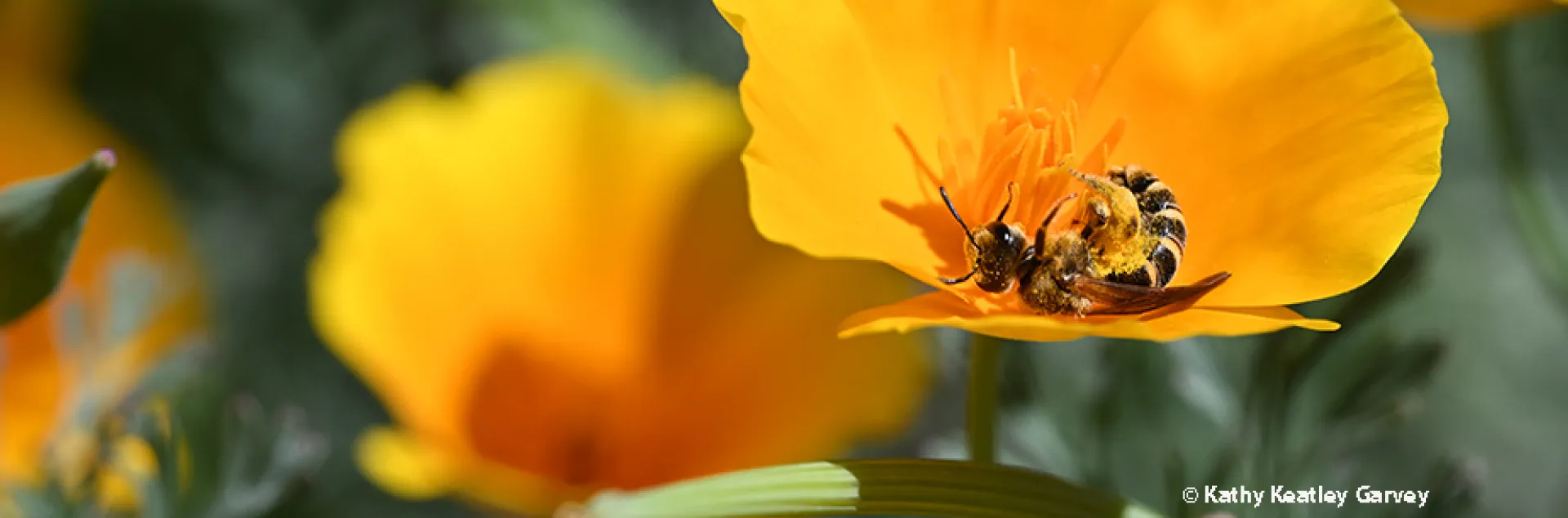
Cover image: A native bee, genus Halictus, rolling in a California golden poppy in the UC Davis Ecological Garden. (Photo by Kathy Keatley Garvey)