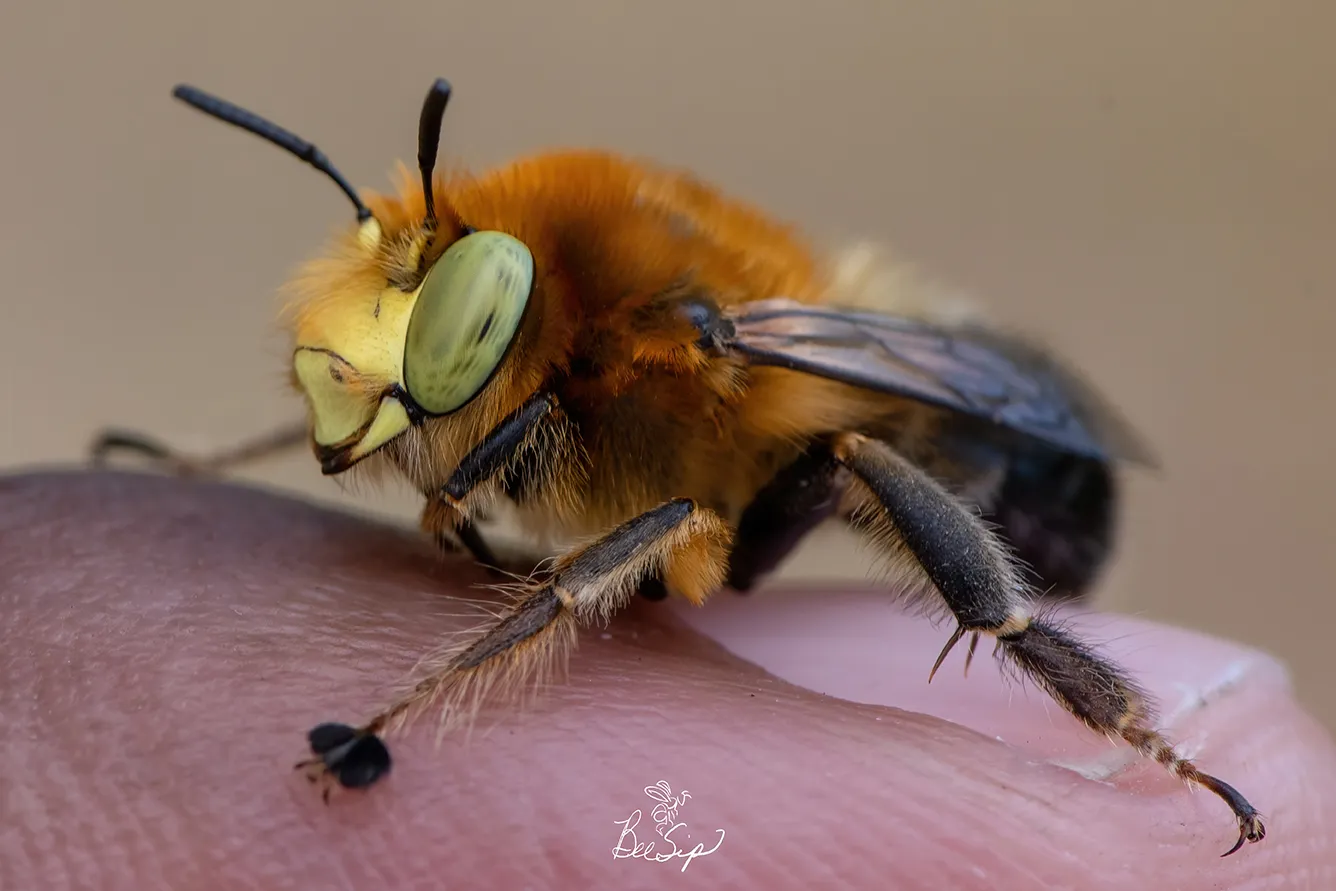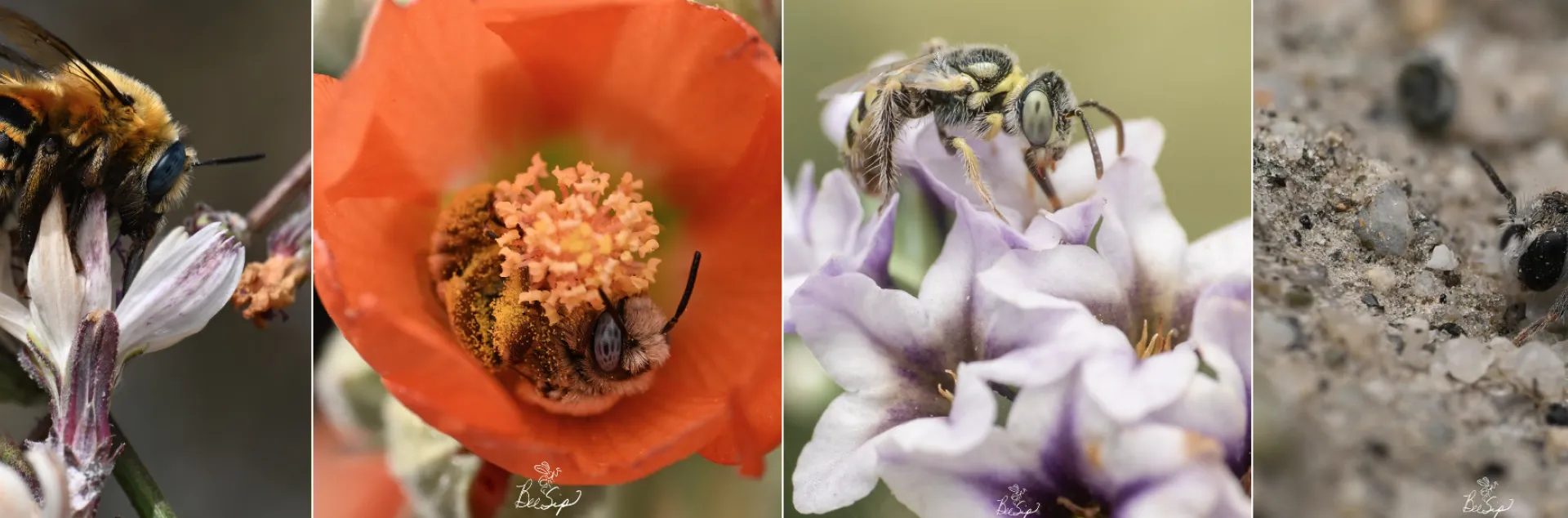
"If you want to find the native bees, look for native plants and vice versa. If you want to save the native bees, save the native plants."
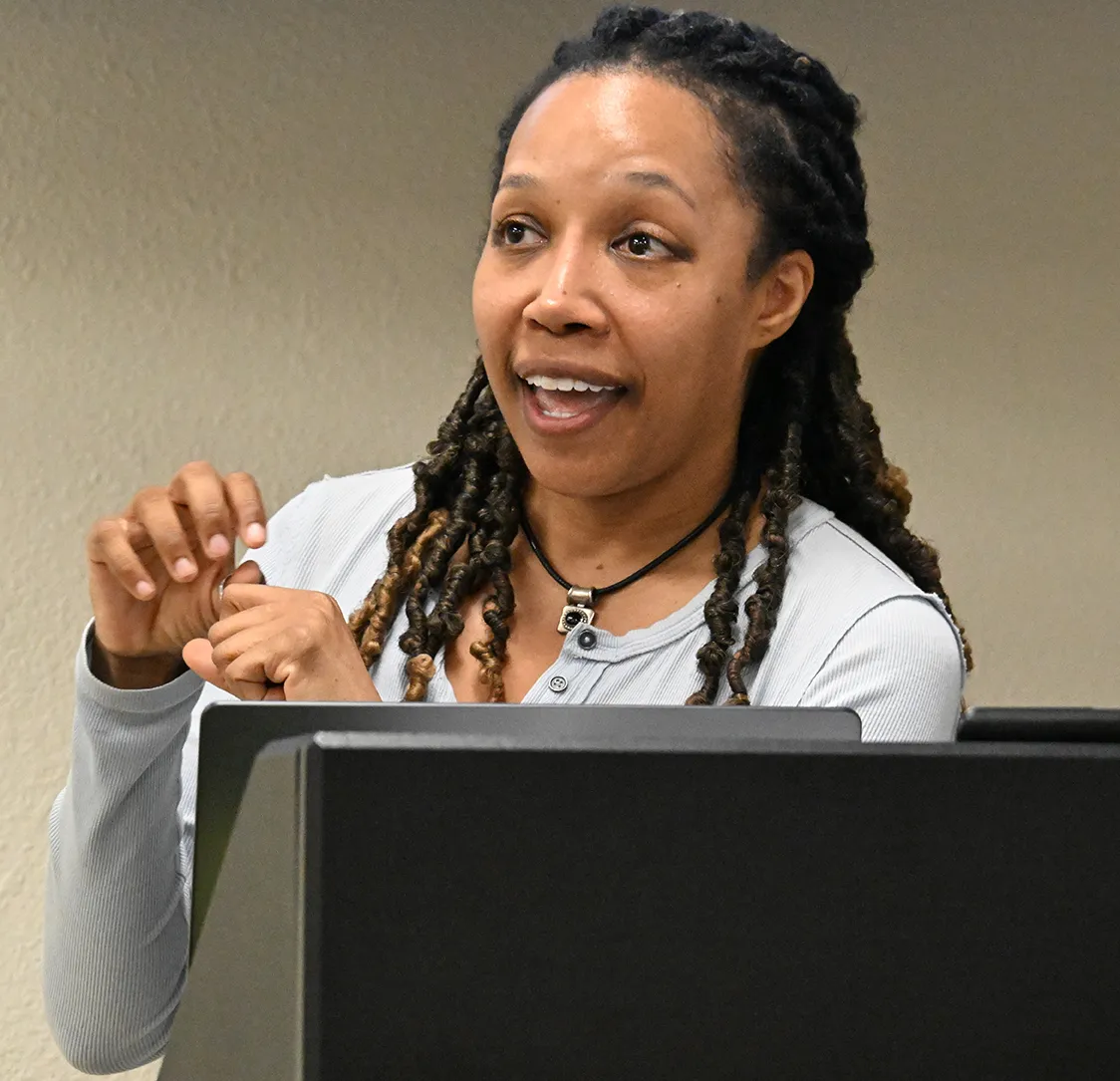
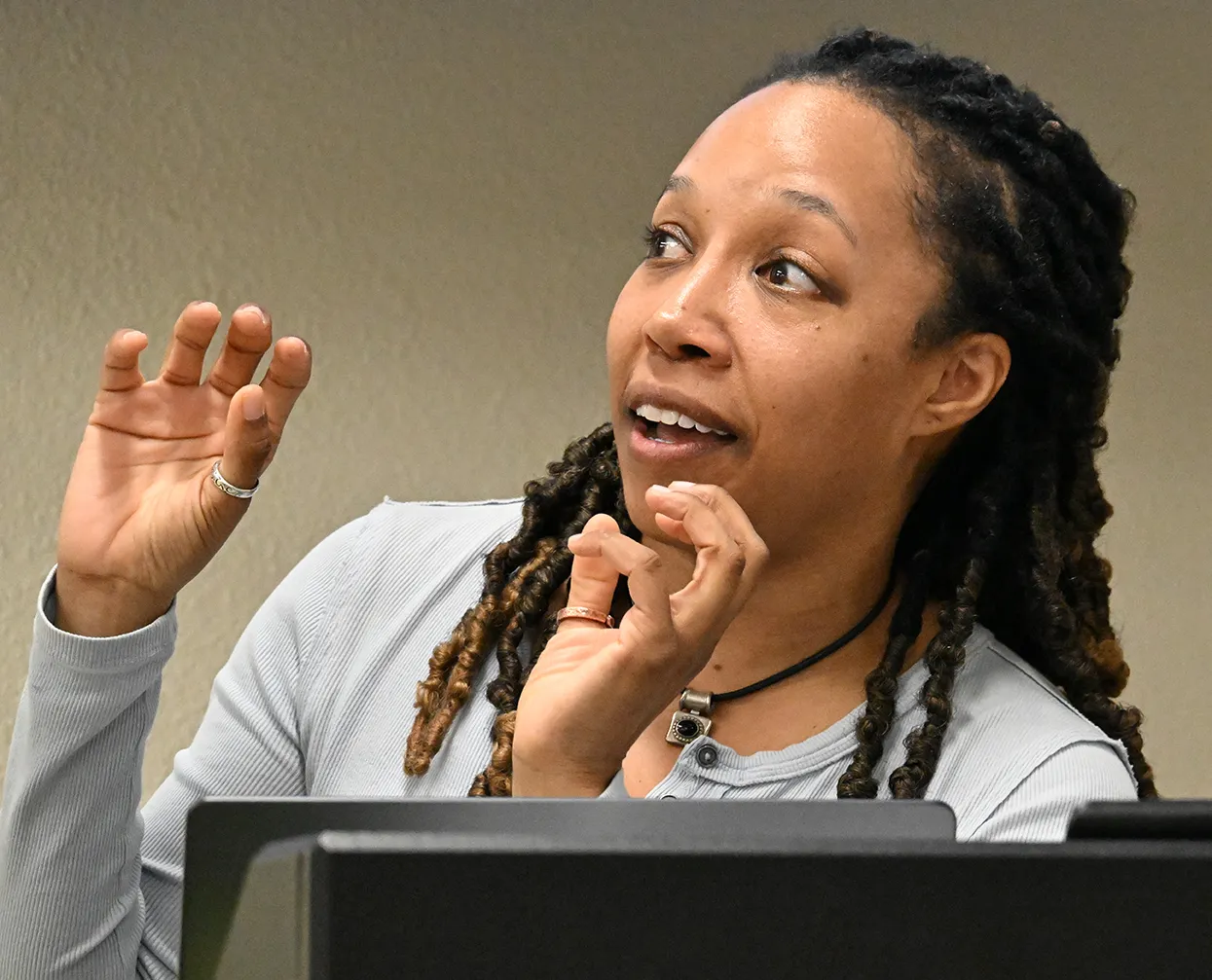
So said native bee conservationist and native bee photographer Krystle Hickman, author of The ABCs of California's Native Bees when she addressed a recent Bohart Museum of Entomology open house at UC Davis.
"I photograph native bees, the plants that they have relationships with, as well as their locations. And primarily, I photograph in California," she said, adding that she considers herself a "conservation photographer as well as a community scientist."
"Um, 'community scientist,' it's a term that I prefer to use over 'citizen science' because they're basically the same thing. But the last few years, politically, the word 'citizen' has kind of changed from whether or not you have a degree in what you're studying to whether or not you're documented. So just to be more inclusive, I started using 'community scientist' as a term...So basically what I do, again, is photograph bees in their environment, document their behavior, also notate their plants are on, and I keep track of things like times, dates, and weather. So I actually have an Excel sheet for every single location I visit, and I update it year after year, and it's a great way to keep track of things."
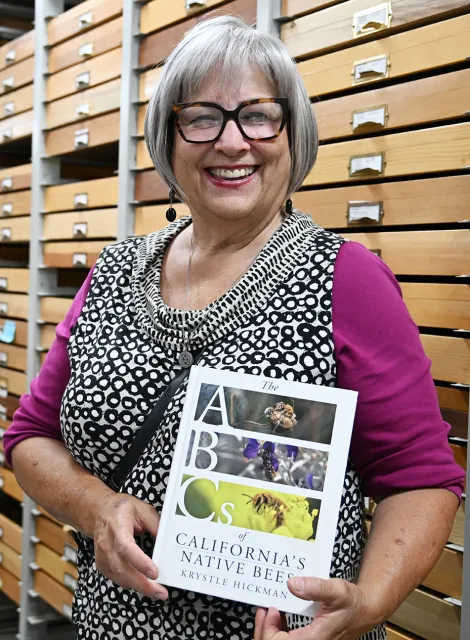
Her 240-page book, published by Heydey in October 2025, is billed offering "an intimate look at the daily habits of rare and overlooked native bees in California: those cloaked in green or black or red, that live alone in the ground or sleep inside flowers, that invade nests and pillage resources like infinitesimal conquerors, or that, unlike more generalist honey bees are devoted exclusively to the pollen of a single type of flower...Meant for all curious readers, this collection of bee stories—one for each letter of the alphabet, matching the first letter of a bee’s scientific name—will leave you both wowed and compelled to help save these fascinating beings and the lands they call home."--Heydey
Hickman noted that many people cannot tell the difference between honey bees and native bees.
"So first off," she told the crowd, "honey bees are only native to Europe, Asia, and Africa. The ones that are in the United States are multiple subspecies of the European one, as well as a single African one. And native bees, like native plants, are from where they currently reside without human introduction. So they could be native to all the United States, California, or even an area as small as your zip code. They also serve as indicator insects, so their change in population can signal the health of an ecosystem that they're in. They can be generalist pollinators, meaning they'll try and pollinate everything, but they can also be specialist pollinators, meaning they'll only pollinate, um, like a single family of plants or even sometimes a genus or a species."
"So about 20 or 45 percent of these species are specialist pollinators. And unlike male honeybees, male native bees can mate multiple times without dying. Unlike female honey bees, female native bees can sting multiple times without dying, but they rarely do that. They're also threatened by things like climate change, land loss, and disease. Two-thirds are ground nesting, one-third are cavity nesting, and nine out of ten are solitary, so they don't live in hives like honeybees or bumble bees."
Hickman said a quote attributed (incorrectly) to Albert Einstein sparked her interest in bees: “If the bee disappeared off the surface of the globe, then man would have only four years of life left. No more bees, no more pollination, no more plants, no more animals, no more man.”
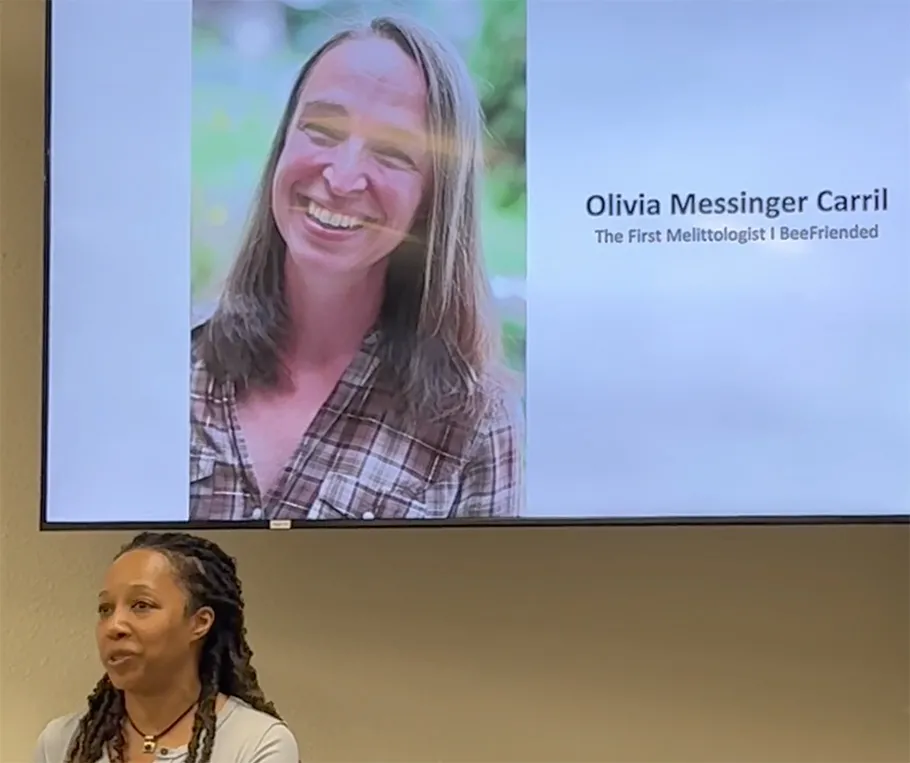
At the onset of her interest in native bees, a conversation with melittologist Olivia Messenger Carril, co-author of the book, The Bees in Your Backyard: A Guide to North America's Bees (with Joseph S. Wilson) inspired her. (A melittologist is an entomologist who specializes in the scientific study of bees.)
Bees in Your Backyard introduces the reader to the some 4000 species of native bees in the United States. Globally, there are more than 20,000 known species of bees, of which some 1600 reside in California.
"So I think our first phone call was like four hours long. Um, but it was actually through her that I found out that there's over 20,000 species of bees in the world."
Many of her images are displayed in the hallway of the UC Davis Academic Surge Building, 455 Crocker Lane, home of the Bohart Museum of Entomology.
(Read more about Hickman on her beesip.com website and follow her on Instagram at https://www.instagram.com/beesip. See feature story on "How One Woman Fell in Love with California's Native Bees on imagine5.com.)
Buzz Words in Literature
The Bohart Museum of Entomology open house, themed "Buzz Words: Insects in Literature," also included speakers Felicity Muth and Christofer Brothers. Muth is a UC Davis bee researcher and author of "Am I Even a Bee?" Brothers is a UC Davis doctoral candidate studying dragonflies and who writes rhyming prose dealong with his research. Three members of the UC Davis Entomology Graduate Student Association (EGSA)--Grace Horne and Mia Lippey and Marielle Hansen Friedman--coordinated the open house.
Moth Night on July 18
The next Bohart Museum open house is "Moth Night," set from 7 p.m. to 11 p.m., Saturday, July 18. It will include a blacklighting exhibit and moth displays, in keeping with National Moth Week. All open houses are free and open to the public.
The Bohart Museum is located in Room 1124 of the Academic Surge Building. It houses a worldwide collection of eight million insect specimens, plus a live petting zoo, and an insect-themed gift shop.
Cover images: Native bee images by Krystle Hickman as seen on her Instagram account at https://www.instagram.com/beesip.