
UC Davis PhD student Peter Coggan will discuss moth migration at the Bohart Museum of Entomology open house on Saturday, July 18.
The event, free and family friendly , takes place from 7 to 10 p.m. in the Bohart Museum, located in Room 1124 of the Academic Surge Building, 455 Crocker Lane, UC Davis campus.
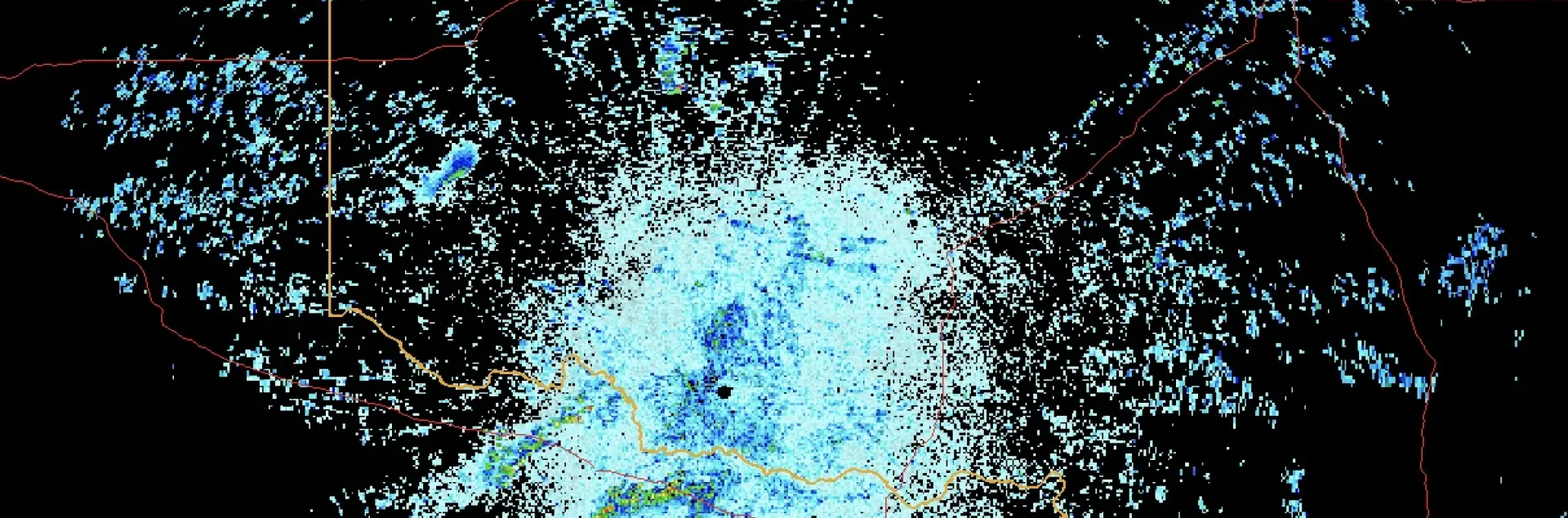
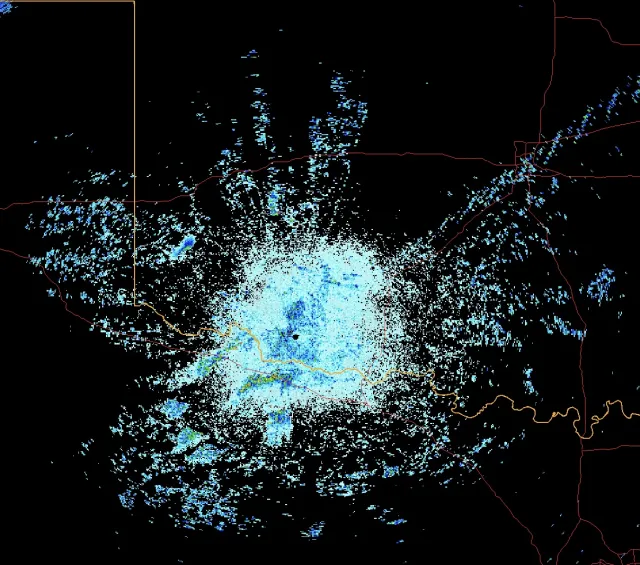
"I will be speaking about moth migration and how we can track it using weather radar techniques," said Coggan, a member of the Population Biology Graduate Group and a member of the laboratory of Santiago Ramirez, UC Davis Department of Evolution and Ecology.
"I have shifted my research to focus on insect aeroecology, where I am focused on questions focused on understanding which insects use the sky for migration and how climate change may be impacting these movements," he said.
"My research now mostly relies on using weather radar to track insect movements and directly sampling the skies using balloons and light aircraft," Coggan shared.
Coggan, born and raised in Boulder, Colo., where he developed a love for biodiversity in the surrounding mountains, is broadly interested in how sensory processing shapes memory formation and other cognitive traits. His current project investigates how hover flies decide which flowers to visit based on innate color preference and learned odors. He began conducting research in high school and has participated in projects from cancer diagnostics to waste water management. He received a bachelor of science in biology from Case Western Reserve University, Cleveland. As an undergraduate, he worked with Dr. Mark Willis and studied how moths perceive smell while moving through a complex environment.
Coggan and his father, Peter Coggan of northern Minnesota, who is active in the Minnesota chapter of National Dark Skies, discussed their work at the Bohart Museum's 2024 Moth Night. They covered sensory biology, husbandry, trapping, and light pollution and answered questions.
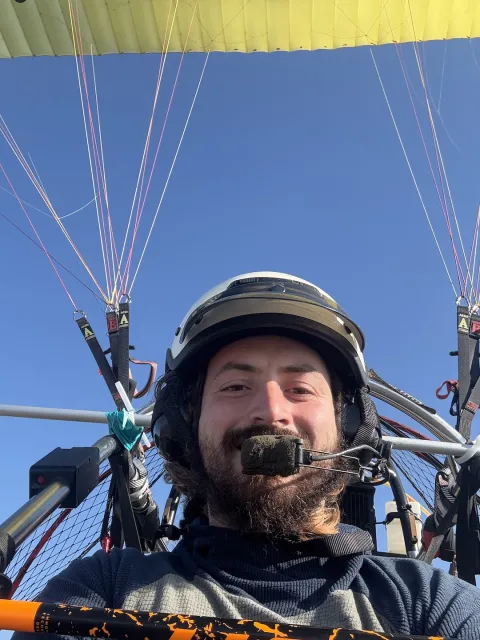
His father won't be able to participate in the 2026 Moth Night, but a UC Davis undergraduate who works with Coggan will be there to discuss light pollution.
The UC Davis Moth Night also will include outdoor backlighting displays, where nocturnal insects will be drawn to ultraviolet lights on a white sheet. One introductory blacklighting display will be headed by John "Moth Man" de Benedictus and will be located near the entrance to the Bohart Museum. The other, a more elaborate display, will be by Joel Hernandez, a UC Davis entomology graduate, from 9:30 to 11:30 in the Shields' Oak Grove, 1 Garrod Drive, UC Davis Arboretum and Public Garden.
The Bohart Museum's home page features an informational video on "blacklighting in a backyard at Davis," by Bohart associate Greg Kareofelas.
Kareofelas and Jeff Smith, curator of the Bohart Museum's worldwide Lepidoptera collection, will show moth specimens and answer questions. Among the other presenters: Turkish doctor Ismail Seker, an expert on silk moths.
"We plan to have live silk moths and hornworms, too," said Tabatha Yang, education and outreach coordinator. The family arts and crafts activity "will be making moth antennae headbands."
The Bohart Museum, founded in 1946, is the home of a global collection of eight million insect specimens, a live petting zoo (including Madagascar hissing cockroaches and stick insects) and an insect-themed gift shop.
Director of the Bohart Museum is Professor Jason Bond, the Evert and Marion Schlinger Endowed Chair of Systematics. He is the executive associate dean of the College of Agricultural and Environmental Sciences and president of the American Arachnological Society.
The Bohart Museum annually celebrates Moth Night, a national observance. During National Moth Week, set July 18-26, communities around the globe "come together to celebrate the beauty, diversity, and ecological importance of moths," according to the organizers.