
"No way!"
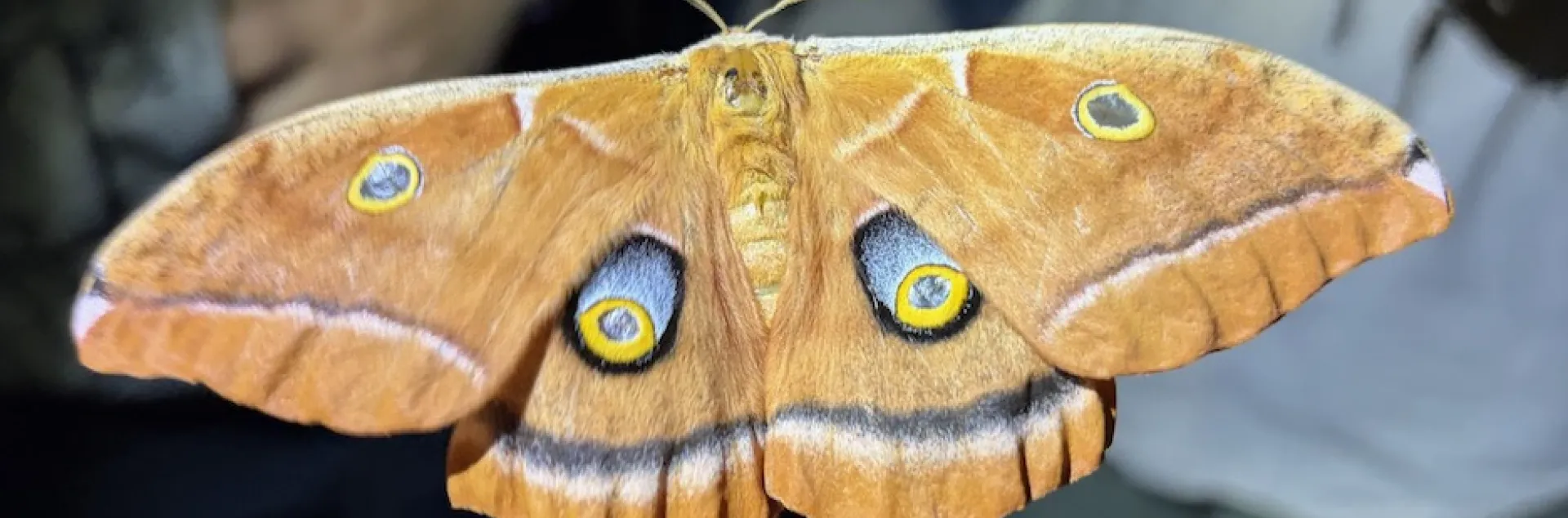
That's what entomologist Joel Hernandez said when a giant silkworm moth fluttered into his backlighting setup on Saturday night, July 18 during the annual Bohart Museum of Entomology Moth Night.
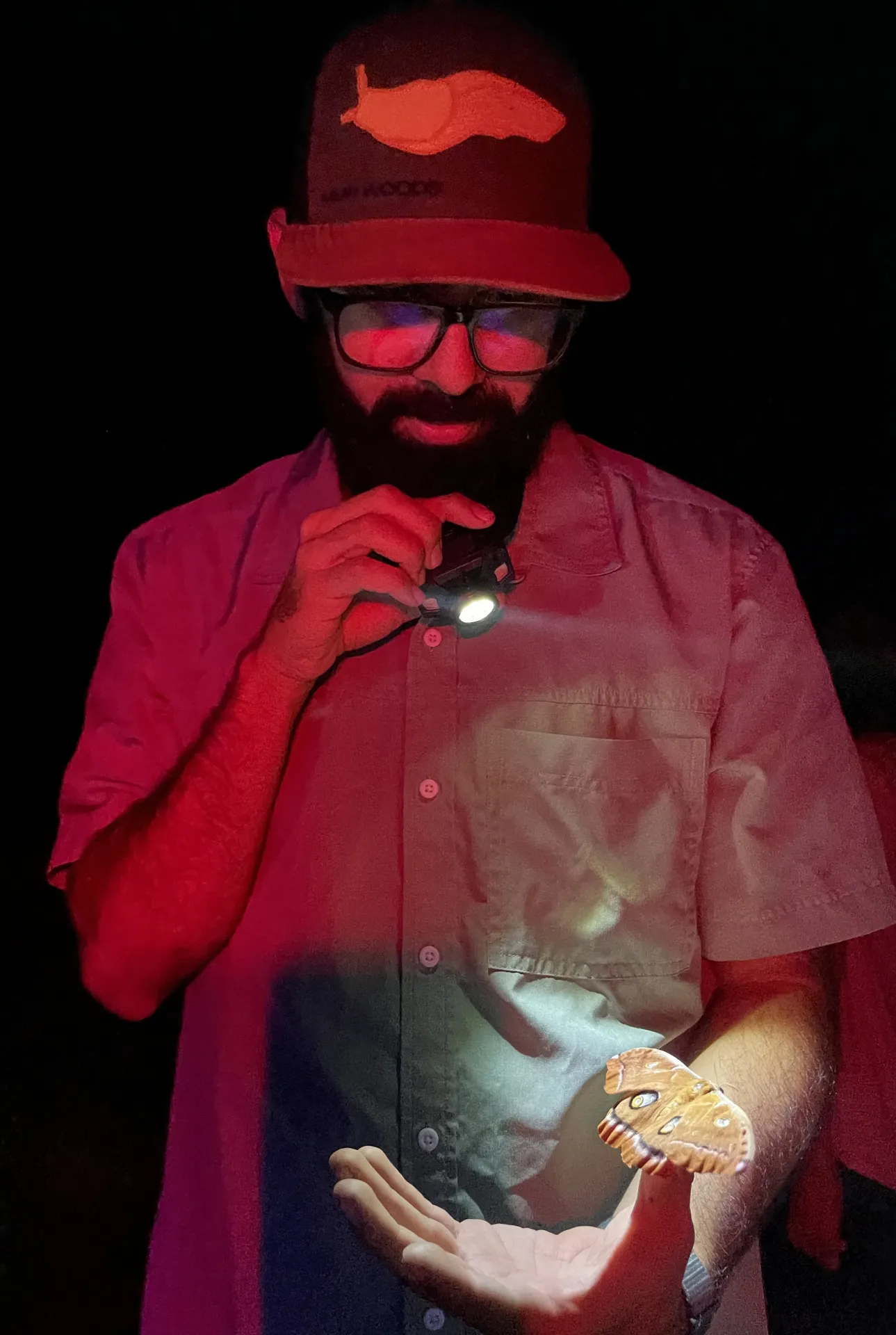
For the occasion, Hernandez, a UC Davis alumnus and agricultural inspector in the Yolo County Ag Commissioner's Office, set up a blacklighting display from 9:30 to 11:30 p.m. in the Shields Oak Grove, UC Davis Arboretum and Public Garden, where he drew scores of moths.
"This giant silkworm moth was the highlight of the evening," said Bohart research associate John "Moth Man" de Benedictus. "Joel cried out 'No way!' when it flew in and there was a roar from the visitors. It landed quietly on the drop cloth beneath the sheets providing a photo op. Joel collected it alive and caged it, giving everyone an opportunity to look at it closely."
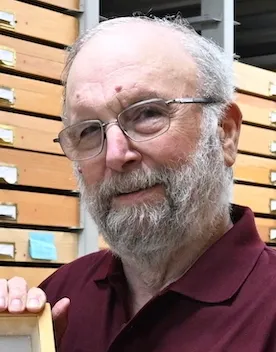
"It is probably more common than collection records suggest in Davis because the peak flight is in the wee hours of the morning, so unseen by most people," de Benedictus said. "Most of the moths that are encountered earlier in the evening are females as was the case with the one that came to Joel's sheet. There are at least two generations per year--possibly three in our region. It is found across the continent and feeds on many trees and shrubs. Joel thinks oaks are the most common foodplant in Davis."
Hernandez's set-up consisted of of "two overlapping sheets with the west-facing sides illuminated by a mercury vapor light and a coil of LED UV lights," de Benedictus commented. "The east-facing side was illuminated by another coil of UV lights and a fluorescent tube that emitted UV and white light. Many more moths flew in than on any Moth NIght set-ups probably due to being distant from any campus lighting. It also drew far more spectators than any previous Moth Night. They crowded around the sheets photographing and collecting some of the insects that flew in. It was often difficult to get close to the sheet because of the spectators, so this is probably an incomplete list of species that flew to the sheets."
Hernandez described the event as "a huge success, with plenty of visitors making observations on the sheet. The surprise to everyone, including myself, was a polyphemus moth making an appearance at the sheet! It was very cool to share that moment with the public and see everyone’s excitement match my own." He maintains a website at https://theadventuresofmothman.net/.
De Benedictus identified the moths (see list on the UC Davis Department of Entomology and Nematology website).
Of the silkworm moth, de Benedictus identified it as Anthaeraea polyphemus:
Family: Saturniidae
1 Anthaeraea polyphemus. "Polyphemus moth. This giant silkworm moth was the highlight of the evening. It landed quietly on the drop cloth beneath the sheets providing a photo op. Joel collected it alive and caged it giving everyone an opportunity to look at it closely. It is probably more common than collection records suggest in Davis because the peak flight is in the wee hours of the morning, so unseen by most people. Most of the moths that are encountered earlier in the evening are females as was the case with the one that came to Joel's sheet. At least two generations per year. Possibly three in our region. It is found across the continent and feeds on many trees and shrubs. Joel thinks oaks are the most common foodplant in Davis."
Common names of some of the moths drawn to the light included a filbertworm moth, garden tort, necklace or belted-grass Venneer, pug moth, alfalfa looper, and assorted cutworm moths. A dusty June beetle and a number of rove beetles also showed up.
The Bohart Museum, founded in 1946, annually marks National Moth Week, which this year is July 18=26.
The Bohart, located in Room 1124 of the Academic Surge Building, 455 Crocker Lane, UC Davis, is the home of a global collection of eight million insect specimens; a live petting zoo (including Madagascar hissing cockroaches, stick insects and tarantulas) and an insect-themed gift shop, stocked with T-shirts, hoodies, books, posters, jewelry, stuffed toy animals, and insect-collecting equipment.
Director of the Bohart Museum is Professor Jason Bond, the Evert and Marion Schlinger Endowed Chair of Systematics. He is the executive associate dean of the College of Agricultural and Environmental Sciences and president of the American Arachnological Society.