

"Open up The Gates!"
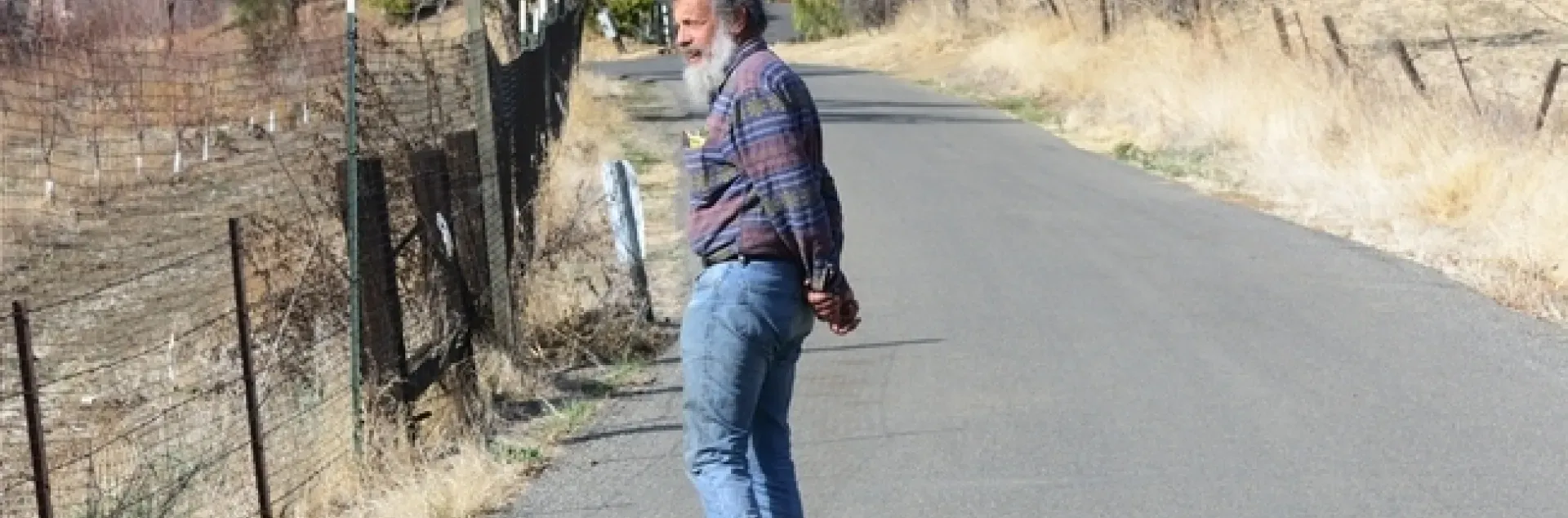
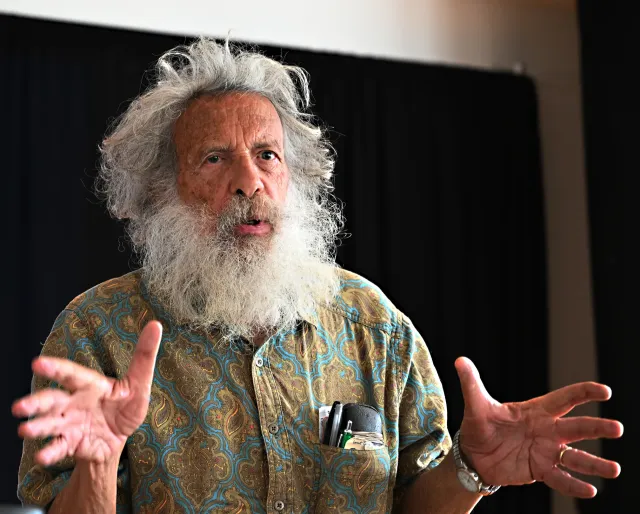
So wrote UC Davis Distinguished Professor (emeritus) Art Shapiro, in an email today to his posse of scientists and friends.
He was referring to Gates Canyon, Vacaville.
Gates Canyon has been part of his butterfly-monitoring research that he launched in central California in 1972. He maintains a research website at https://butterfly.ucdavis.edu/
In the email, Shapiro commented: "I stopped monitoring Gates Canyon after it was devastated by fire on viii.18.20 and have visited sporadically since, once or twice a year. Today a friend (butterfly enthusiast April Kennedy) and I did a 'car-window survey'--we drove slowly up Gates Canyon Road, along the ridgetop, and down Mix Canyon Road."
"The weather was about 75% sun through broken high clouds, 88F, light and variable wind," Shapiro continued. "There was not much in bloom, mostly yellow star thistle, with some Grindelia. On the N-facing slopes in Mix (Canyon), but not Gates, some Aesculus were still in bloom but there was nothing at them. We saw no species in Mix that were not in Gates, and counted only the Gates fauna for comparison with before the fire. I had not been counting individuals before te fire, but we did today. The only comparison to be made, however, is the number of species (and the makeup of the fauna, but I have not gotten to that yet)."
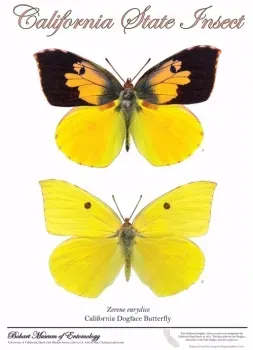
Note the Zerene!
"The Gates count follows: coenia 4, rapae 5, philenor 7, sara female, tullia 18, rutulus 3, tristis 19, acmon 35, eurytheme 7, melinus 1, agricola 1, Z. eurydice 4 males, ericetorum 1 male, zelicaon 1.--14 species. How does this compare with before the fire? Here are the closest date matches for the last 10 years: vii.7.20-12; vii.6.19-15; vii.6.18-16; vii.11.17-19; vii.5.16-15; vii.6.15-18; vii.12.14-11; vii.6.13-12; vii.6.12-19; vii.2.11-16. Thus the number of species today was similar to this week pre-fire. I was very surprised to not see bredowii, lorquini, or any species of Satyrium. Note the Zerene!"
The Zerene he was referring to is Zerene eurydice, the California dogface butterfly, the state insect. It is there because its host plant, false indigo, Amorpha californica, is there.
Fact is, Shapiro earlier worried about the plant's ability to survive.
No Known Fire Resistance
"How quickly can the Gates Canyon fauna recover?" Shapiro asked in an article titled The Fire This Time, the Coast Range Burning, published in the winter 2021 edition of the Lepidopterists' Society newsletter. "Our June trip (2021) showed that many of the species seemingly extirpated in the canyon are still within relatively short dispersal distances to it, and hence able to recolonize if host plants are available...The only species that is almost certainly lost to the fauna is the California dogface, Zerene eurydice, which to our knowledge, bred only in a small tributary canyon with a stand of the host, Amorpha californica. This plant has no known fire resistance. It does not stump-sprout and the whole stand burned."
"At Gates, I would hazard a guess that it will take 20 to possibly 50 years to restore a semblance of the prior fauna. Perhaps half of the fauna might be back within a decade. Very local things like the California dogface (Zerene eurydice) will probably never come back, at least in my lifetime; its host (Amorpha) does not appear to regenerate after fire and its known breeding site in a side canyon was completely charred."
Note that the California dogface butterfly, found only in California, is rarely seen. Most Vacaville residents are unaware of its presence in Gates Canyon. The butterfly thrives especially in the 40-acre Shutamul Bear River Preserve near Auburn, Placer County. The preserve, part of the Placer Land Trust, is closed to the public except for specially arranged tours.
So, good news! False indigo survived and the dogface butterfly is back.
Editor's Note: In 1972 Shapiro launched what is now known as the largest butterfly monitoring dataset in North America and one of the largest in the world. It runs parallel to Interstate 80, with 10 sites distributed from the inner Coast Range, across the Sacramento Valley and the Sierra Nevada, to the western edge of the Great Basin. His sites span a wide range of climates and vegetations, from sea level to treeline at 9000 feet.