
What an intriguing project!
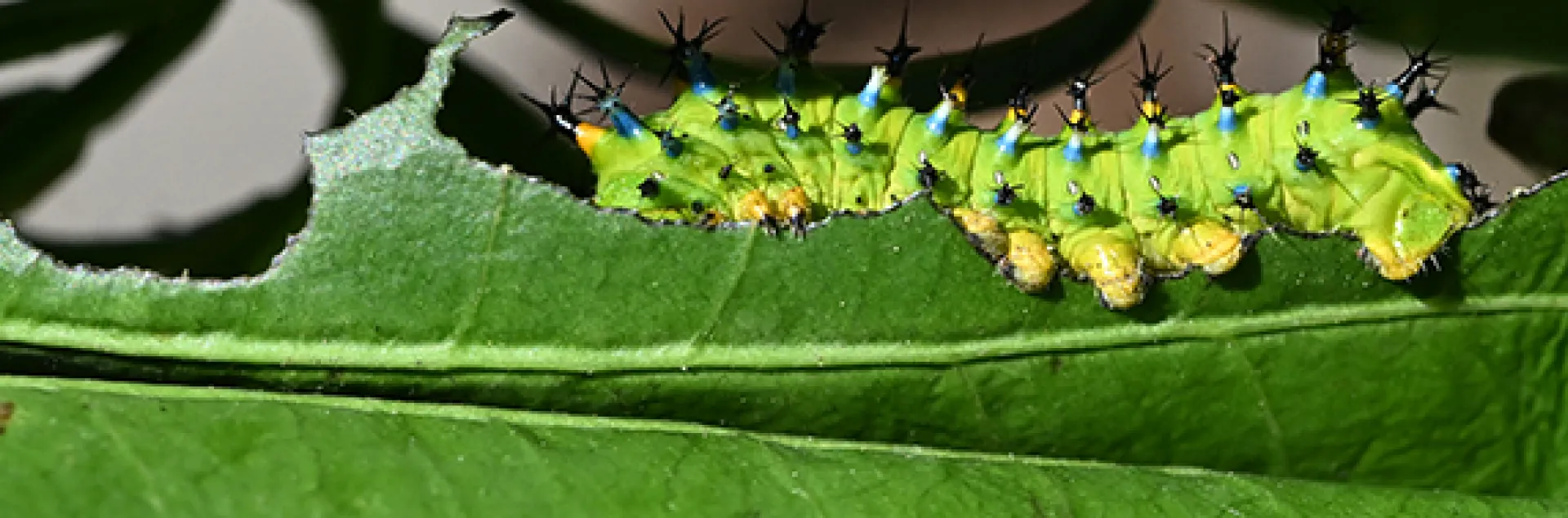
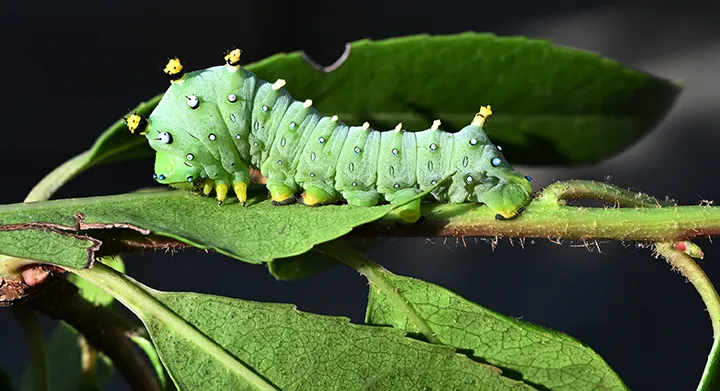
Several of us, including Tabatha Yang, education and outreach coordinator of the Bohart Museum of Entomology, UC Davis, and researcher Brittany Kohler of the Phil Ward and Elizabeth Crone labs, are rearing caterpillars of the Ceanothus silk moth, Hyalophora euryalus.
Lepidopterist and nature photographer Megan McCarty, webmaster of the Lepidopterists' Society, and who has reared Hyalophora for six years, recently hosted a Zoom session to detail the steps involved.
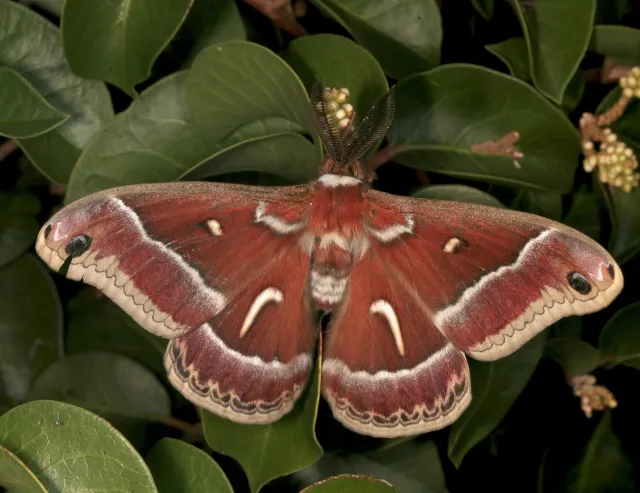
Hopefully, our 'cats will turn into adults, those gorgeous rustic-red and brown moths with crescent-shaped eyespots. This insect is one of North America's largest native moths; its wingspan can measure up to 5 inches. It's commonly spotted across the Pacific Coast from British Columbia down to Baja California.
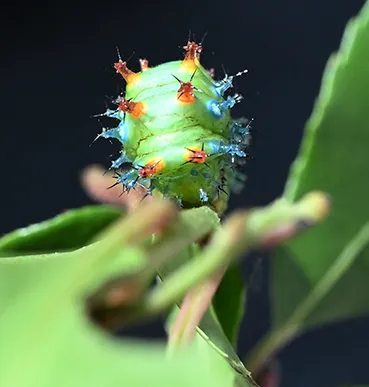
Mine are eating manzanita in their mesh butterfly habitats, but others are munching on Ceanothus. These 'cats are generalists that don't seem all that particular about what's on their menu (but it's recommended you feed them what you started with). Their host plants include red alder, liquidambar, tobacco brush, Douglas fir, madrone, and red flowering currant. (See list of known host plants on calscap.org.)
The 'cats will go through five-instars and then spin a cocoon. When they eclose as adults, they won't be eating; they have no mouthparts. Besides, they are focused on finding a mate. Females lay their eggs on the leaves and branches of host plants. They are univoltines; they produce only one generation of offspring per year.
This species belong to Saturniidae, the saturniids, a family with an estimated 2300 described species. French lepidopterist, botanist, and physician Jean Baptiste Boisduval described euryalus 171 years ago, in 1855.
Entomologist and macro photographer Joel Hernandez, a UC Davis alumnus, posted his experiences rearing these caterpillars on his https://theadventuresofmothman.net/ website: Part 1, Part II, and Part II. He fed his madrone leaves.
In Part 1, Hernandez wrote: "At the beginning of May (2017) I was given about a dozen Hyalophora euryalus eggs from a friend of mine who had been rearing this species last year (2016). I was excited to start this species from eggs and hopefully get them all the way through their life stages. After about a day of having the eggs in my caterpillar cage, they all hatched at the same time. Seeing all these very tiny caterpillars brought me great joy and due to the warm weather my area was having, they began to progress very quickly." (Continue on Part 1. Also check out his amazing website.)
Moth Night at the Bohart Museum
Meanwhile, the Bohart Museum of Entomology is planning its annual Moth Night, set for 7 to 10 p.m., Saturday, July 18 in Room 1124 of the Academic Surge Building, 455 Crocker Lane, UC Davis campus. It's free and family friendly and will include blacklighting, moth displays, a live petting zoo, and a family arts and crafts activity. No reservations are required--just come, talk to the scientists, and learn about the moths. National Moth Week is July 18-26.
Among those scheduled to participate: Bohart associate John "Moth Man" De Benedictis; Jeff Smith, curator of the Bohart Museum's Lepidoptera collection; and Bohart associate Greg Kareofelas, who created the YouTube video below on blacklighting. Hernandez will provide a second blacklighting display at the event, in the Oak Grove of the UC Davis Arboretum and Public Garden.
The Bohart Museum, founded in 1946, houses a global collection of some eight million insect specimens. It also includes a live petting zoo (Madagascar hissing cockroaches, stick insects and more) and an insect-themed gift shop, stocked with T-shirts, hoodies, books, posters, jewelry, toy stuffed insects and arachnids, and insect-collecting equipment.
Director of the Bohart Museum is Professor Jason Bond, the Evert and Marion Schlinger Endowed Chair of Systematics, UC Davis Department of Entomology and Nematology, and the executive associate dean of the College of Agricultural and Environmental Sciences.
For more information on the Bohart Museum, access the website or email bmuseum@ucdavis.edu.
Cover image: Ceanothus silk moth, Hyalophora euryalus, feeding on manzanita. (Photo by Kathy Keatley Garvey)