
Paying tribute to National Pollinator Month...
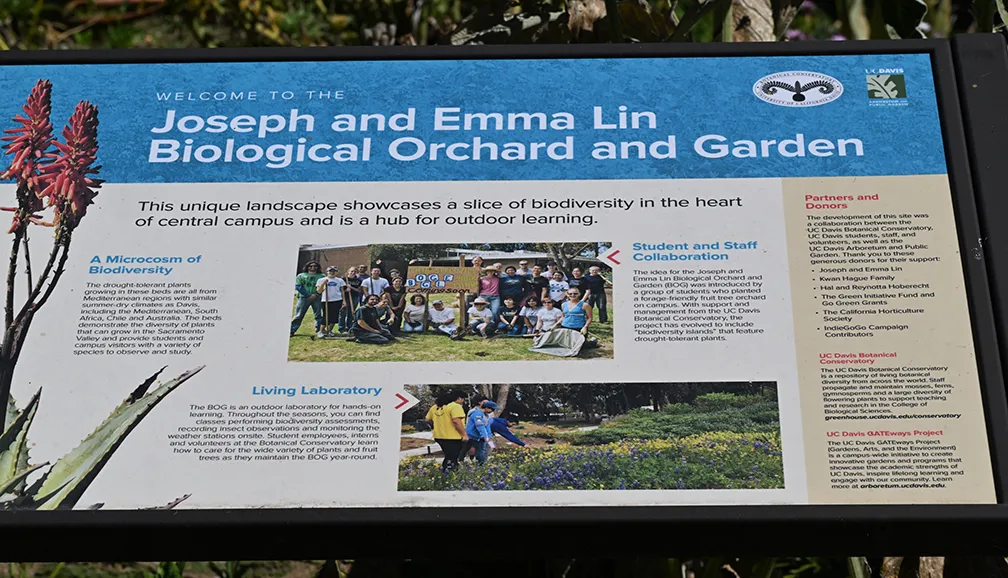
When you visit the Joseph and Emma Lin Biological Orchard and Garden near the Louis K. Mann laboratory on the UC Davis campus, you'll see as the sign says "a slice of biodiversity."
Moving closer, you'll read: "This unique landscape showcases a slice of biodiversity in the heart of central campus and is a hub for outdoor learning."
Other key facts:
A Microcosm of Biodiversity
"The drought-tolerant plants growing in these beds are all from Mediterranean regions with similar summer dry climates as Davis, including the Mediterranean, South Africa, Chile and Australia.
"The beds demonstrate the diversity of plants that can grow in the Sacramento Valley and provide students an campus visitors with a variety of species to observe and study."
Student and Staff Collaboration
"The idea for the Joseph and Emma Lin Biological Orchard and Garden (BOG) was introduced by a group of students who planted a foliage-friendly fruit tree orchard on campus.
"With support and management from the UC Davis Botanical Conservatory, the project has evolved to include 'biodiversity islands' that feature drought-tolerant plants."
Living Laboratory
"The BOG is an outdoor laboratory for hands-on learning. Throughout the seasons, you can find classes performing biodiversity assessments, recording insect observations and monitoring the weather stations onsite. Student employees, interns and volunteers at the Botanical Conservatory learn how to care for the wide variety of plants and fruit trees as they maintain the BOG year-around."
"The development of this site was a collaboration between the UC Davis Botanical Conservatory, many UC Davis students, staff and volunteers and the UC Davis Arboretum and Public Garden."
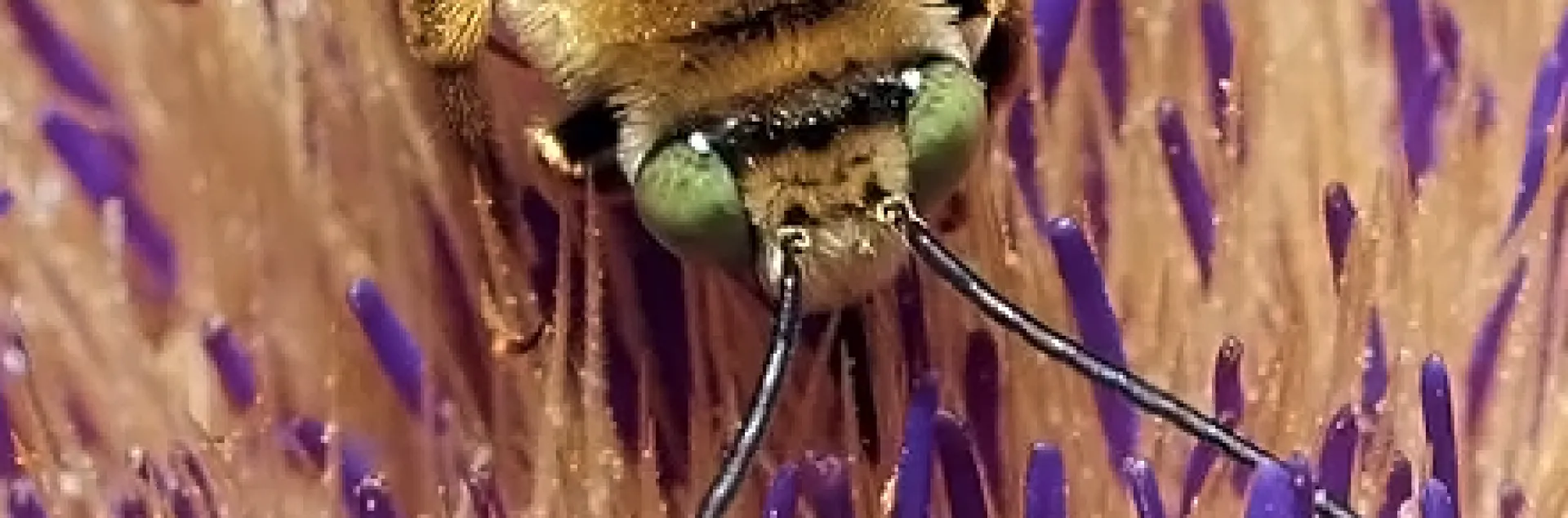
The BOG is a sea of change each time we visit. Sometimes you'll see a bumble bee, Bombus vosnesenskii, foraging on phacelia; a native bee, a Svastra obliqua expurgata, on a flowering artichoke; a cabbage white butterfly, Pieris rapae, fluttering around the landscape; or a honey bee, Apis mellifera, gathering pollen from a California golden poppy. It's a peaceful place to "bee."
Cover image: The eyes of a native bee, Svastra obliqua expurgata, on a flowering artichoke. (Photo by Kathy Keatley Garvey)