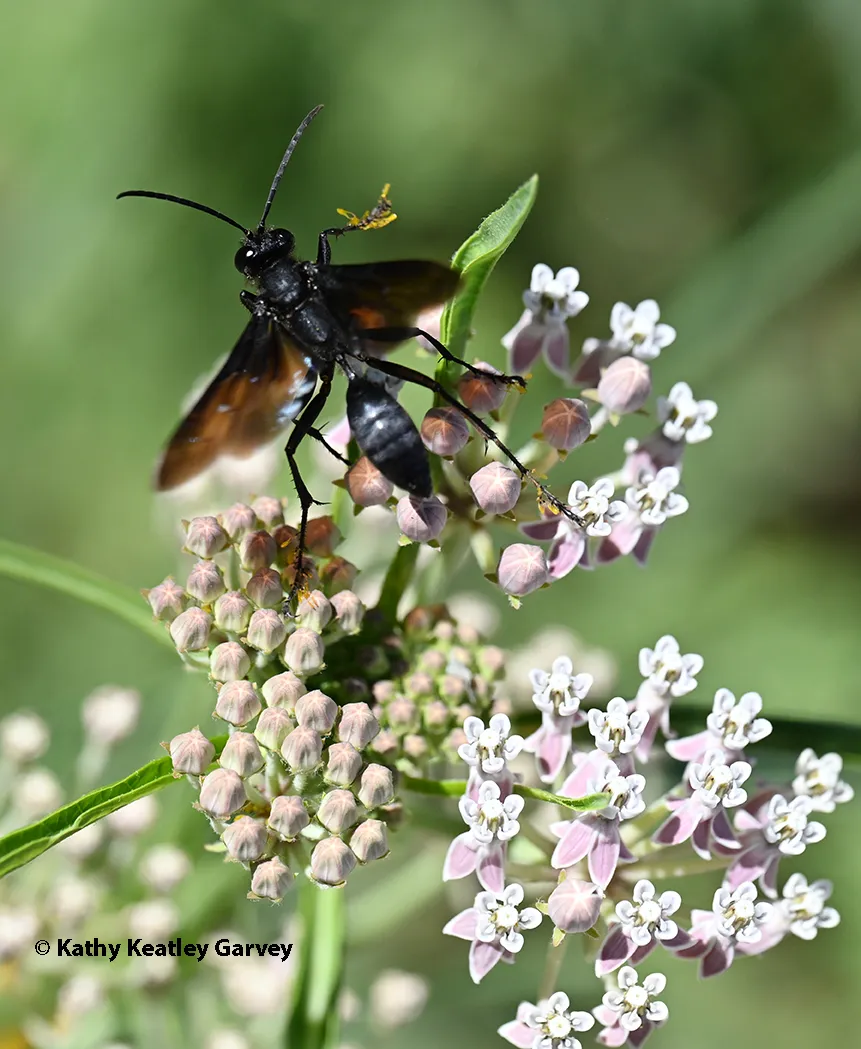
Wasps don't get much recognition as pollinators during National Pollinator Week, June 22-28.
But they are pollinators.
Following her seminar several years ago to the UC Davis Department of Entomology and Nematology, Professor Amy Toth of Iowa State University (#wasplove), known for her expertise in the biology of social bees and wasps, foraging and social behavior, insect nutrition, and genetics and genomics of bees and wasps, told us why we should love wasps.
Her message bears repeating, especially during National Pollinator Week.
1. They are pollinators
2. They contribute to biocontrol of lepidopteran pests in gardens and on decorative plants
3. They have been shown to carry yeasts to winemaking grapes that may be important contributors to the fermentation process and wonderful flavors in wine!
4. They are the only known insect (Polistes fuscatus) that can recognize each other as individuals by their faces.
5. They are devoted mothers that will dote on their young all day long for weeks, defending their families with fury.
6. Their social behavior, in my opinion, is the most human-like of any insect. They know each other as individuals, and are great cooperators overall, but there is an undercurrent of selfishness to their behavior, manifest in nearly constant passive-aggressive interactions between individuals.
7. They are artists. They make perfect hexagonal nest cells out of paper, which they make themselves out of tree bark + saliva.
8. They are extremely intelligent. They're predators, architects, good navigators, and great learners. Among insects, they have large brains, especially the mushroom bodies (learning/memory and cognition area of insect brain).
9. They are beautiful, complex, and fascinating creatures!
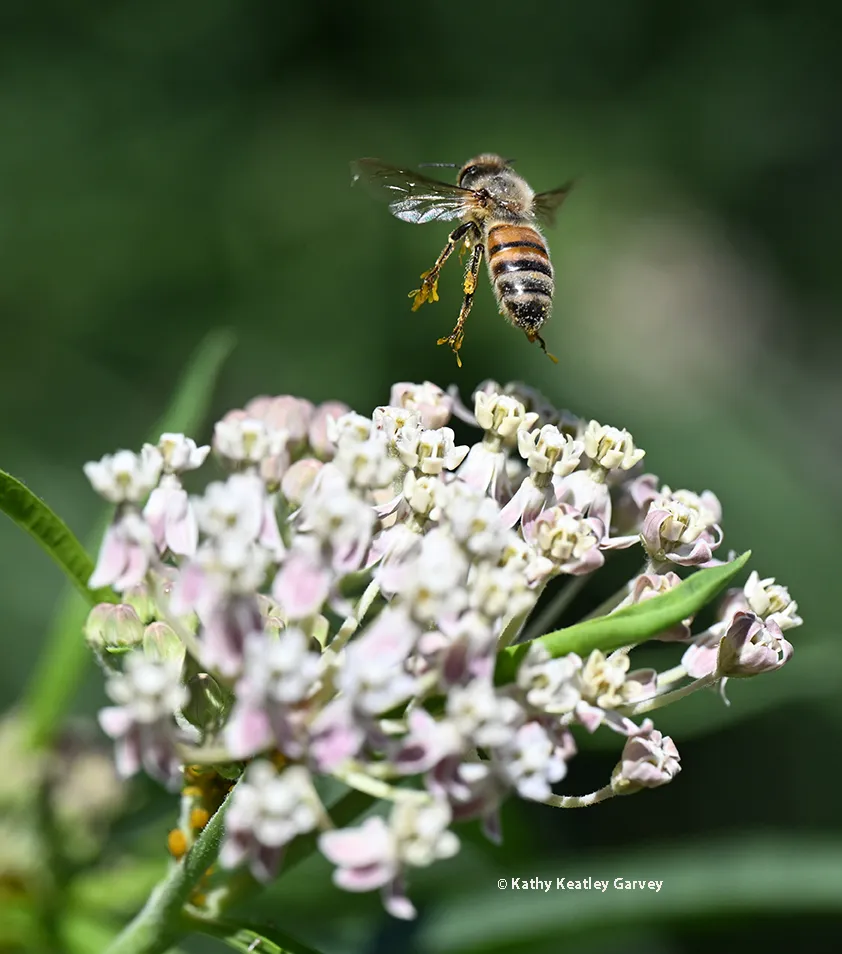
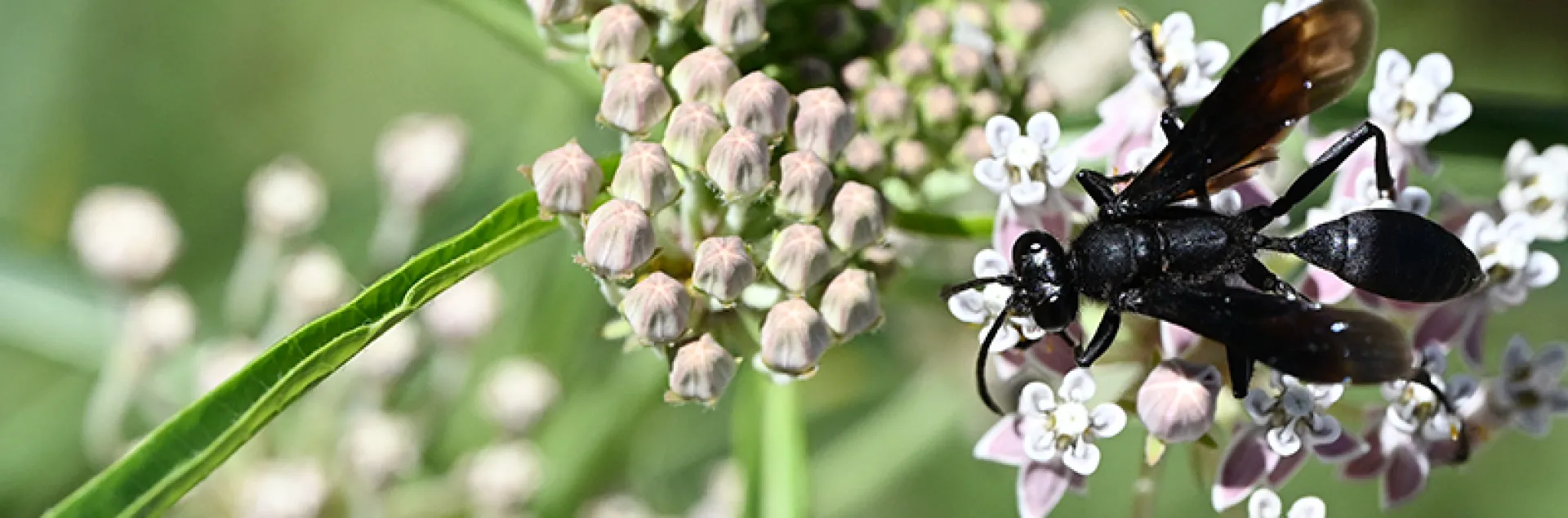
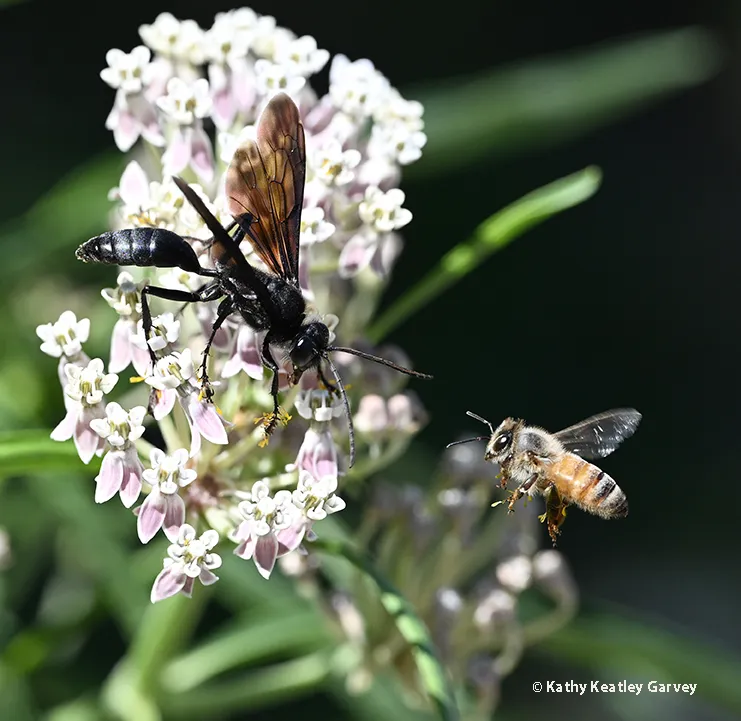
Have you ever seen a wasp eye-to-eye with its cousin, the honey bee? We encountered that scenario that last weekend at the UC Davis Ecological Garden. As a monarch took flight, a hungry wasp began foraging on milkweed. It came face-to-face with its cousin, a honey bee, seeking some nectar. Both had pollinia on their legs.
Both are pollinators.