
The Gulf Fritillary is surprisingly resilient-- except when it's not.
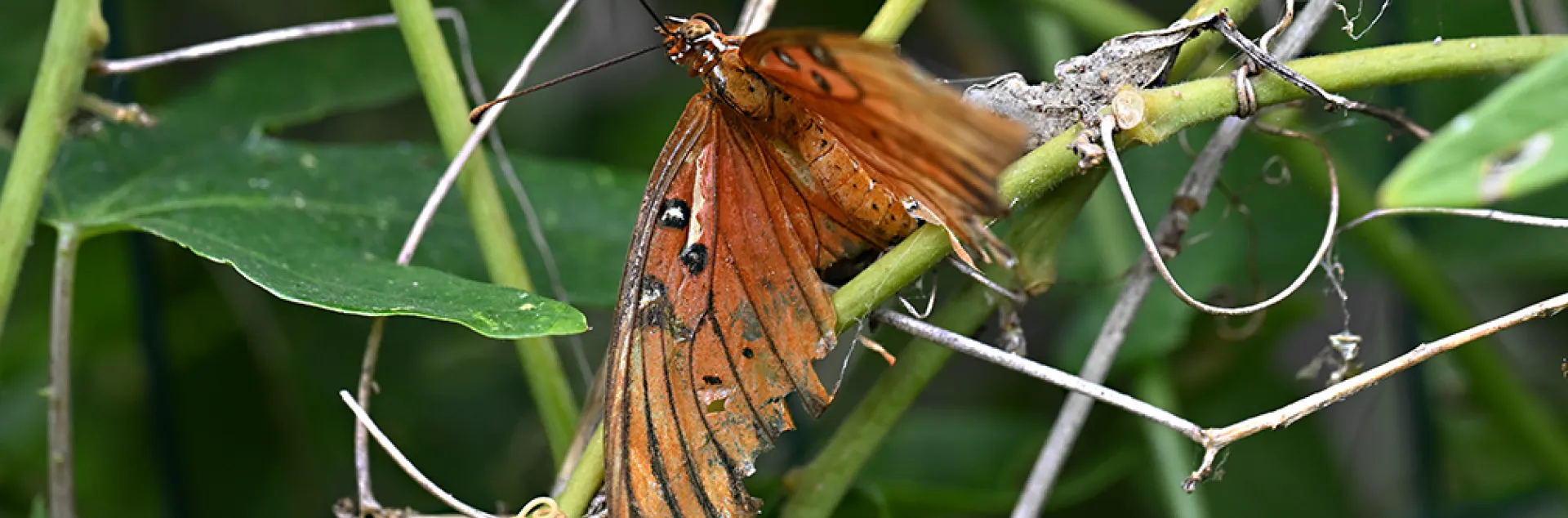
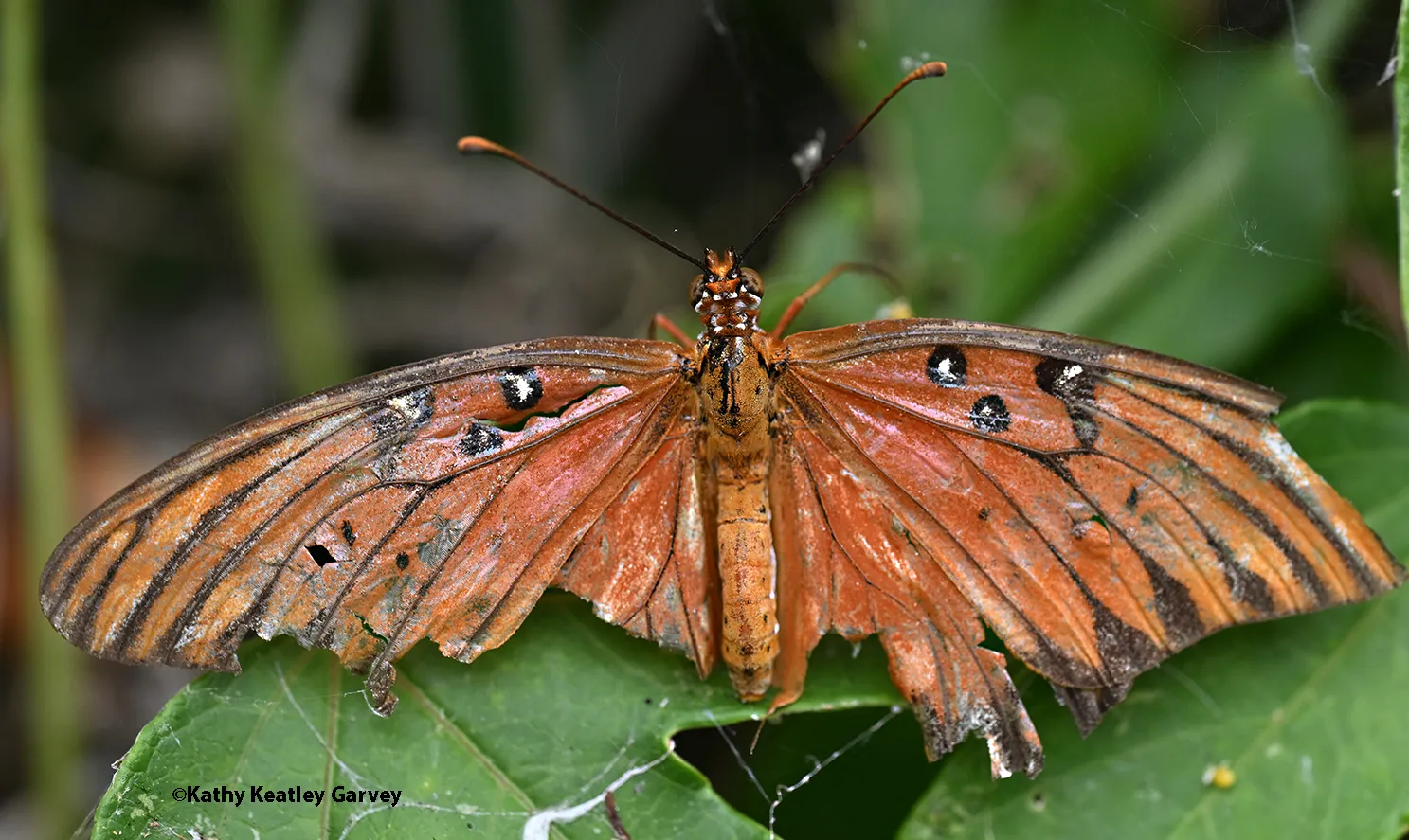
Yesterday we spotted a crippled, tattered and faded Gulf Frit, Agraulis vanillae, lying almost motionless on its host plant, the passionflower vine, Passiflora.
It was apparently a victim of a predator. Maybe a bird? A praying mantis? A cat?
It could not fly and was making no attempt to do so.
A bird may have snagged it but didn't eat it. Frankly, Gulf Fritillaries don't taste good. These butterflies sequester toxic compounds from their host plant.
"Gulf Fritillaries have a chemical defense mechanism in which they release odorous chemicals in response to predator sightings," according to Wikipedia. "As a result, common predators learn to avoid this species."
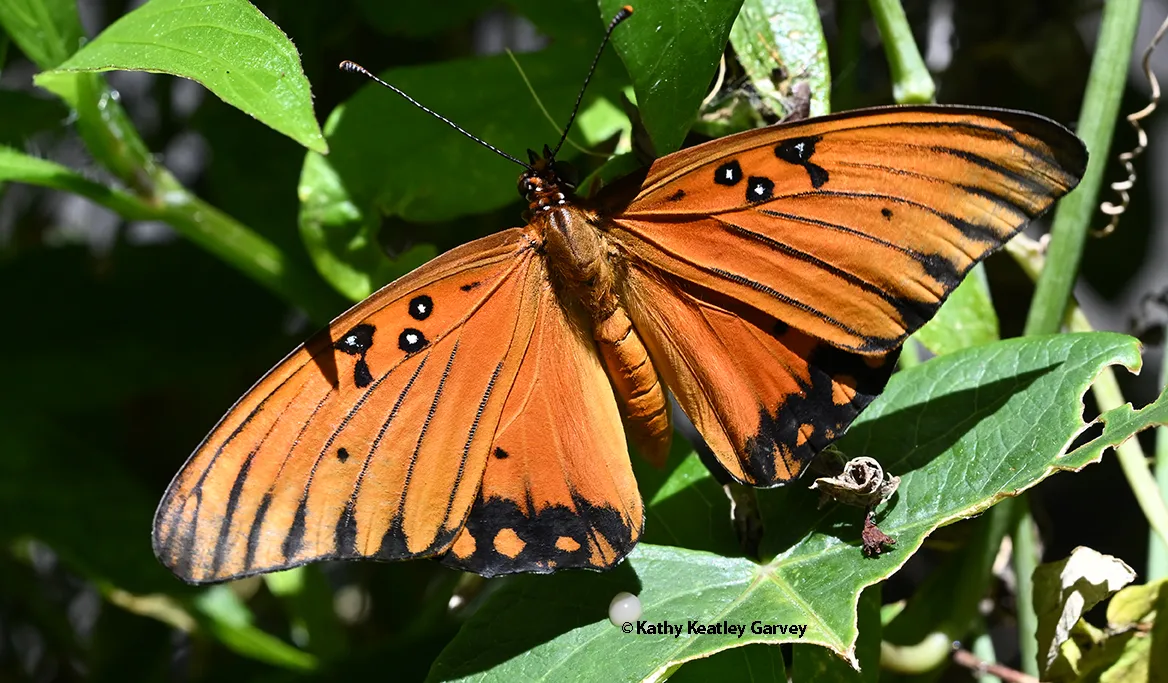
One butterfly dying. And then another butterfly appears, looking newly eclosed. Welcome to the world! Wings up!
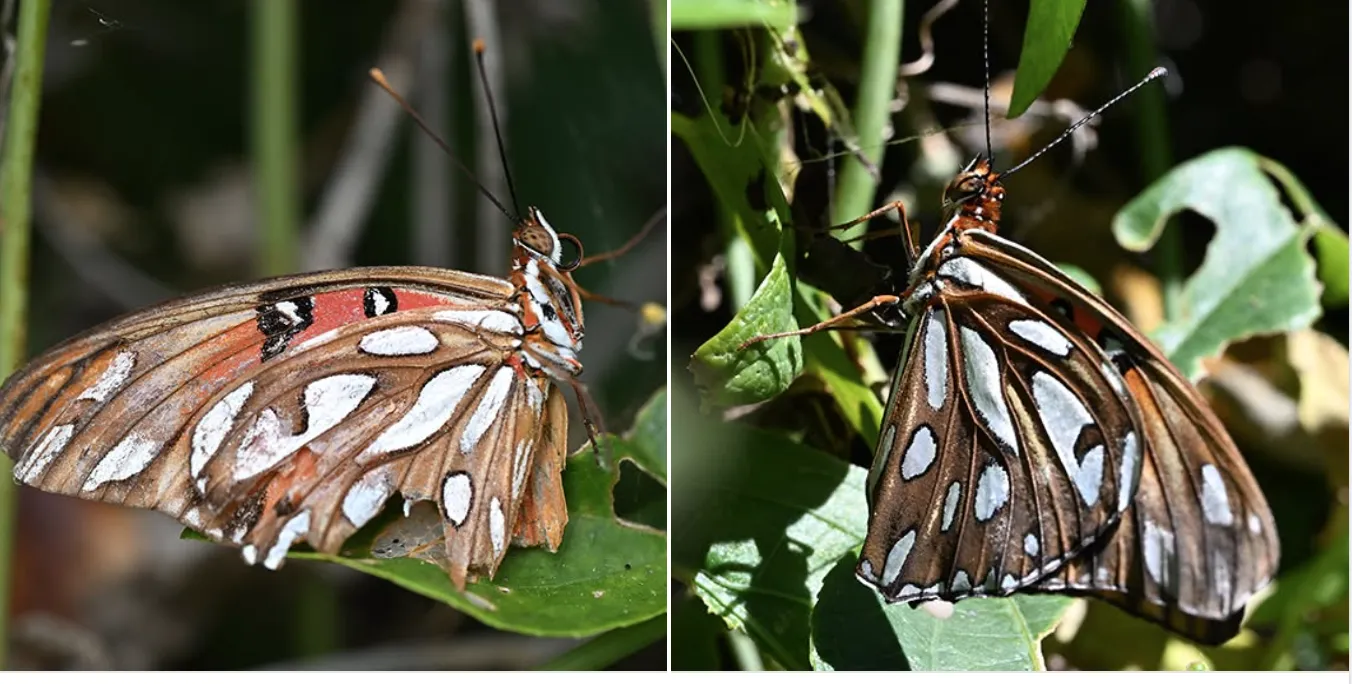
Cover image: Crippled Gulf Fritillary on its host plant, Passiflora. (Photo by Kathy Keatley Garvey)