Bug Squad Logo

Bug Squad

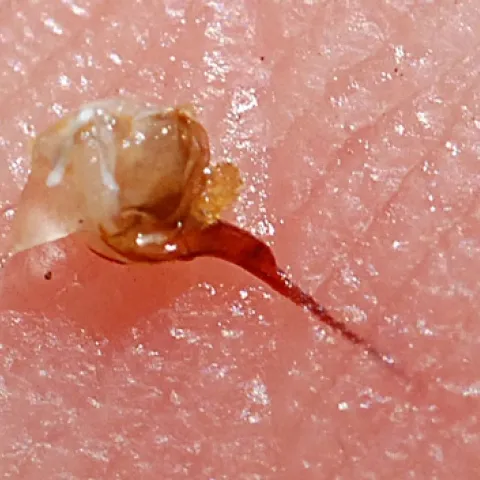
Bug Squad blog image depicts a honey bee sting in action.

Welcome to the Bug Squad blog! The Bug Squad blog was launched Aug. 6, 2008 and is a daily blog (Monday through Friday). It showcases entomologists and the work they do.  The blog focuses on scientists in the UC Davis Department of Entomology and Nematology, the Bohart Museum of Entomology, Harry H. Laidlaw Jr. Honey Bee Research Facility, the UC Davis Bee Haven, and assorted campuswide events, including UC Davis Picnic Day, UC Davis Biodiversity Museum Day, and Bohart Museum open houses. The blog spotlights insects, including bees, butterflies, dragonflies, and praying mantises, as well as arachnids such as jumping spiders and crab spiders. Author and photographer is Kathy Keatley Garvey, communications specialist, UC Davis Department of Entomology and Nematology, and a longtime journalist and community scientist with two degrees from Washington State University.  She is a member of the Entomological Society of America (ESA) and the Association for Communication Excellence (ACE). Her blog posts and images have won international awards from ACE and ESA and appeared on journal and magazine covers. She shoots primarily with a Nikon Z-8 mirrorless camera, a Nikon D500 and Nikon 800, with assorted macro lenses. Feedspot lists it as one of the top entomology blogs on the Internet. 
Primary Image
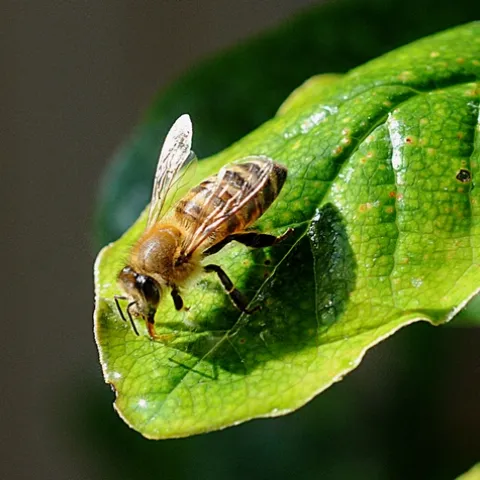
THIS HONEY BEE, sipping water from a leaf, is safe and secure--but not if hordes of Rasberry crazy ants find her. (Photo by Kathy Keatley Garvey)

Beleaguered Bee, Crazy Ant

August 7, 2009
By Kathy Keatley Garvey
It's a crazy world out there. Now our beleaguered honey bee has a new foe: the Rasberry crazy ant, Paratrechina sp. nr. pubens. The Rasberry crazy ant is driving Texans crazy.
View Article
Primary Image
CLOSE-UP of a bee sting. (Photo by Kathy Keatley Garvey)

The Sting

August 6, 2009
By Kathy Keatley Garvey
Beekeepers consider stings just a part of their job. However, say the word "bee" and John Q. and Jane Q. Public may not think about the pollination of fruits, vegetables and nuts. Or the end product: honey. The bee conjures up the "S" word: sting.
View Article
Primary Image
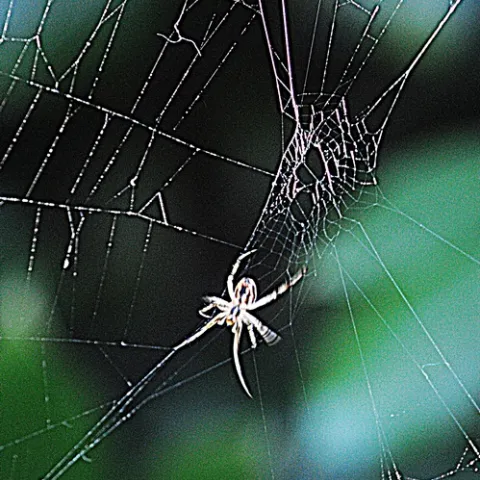
ORB WEAVER at work. The end product is nature's lace and an engineering feat, and, if she's lucky, a feast tonight. (Photo by Kathy Keatley Garvey)

Nature's Lace

August 5, 2009
By Kathy Keatley Garvey
A spider web is nature's lace, a symmetrical work of wonder. Well, a sticky, deadly trap if you're an insect. Then you become just another tasty morsel for the predacious, albeit artistic, spider.
View Article
Primary Image
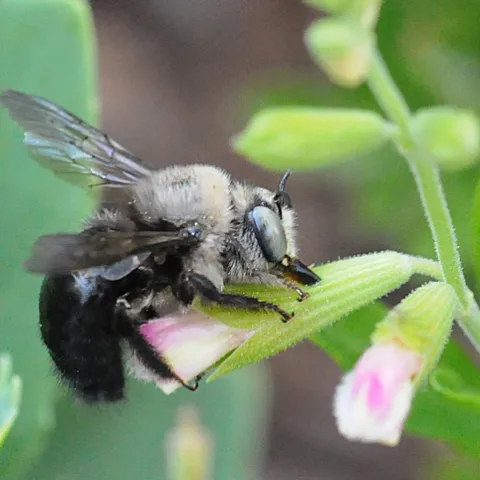
MALE CARPENTER BEE, Xylocopata tabaniformis orpifex, robbing nectar from sage. (Photo by Kathy Keatley Garvey)

Catching up with the Carpenters

August 4, 2009
By Kathy Keatley Garvey
Catching up with the carpenters is not always easy. Not the construction workers--the carpenter bees. They move fast as they buzz from flower to flower. California is home to three carpenter bee species, says native pollinator specialist Robbin Thorp, emeritus professor of entomology at UC Davis.
View Article
Primary Image
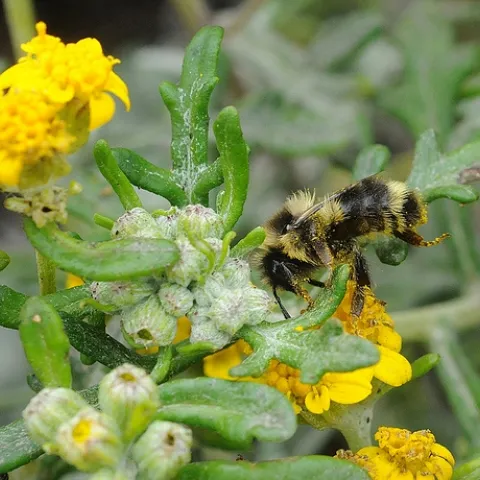
BUMBLE BEE (Bombus bifarious) nectaring coastal goldfields at Bodega Bay. This species is the second most common bumble bee species at Bodega Bay. This is a worker or female. (Photo by Kathy Keatley Garvey)

Bumble Bees at Bodega Bay

August 3, 2009
By Kathy Keatley Garvey
Thars gold in them thar hills. And also bumble bees. If you visit the Sonoma County coastal town of Bodega Bay, and drive up to Bodega Head overlooking the ocean, youll see a carpet of gold flowers known as coastal goldfields or Lasthenia minor.
View Article