Bug Squad Logo

Bug Squad

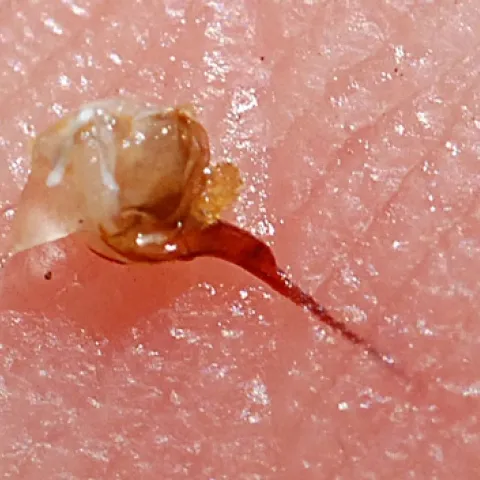
Bug Squad blog image depicts a honey bee sting in action.

Welcome to the Bug Squad blog! The Bug Squad blog was launched Aug. 6, 2008 and is a daily blog (Monday through Friday). It showcases entomologists and the work they do.  The blog focuses on scientists in the UC Davis Department of Entomology and Nematology, the Bohart Museum of Entomology, Harry H. Laidlaw Jr. Honey Bee Research Facility, the UC Davis Bee Haven, and assorted campuswide events, including UC Davis Picnic Day, UC Davis Biodiversity Museum Day, and Bohart Museum open houses. The blog spotlights insects, including bees, butterflies, dragonflies, and praying mantises, as well as arachnids such as jumping spiders and crab spiders. Author and photographer is Kathy Keatley Garvey, communications specialist, UC Davis Department of Entomology and Nematology, and a longtime journalist and community scientist with two degrees from Washington State University.  She is a member of the Entomological Society of America (ESA) and the Association for Communication Excellence (ACE). Her blog posts and images have won international awards from ACE and ESA and appeared on journal and magazine covers. She shoots primarily with a Nikon Z-8 mirrorless camera, a Nikon D500 and Nikon 800, with assorted macro lenses. 

Primary Image
A DAMSELFLY, probably a bluet, perches on a tower of jewels, a bee-friendly plant. Now it's a damselfly-friendly plant. (Photo by Kathy Keatley Garvey)

A Damsel Not in Distress

June 24, 2009
By Kathy Keatley Garvey
They're as long and thin as darning needles. And, sometimes theyre as difficult to find as a needle in the proverbial haystack. These slender, frail-looking insects (below) are damselflies. They fly around ponds and streams and perch on plants near the shoreline.
View Article
Primary Image
HONEY BEE touches down on a bristly oxtongue, a plant considered a noxious weed to people but a treasure to bees. (Photo by Kathy Keatley Garvey)

Noxious or Nice?

June 23, 2009
By Kathy Keatley Garvey
Today, in honor of National Pollinator Week, we turn to the Picris echioides. Picris echioides? You either hate it or love it. Honey bees love it. Gardeners hate it. ?If you plant a lawn with Picris echioides, expect a visit from Code Compliance.
View Article
Primary Image
THE HONEY BEE (Apis mellifera) is a cause for celebration during National Pollinator Week, June 22-28. This honey bee is nectaring sage. (Photo by Kathy Keatley Garvey)

First Garden, First Hives, First Bees

June 22, 2009
By Kathy Keatley Garvey
This week (June 22-28) is National Pollinator Week, and what better time to celebrate the honey bee than now? The White House Victory Garden, planted the first day of spring on part of the South Lawn, now has thousands of new residents: honey bees (Apis mellifera).
View Article
Primary Image
HONEY BEE, one leg extended, heads for the pollen. (Photo by Kathy Keatley Garvey)

Packing 'n Pressing Pollen

June 19, 2009
By Kathy Keatley Garvey
Quick! How many legs does a honey bee have? If you said "three pairs" or "six legs," you'd bee right. But have you ever noticed the honey bee in flight? The worker bee packs pollen in her pollen baskets or corbiculae, located on the midsegments of her outer hind legs.
View Article
Primary Image
BOTTLE-GREEN blow fly, the color of emeralds, on a pink cosmos. (Photo by Kathy Keatley Garvey)

The Bug Stops Here

June 18, 2009
By Kathy Keatley Garvey
President Obama caught a little flak when he smacked a fly during a recent press interview in the White House. During the interview, a pesky fly buzzed around his head and then landed on his hand. Big mistake. The commander-in-chief nailed him. The bug stopped there. "I got the sucker," he said.
View Article