
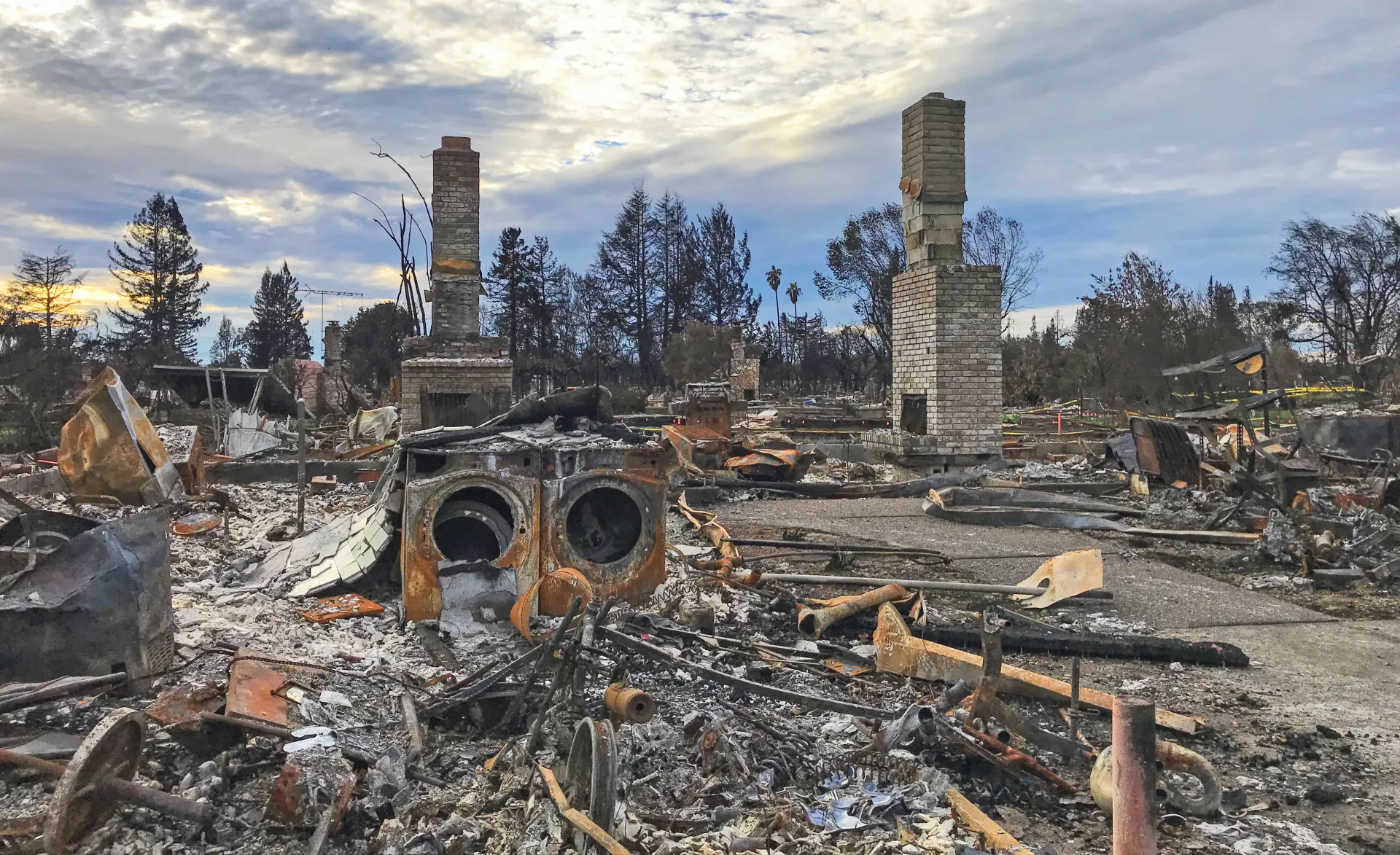
The 2017 Tubbs Fire in Santa Rosa was one of the first widely documented cases of wildfire damage directly to urban water infrastructure. Photo by Faith Kearns
By Faith Kearns, Gregory Pierce, Edith de Guzman, Erik Porse and Jennifer Gorman
In the aftermath of the 2025 Los Angeles fires, local news outlets found themselves publishing explainers on a topic most residents never expected to navigate: the difference between a boil-water notice, a do-not-drink advisory, and a do-not-use order.
For residents trying to return home, the technical distinctions mattered. Could they make coffee? Wash dishes? Take a shower? Fill a pet's water bowl? As water quality testing and recovery efforts progressed, many people first encountered information through news stories, social media posts, neighborhood group chats, and conversations with friends before they encountered an official notice. Even then, the guidance could be difficult to interpret.
This crisis highlighted a reality that extends far beyond any single wildfire. Restoring drinking water quality after a disaster is a major technical challenge. But communicating changing information about risk that helps people understand when they should and should not use household water , and when they can safely trust it again can be just as difficult.
To better understand these challenges, the UCLA Luskin Center for Innovation and the California Institute for Water Resources at UC Agriculture and Natural Resources convened a workshop on May 1, 2026, at the Los Angeles Cleantech Incubator. The event was the third in a four-part series organized through the Urban Water Supply + Fire Research and Policy Coordination Network, a collaborative effort supported by the UCLA Sustainable LA Grand Challenge.
More than 50 participants representing water utilities, regulators, researchers, nonprofit organizations, consultants, and media professionals joined the discussion. The conversations ranged from laboratory testing and regulatory requirements to social media misinformation and community engagement, but four themes consistently emerged.
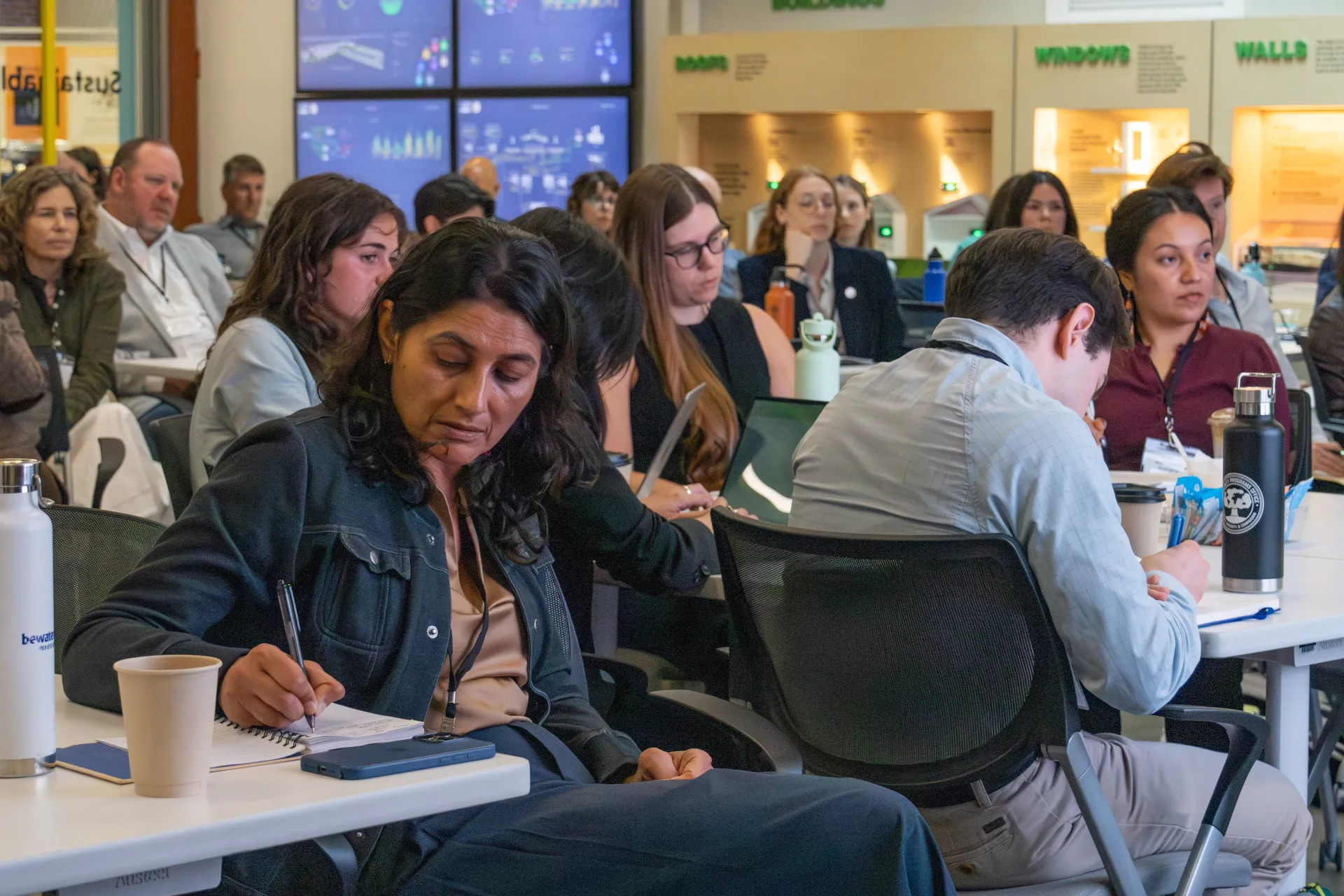
Participants in the workshop included researchers and practitioners from a broad range of fields and institutions. Photo credit: Selin Filiz, Sustainable LA Grand Challenge
Trusted messengers matter as much as technical information
One of the clearest messages from the workshop was that access to information is not the same as trust in information.
Water utilities and public health agencies play a central role in communicating water quality information during disasters. Yet many residents receive and evaluate information through informal networks long before they engage with official sources. Neighbors, community organizations, local media, faith groups, and social media networks often shape how people interpret risks and decide how to respond.
This reality creates both challenges and opportunities. Accurate information can spread quickly through trusted community networks, but so can confusion, misinformation, and outdated information. Participants emphasized the importance of building relationships with community-based organizations and other trusted messengers before disasters occur rather than relying solely on emergency communications after a crisis begins.
The discussion also highlighted a need for greater investment in communications capacity. Water systems are often expected to communicate effectively across multiple platforms and audiences during emergencies, yet most lack the staffing and resources needed to do so, especially when those resources are directed toward protecting or restoring services after a disaster. Effective communication increasingly requires specialized skills and long-term engagement strategies.
Wildfire-related water communications face a unique trust challenge
Most public communications about drinking water aim to reassure people that their water is safe. Wildfire-related impacts to water quality create a very different challenge.
When contamination is suspected during or after a wildfire event, water systems need residents to stop using their tap water or limit certain uses. Yet once testing and restoration efforts are complete, those same systems face the task of urging residents to quickly regain confidence and return to normal use. In other words, agencies must encourage temporary distrust of drinking water and then rebuild trust again, often within a matter of weeks or months.
Workshop participants noted that water managers still have a limited understanding about how residents’ views of tap water trust change following events. Do residents fully regain confidence after a “do-not-drink” advisory is lifted? How long do concerns persist? Are some communities more likely than others to continue avoiding tap water?
These questions matter because trust influences not only public health outcomes, but also household costs and behaviors. If residents continue relying on bottled water long after water quality has been restored, the consequences can extend well beyond the immediate disaster period.
The workshop underscored that trust is rarely built during an emergency. Instead, it is often the product of relationships, credibility, and engagement established long before a wildfire occurs.
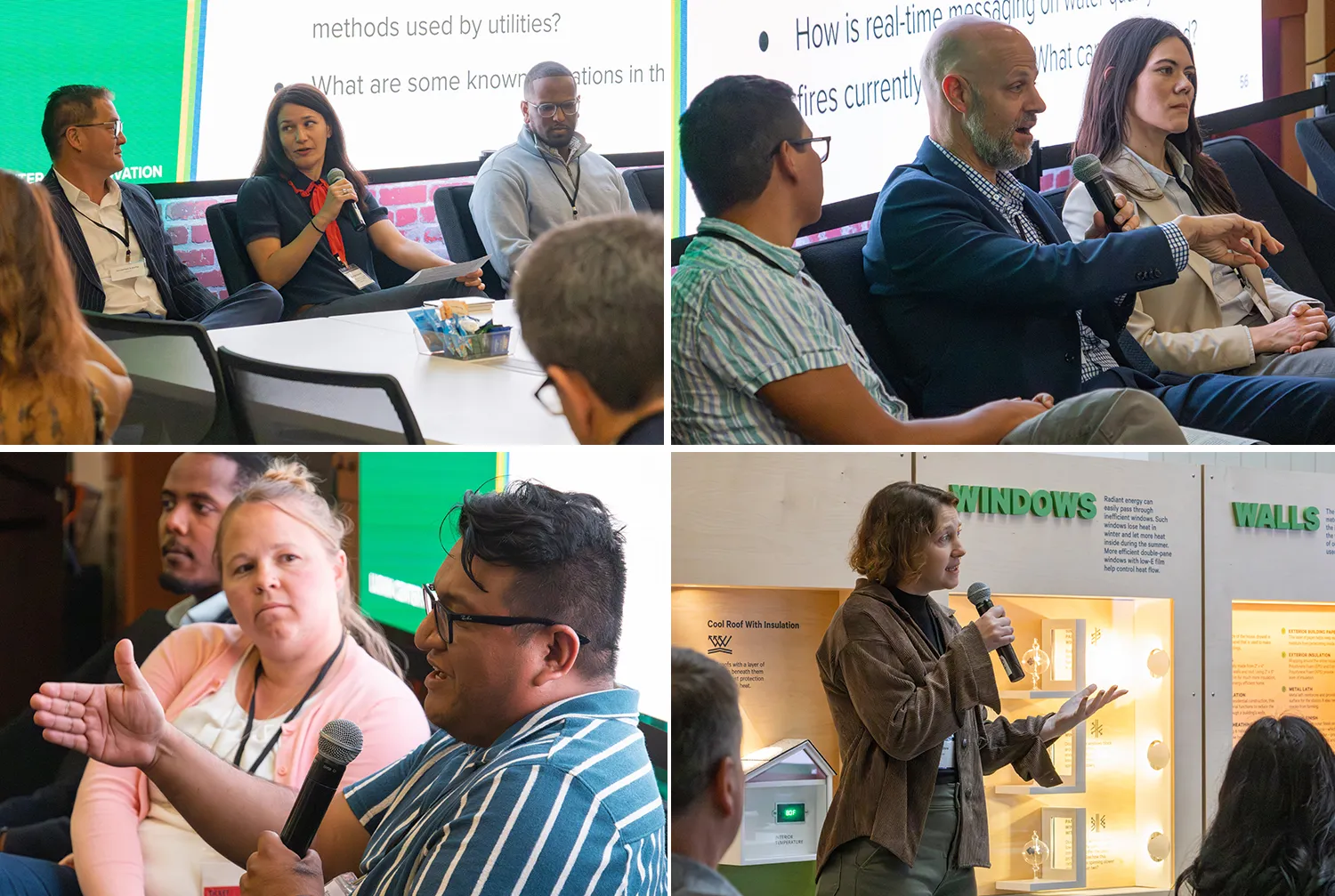
Panelists at the workshop focused on public confidence in water post-wildfires. Photo credit: Selin Filiz, Sustainable LA Grand Challenge
We still know surprisingly little about how people respond to messages
Although significant research has been conducted on wildfire impacts to drinking water systems, much less is known about how households respond to water quality advisories and restoration efforts.
Participants discussed evidence from other disaster types, including hurricanes, freezes, and earthquakes, where bottled water purchases and emergency spending often increase dramatically. Yet relatively little research has examined whether wildfire-related water quality incidents produce similar patterns, how long behavioral changes persist, or how they interact with preexisting concerns about tap water quality.
Several participants pointed to a broader gap in understanding public confidence itself. While utilities and researchers increasingly recognize trust as an important outcome — which is widely perceived to be worsening— there is little consensus on how trust should be measured or tracked.
The workshop highlighted promising approaches, including community-based testing programs, neighborhood ambassador initiatives, trusted-messenger partnerships, and efforts to provide residents with individualized water quality information. However, evidence regarding which approaches most effectively improve public confidence remains limited.
Participants emphasized the need for more research that moves beyond assumptions about what people need to know and instead focuses on how people actually receive, interpret, and act on information during and after disasters.
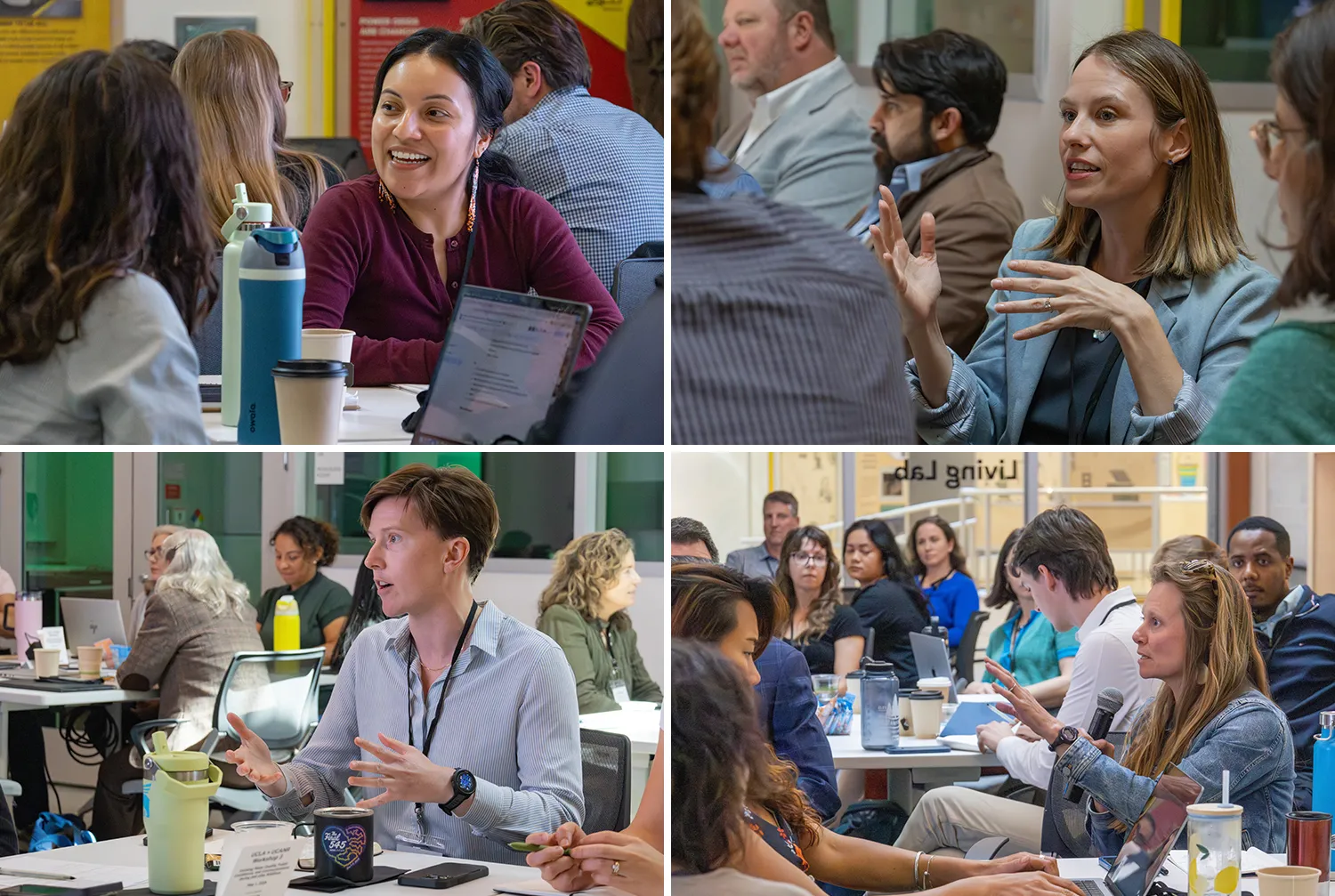
Participants at the workshop had many animated conversations about public confidence in water post-wildfires. Photo credit: Selin Filiz, Sustainable LA Grand Challenge
Progress has been significant, but capacity constraints remain
The past decade has seen major advances in the science of wildfire-related drinking water contamination as well as successful policy and emergency responses. Experiences from major fires in California, including the 2017 Tubbs Fire and 2018 Camp Fire, and other western states from Colorado to Oregon have led to improvements in testing protocols, restoration practices, operational guidance, and scientific understanding. Many participants agreed that the water sector has much more guidance available for preparedness actions today than it did a decade ago.
At the same time, workshop discussions repeatedly returned to the gap between ideal practices and available resources.
In theory, extensive testing, rapid laboratory analysis, broad customer outreach, and quick restoration are desirable goals. In practice, water systems and public agencies often face staffing limitations, laboratory bottlenecks, severe funding constraints, and competing emergency priorities.
Participants also discussed tensions between regulatory requirements and operational realities. Public health protections must remain paramount, but major disasters can create circumstances where rigid processes do not align with the urgency of restoring service and helping communities recover.
As wildfire risks continue to grow and public resources dwindle, the gap between ideal restoration scenarios and the on-the-ground political and economic realities is likely to become increasingly important for utilities, regulators, and policymakers alike.
Looking ahead
Recent wildfires have intensified attention on how fires affect drinking water systems. Yet the workshop highlighted that technical questions are only part of the story.
Equally important are the practical and social dimensions of recovery. How do people interpret risk? Who do they trust? Which messages result in informed action? And what kinds of relationships and institutional capacity are needed before a disaster occurs?
Participants consistently noted to a simple observation: effective disaster communication depends on social infrastructure that is built long before a disaster begins. Trusted relationships, community partnerships, communication capacity, and public confidence cannot be created overnight.
As wildfires become more frequent and severe across the western United States, answering these questions will become increasingly important. The science of wildfire impacts on drinking water quality continues to evolve. So too must our understanding of how to communicate those risks, and how to rebuild confidence once the danger has passed.
A forthcoming synthesis report from the Urban Water Supply + Fire Research and Policy Coordination Network, scheduled for release in Fall 2026, will explore these issues in greater detail and identify opportunities for future research, policy development, and practice.
About the Authors
Faith Kearns is a scientist and research communication practitioner, the Director of Research Communication with the Arizona Water Innovation Initiative, and an Affiliate Scholar with the UCLA Luskin Center for Innovation.
Greg Pierce is the Senior Director of the Luskin Center for Innovation, an Associate Professor in Residence at UCLA's Department of Urban Planning, and the director of the Human Right to Water Solutions Lab.
Edith de Guzman is a Water Equity and Adaptation Policy Cooperative Extension Specialist based in UCLA's Luskin Center for Innovation.
Erik Porse is the Director of the California Institute for Water Resources and an Associate Cooperative Extension Specialist in UC ANR.
Jennifer Gorman is a Graduate Student Researcher (Master of Public Policy) in UCLA's Luskin Center for Innovation.