
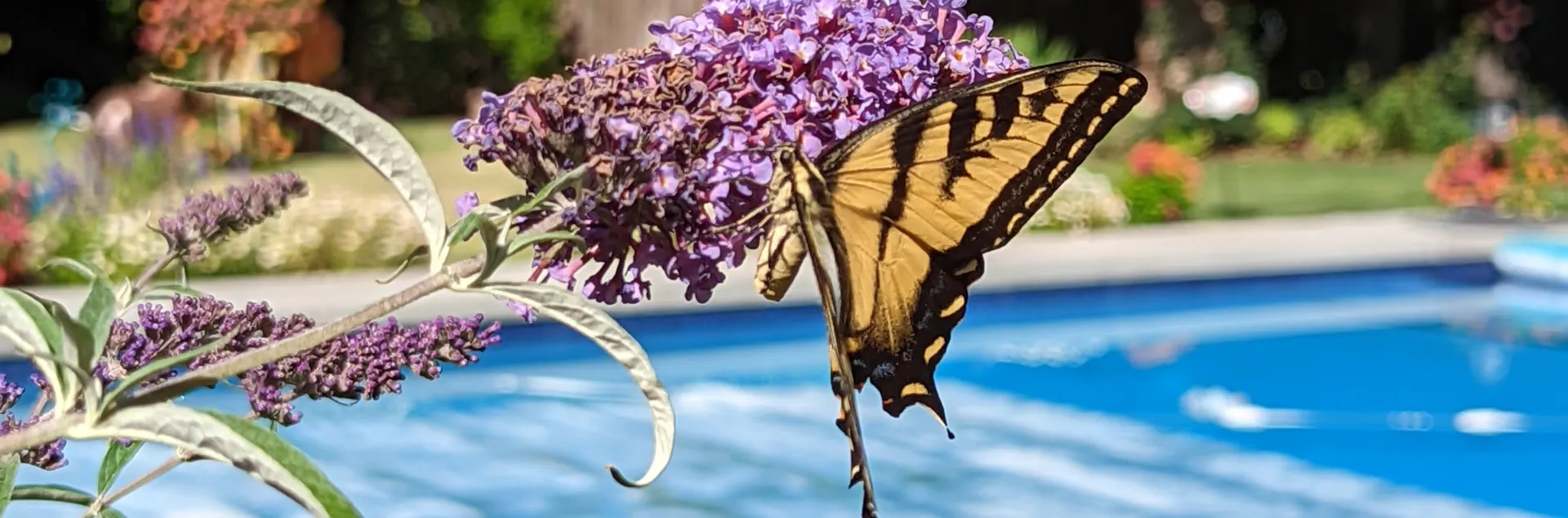

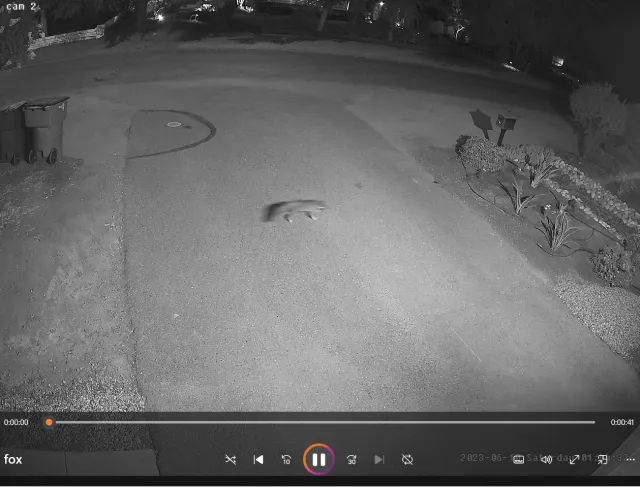
Even in urban areas, your backyard can be a refuge for wildlife – birds, butterflies, beneficial insects, rabbits, snakes and even the occasional red fox or racoon. That’s what UC Master Gardener Alexis Valentin has learned in her efforts to turn the area surrounding her Fresno home into a welcoming place for natural creatures, including a red fox she caught on her doorbell camera.
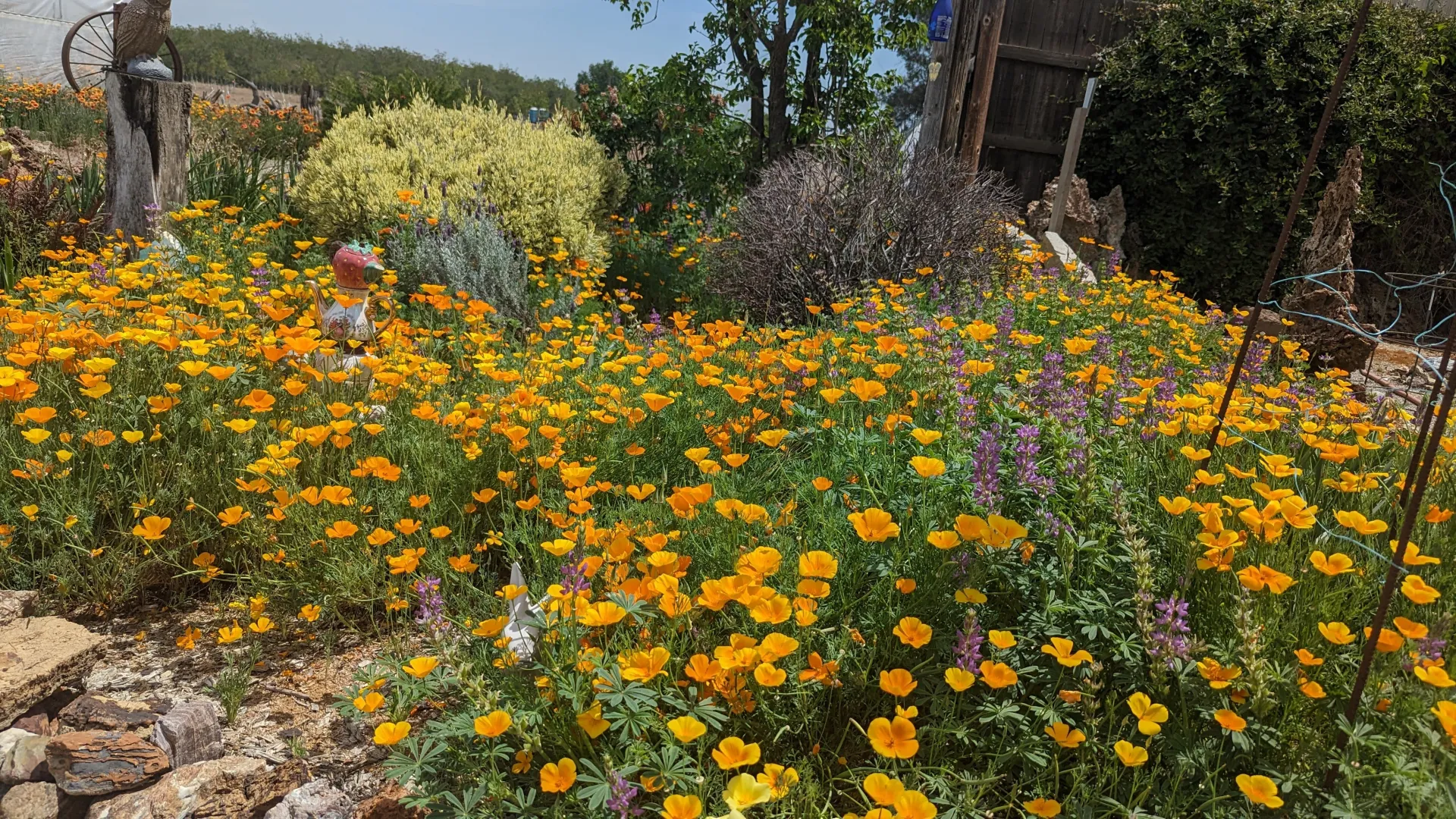
One of the ways to attract wildlife is to let the garden go a little wild, she said. Limit the amount of manicured lawn and instead fill the yard with a diversity of plants, especially those native to California. Provide dead snags for birds to perch and brush piles for animals to hide. Leave a layer of leaves or other organic mulch on the soil, creating a habitat for grubs and worms, a food source for wildlife.
Wildlife attracters include showy milkweed, Western redbud, California goldenrod and wooly buckwheat, to name a few. If the backyard is large, consider a Valley oak, a shelter for owls, birds, bats and other animals plus a food source for animals that forage for acorns. Wildflower seed mixes, readily available online, can be used to fill in an attractive wildlife habitat.
“Feed wildlife by growing fruit trees, berries and nuts,” Valentin said. “In the vegetable garden, allow some of the plants to bolt and go to seed. Leave native grasses growing between your plants, providing seeds for wildlife. You may even want to leave out some rotting fruit.”
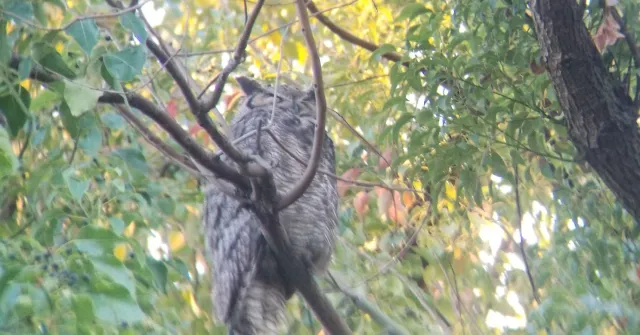
Bird feeders, bee logs, bat and owl boxes may be added to the garden to make the area a resource for wild animals. Drill 3/8-inch holes 3 to 4 inches deep in a log to provide a nesting site for carpenter and other bees. Ground-nesting bees need areas of bare soil or ground that is lightly covered with organic materials. Follow the links for plans to make bat roosts, wild bird boxes , and barn owl boxes.
Wildlife will also need a water source. A backyard pool meets that need. A running fountain, small pond or frequently refreshed bird bath or water saucer will attract wildlife. To prevent mosquitoes from breeding, add mosquito fish to ponds and “mosquito dunks” to fountains and other water features.
A crucial component of wildlife-friendly gardening is eliminating pesticide sprays. Pesticides disturb a natural balance in the garden ecology, in which bats and opossums help control unwanted animals and insects, such as rats, mice, ticks, cockroaches, snails and slugs. Pesticide sprays don’t discriminate. Pesticides may kill pests, but the beneficial insects – such as ladybugs, lacewings and praying mantises - are impacted just the same.
Rat and gopher poisons are equally harmful. The poisons cause a slow, agonizing death for the animals. Predator animals, like hawks, foxes, coyotes, opossums, dogs and cats, may eat poisoned rodents and suffer from dangerous secondary poisoning.
In general, imitate nature in planning and maintaining the garden to restore wildlife habitat to animals, insects, reptiles and arthropods that are being displaced in urban areas.
______________________
Written by UC Master Gardener Jeannette Warnert