
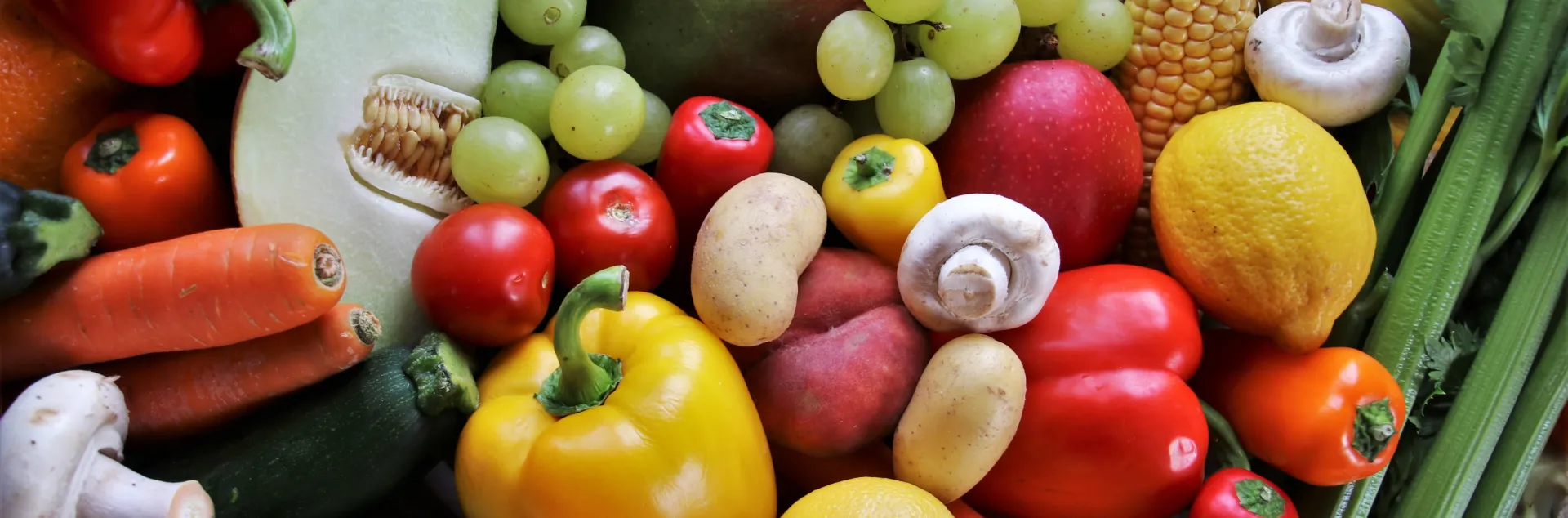
It’s officially summer! Farmer’s markets, roadside stands and grocery store produce sections are overflowing with an abundance of seasonal fruits and vegetables. Incorporating a variety of produce of all shades can help you meet your vitamin and mineral needs. But what makes these foods so colorful? Most of the vibrant colors in fruits and vegetables are a result of plant pigments. These natural chemicals help the plant to grow, and as a wonderful secondary effect, they can also have health benefits when we eat the plants.
Red
Betalain is a red pigment which can be found in beets. Some studies have shown that betalain can improve blood sugar regulation, cognitive function, and liver health.
Lycopene is another red pigment that was first discovered in tomatoes. It is also found in some dark orange and pink foods such as carrots, pumpkin, grapefruit and papaya. Lycopene counteracts oxidative stress to fight diabetes, neurodegenerative diseases and heart disease. Heat increases the concentration and absorption of lycopene, so the best way to reap its numerous health benefits is to cook the foods. Making tomato sauce, carrot soup, or pumpkin pie are all great ways to get more lycopene!
Orange

Beta carotene, better known as Vitamin A, is the primary source of orange pigments. This carotenoid famously helps with eye function and night vision. You can find it in carrots, orange peppers, sweet potatoes and apricots. As a fat-soluble vitamin, it is best absorbed from food when paired with healthy fats. Try roasting sweet potatoes with olive oil, or eating sliced peppers and carrots with hummus or guacamole.
Yellow
Two other superstar pigments that improve vision are lutein and zeaxanthin. These lesser known carotenoids absorb harmful blue light to protect not only your eyes but also your skin. Studies show that these nutrients improve skin hydration and reduce inflammation. Lutein also plays a crucial role in brain tissue and could help with reasoning skills and memory. Oranges, squash, yellow peppers corn are great sources of both lutein and zeaxanthin.
Green
Chlorophylls are complex molecules that are especially high in minerals, vitamins, and essential fatty acids. These nutritional powerhouses are full of vitamins E, A, C, K, as well as magnesium, potassium, iron, and calcium. All plant foods contain chlorophyll, which helps the plant convert sunlight into energy, but they are especially rich in leafy greens and algae. Add dark greens like spinach, kale, and collards to your meals. You can also try popular algae foods such spirulina, Sushi Nori or kombu!
Blue and purple
Anthocyanins, are responsible for the deep purple hues of cherries, berries, and “red” cabbage and onion. Because of this vibrant color, anthocyanins are being used to make natural food and cosmetic colorings. They are a type of Flavonoid, which are powerful antioxidants and can bind to toxic metals and remove them from your body. For centuries, humans have observed that plants with these compounds help reduce inflammation, allergy symptoms, viral infections, and cancer while also protecting the liver and circulatory system.
Sources
Krishnakripa P, Thoppil JE. Beyond a pigment- a review on the beneficial aspects of anthocyanins, chlorophylls, carotenoids, and betalains. Vegetos. 2026. https://doi.org/10.1007/s42535-025-01166-5
Bin-Jumah MN, Nadeem MS, et al. Lycopene: A Natural Arsenal in the War against Oxidative Stress and Cardiovascular Diseases. Antioxidants. 2022. https://www.mdpi.com/2076-3921/11/2/232
What Is Lutein? Learn About Its Health Benefits. Cleveland Clinic- Nutrition. 2024. https://health.clevelandclinic.org/lutein