
One of the special things about our Mediterranean climate is being able to grow edible plants year-round. Even as we are harvesting beautiful tomatoes, in August it’s time to start planning for cool weather gardens.
There is a long list of cool season vegetables, including lettuce, brassicas like broccoli, cauliflower, cabbage, and kale, greens including spinach and chard, and peas. Here we’re going to focus on root vegetables, specifically carrots, beets, turnips and radishes. This is because these vegetables need to be direct sown—that is, grown in the bed or container from seed rather than transplanted as seedlings. These plants don’t like to be moved, and allowing the seeds to germinate in the bed lets them set their roots and establish a solid foundation without disturbance or damage.
Root vegetables can be planted in containers if the containers are large enough, or in raised beds once your summer crops are finished. Some, such as radishes, can be interplanted with lettuce and parsley, both of which make good cool season crops. Make sure your root vegetables are planted where they get at least four to six hours of daily sunlight. Your soil should be well composted.
Carrots
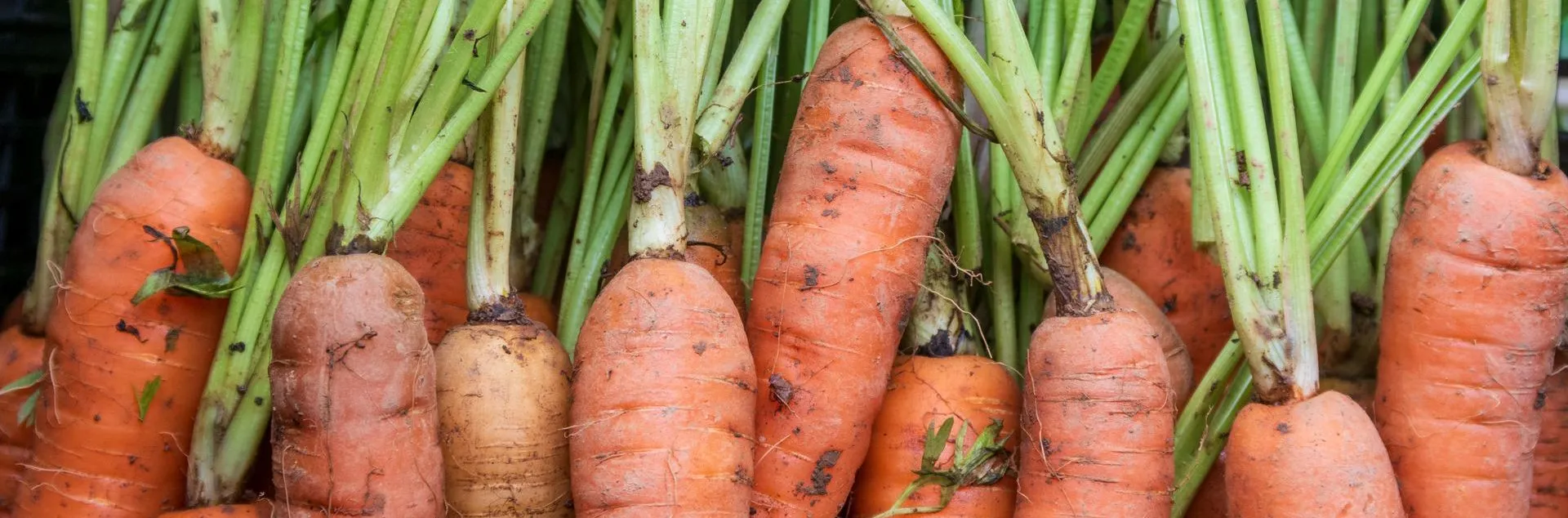
Carrot seeds require constant moisture to germinate and cannot be planted very deeply (no more than ¼ inch) because they won’t have enough energy to make it through the soil when they sprout. The seeds are very tiny, and you may find it difficult to plant them, but like all vegetables the plants need space to grow. The plants should be spaced about an inch apart, in rows that are 12 to 16 inches apart. At each place where you want a plant, scatter 2 to 6 seeds to make up for losses due to insects or failure to germinate. When they emerge, the seedlings should be thinned to 2” apart, and then successively until the row has evenly spaced plants. Like beets, carrots do best with lower nitrogen and you may want to test your soil with a simple home soil testing kit, and if needed add a fertilizer high in phosphorus and potassium.
Beets
Beet seeds can be sown every 2 to 3 weeks for a continuous harvest. The seeds should be planted 2 to 3 inches apart and up to 1 inch deep, in soil amended with a fertilizer low in nitrogen and high in phosphorus and potassium. Like the carrots, you’ll need to thin the seedlings until there is 3 to 4 inches between the plants once the seedlings have 2 true leaves.
Turnips
Turnips need plenty of space to grow or the quality of the root will be impacted. As the seedlings grow, they should be thinned to 2 to 6 inches apart, depending on the variety. Your seed packet should give you the correct spacing needed.
Radishes
Like beets, radishes can be sown every few weeks for a continuous harvest during the season. The amount of space they will need will depend on the variety, so be sure to check the seed packet for spacing requirements. Radish sizes vary greatly, from small radishes that are about 1 inch wide to large Asian daikon radishes that can reach 3 or 4 inches wide. Consequently, your seedlings will need to be thinned to between 4 and 8 inches apart, depending on the variety.
General Planting Tips
• Use floating row covers or a fine mulch between rows to keep soil moist while you’re waiting for your seeds to germinate because it’s important not to let the soil dry out. Moisten the soil before planting, then lay a moist row cover or mulch on the soil and keep it moist while waiting for germination. Raise the row cover on hoops as the seeds sprout. Bonus: row covers also offer protection to your seedlings from insects, slugs, snails and birds.
• Thinning plants should be done by snipping the plant at the soil line so as not to damage any other seedlings. Beet greens from thinning can be cooked and eaten.
• Some people like to pre-soak seeds prior to planting to help them germinate more quickly.
• The optimal soil temperatures for seed starting ranges from 50°F to 86°F, with a minimum of 41°F. Check the links below for specific temperature requirements for the different types of vegetables.
For more information:
• Carrots: https://ucanr.edu/site/mg-sonoma/carrots
• Carrots: https://ipm.ucanr.edu/home-and-landscape/cultural-tips-for-growing-carrot/#gsc.tab=0
• Beets: https://ucanr.edu/site/uc-master-gardeners-sacramento-county/growing-beets-sacramento
• Beets: https://ipm.ucanr.edu/home-and-landscape/cultural-tips-for-growing-beets/#gsc.tab=0
• Turnips: https://ipm.ucanr.edu/home-and-landscape/cultural-tips-for-growing-turnip/#gsc.tab=0
• Radishes: https://ipm.ucanr.edu/home-and-landscape/cultural-tips-for-growing-radish/#gsc.tab=0
• Cool weather gardening: https://ucanr.edu/site/uc-master-gardener-program-alameda-county/cool-weather-vegetable-gardening-late-summer-or
Help Desk of UC Master Gardener of Contra Costa County (RDH)