
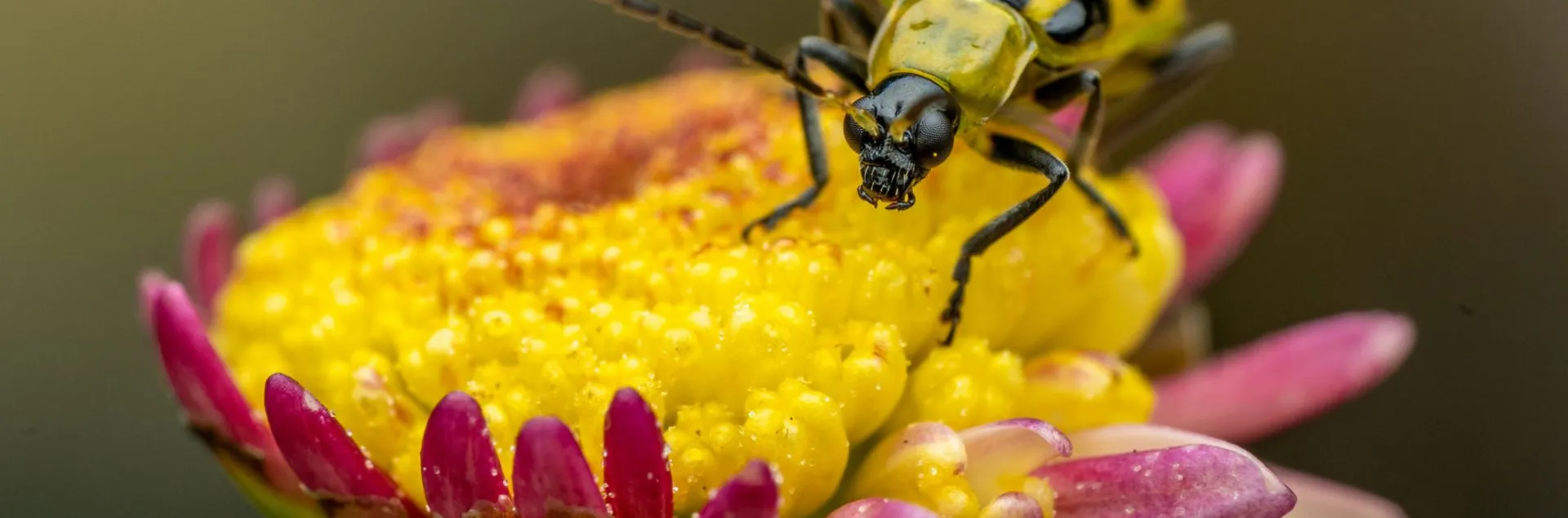
If you've noticed small, greenish-yellow beetles with twelve black spots chewing holes in your vegetable leaves, you may be hosting one of summer's most troublesome visitors: the western spotted cucumber beetle (Diabrotica undecimpunctata). This is the most common cucumber beetle species in California, and once you spot one, there are likely more on the way.
Getting to Know the Beetle
Adult western spotted cucumber beetles are shiny, about ¼ inch long, with a black head and long, threadlike antennae. That distinctive greenish-yellow body with twelve black dots makes them easy to identify although gardeners sometimes mistake them for lady beetles. The key difference is in the antennae: lady beetles have short, stubby antennae, while cucumber beetles have long, slender ones.
The beetles overwinter as adults in weedy areas and move into gardens as soon as plants begin to emerge in spring. Females lay their eggs at the base of plants or in soil cracks. The larvae hatch, burrow into the ground to feed on roots for two to six weeks, then pupate and emerge as adults ready to go after the aboveground parts of your plants. With several generations per year, populations can build up quickly.
What They're After
The list of plants these beetles will eat is impressively long. Adults feed on the leaves of cucumbers, melons, squash, and other cucurbits, as well as corn, potatoes, tomatoes, eggplant, beans, peas, beets, asparagus, cabbage, and lettuce. They'll also go after ripening peaches, apricots, and other soft fruit. Shoots and blossoms are fair game too.
Beyond the visible chewing damage, there's a hidden threat: cucumber beetles can spread cucumber mosaic virus and bacterial wilts in cucurbits, which can be far more devastating than the feeding damage itself. This is one reason early detection really matters.
If you're finding beetles on your calendulas, take note — those plants can serve as a reservoir for eggs and larvae. Removing or cutting them back and bagging the plant material for disposal (rather than composting) can help reduce the local beetle population.
Managing the Damage
Management of cucumber beetles can be challenging. Small seedlings are especially vulnerable and can be destroyed quickly. Established plants are more resilient and can tolerate a moderate amount of feeding without serious setback, but infestations can still weaken plants or open them up to disease.
Here are some practical approaches:
• Protective coverings: Covering young seedlings and small transplants with row cover fabric, fine mesh screens, or individual cloches or cones is one of the most reliable strategies. Keep the covers in place until plants are large enough to tolerate some feeding. Just be sure to remove covers when flowers appear, so pollinators can do their work.
• Physical removal: The least toxic approach is handpicking beetles and dropping them into a bucket of soapy water. It takes some patience, but it's effective for keeping populations in check if you're diligent, especially in the early morning when beetles are less active.
• Natural predators: Several general predators, such as lacewings, are known to attack cucumber beetles. Encouraging a healthy, diverse garden ecosystem can help keep populations from getting out of hand.
• Stone fruit: For ripening peaches, apricots, and other soft fruit, early harvest is often the most practical option once beetles are active.
Stay Ahead of the Problem
As with most garden pests, your best tool is observation. Walk your garden regularly, flip leaves, and check around the base of plants. Catching an infestation early before beetles have had a chance to reproduce and spread gives you the best chance of protecting your harvest.
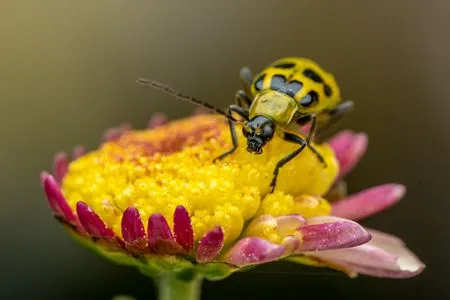
Photo credit: Skyler Ewing on Pexels
UC Master Gardener Program of Contra Costa County Help Desk (RDH)