
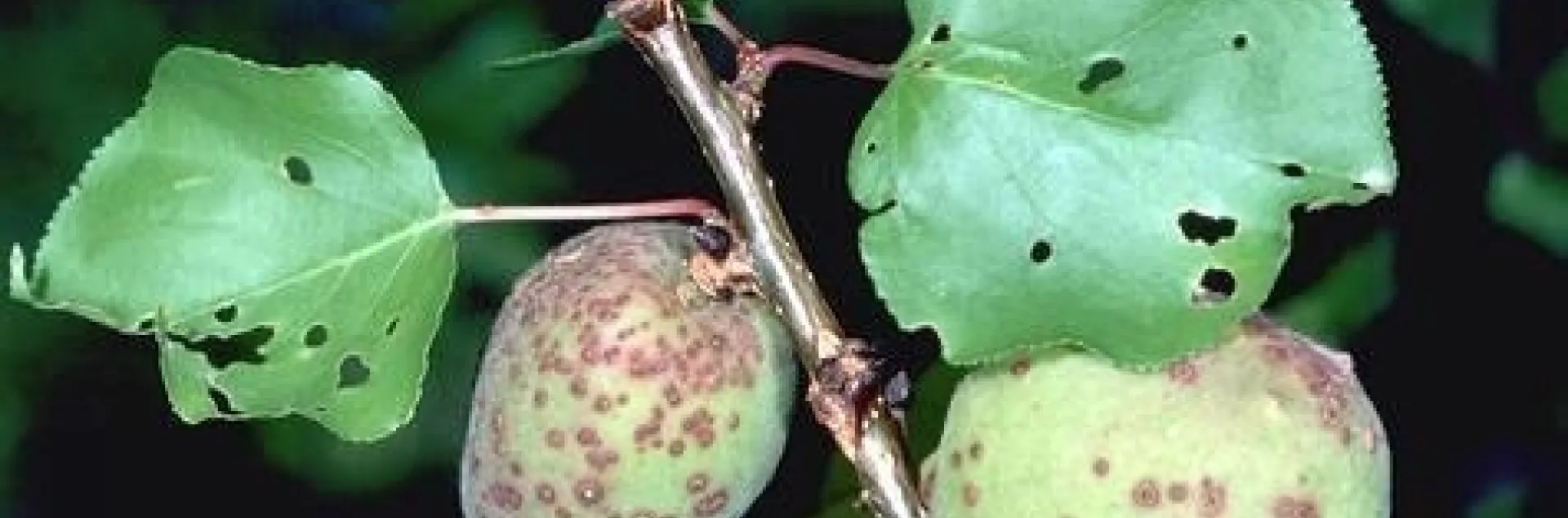

Apricot trees need to be pruned in summer instead of fall to avoid a disease called Eutypa dieback. It causes limbs and twigs to wilt suddenly and die. Shot hole disease is another common apricot pest which appears as purplish or reddish spots on new buds, leaves and shoots. The disease is most severe in years with rainy winter and spring weather.
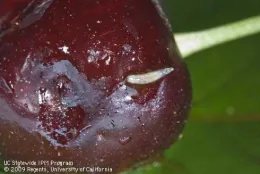
Plums and other stone fruit can be attacked by brown rot, a disease that causes flower blossoms to turn brown, wither, and stay on the plant. Fruit that does develop turns brown or has tan spots that can appear sunken over time.
Peach and nectarine trees are susceptible peach leaf curl. Tree leaves have reddish areas that thicken and pucker, causing leaves to curl. In rare cases, fruit develops reddish, wrinkled areas that become corky and tend to crack.
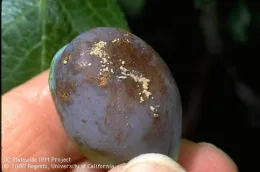
Many vertebrate pests such as tree squirrels, birds, rats, and others also enjoy snacking on stone fruits. Visit the vertebrate Pest Notes to learn ways to keep them from ruining your harvest.
You can find more information about caring for stone fruit trees, as well as a list of the common pests, disease and disorders that affect these trees at the following links:
Apricot Nectarines and Peaches