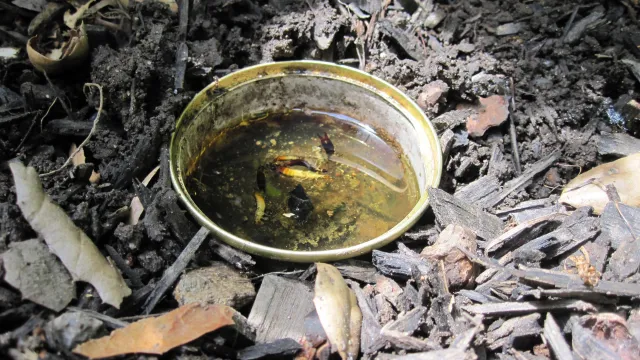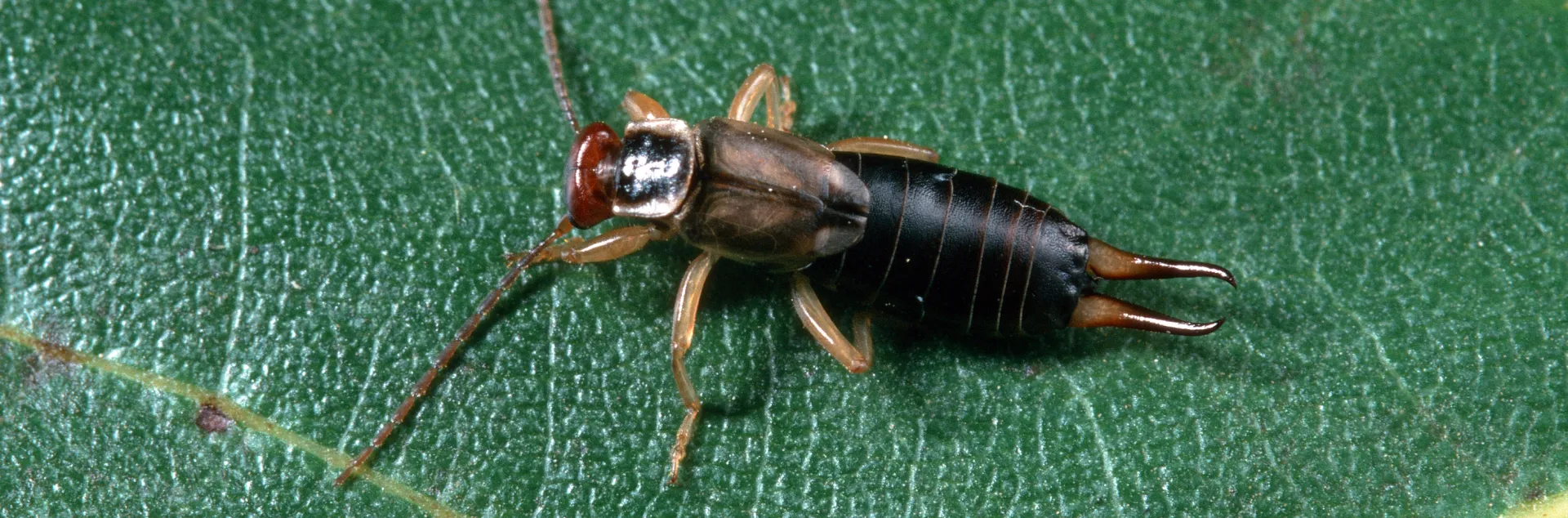
Earwigs, sometimes also called pincherbugs, can be damaging or just a nuisance around our homes and gardens. While these insect pests aren’t harmful to humans, they can cause quite the ruckus in home gardens. The most common species found in California is the European earwig, Forficula auricularia. This species is known to especially thrive in spaces with ample moisture and shade.
Earwigs typically feed at night, damaging seedlings and chewing holes on vegetables, flowers, sweet corn, or plants with soft fruits like strawberries and apricots. While earwigs can be pests in some gardens, they also act as beneficial predators by feeding on aphids and other soft-bodied insects and insect eggs.
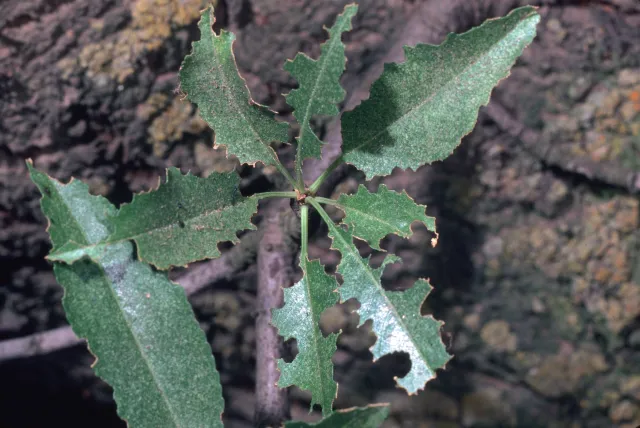
Successful management of earwigs involves multiple actions, including trapping and sanitation.
Trap until earwigs are gone or reduced tolerable numbers.
Reduce earwig hiding places in the garden by removing weeds, debris, and any overgrowth.
Move flowerpots and garden objects or structures that can provide shelter to earwigs.
Install drip irrigation where possible to reduce moisture.
Use Tanglefoot around the trunk of stone fruit trees to keep earwigs out, and harvest fruit as soon as it ripens.
For more information on how to identify and manage earwigs, read the UC IPM publication Pest Notes: Earwigs or watch this video from UC IPM for a demonstration on how to trap earwigs in the garden.