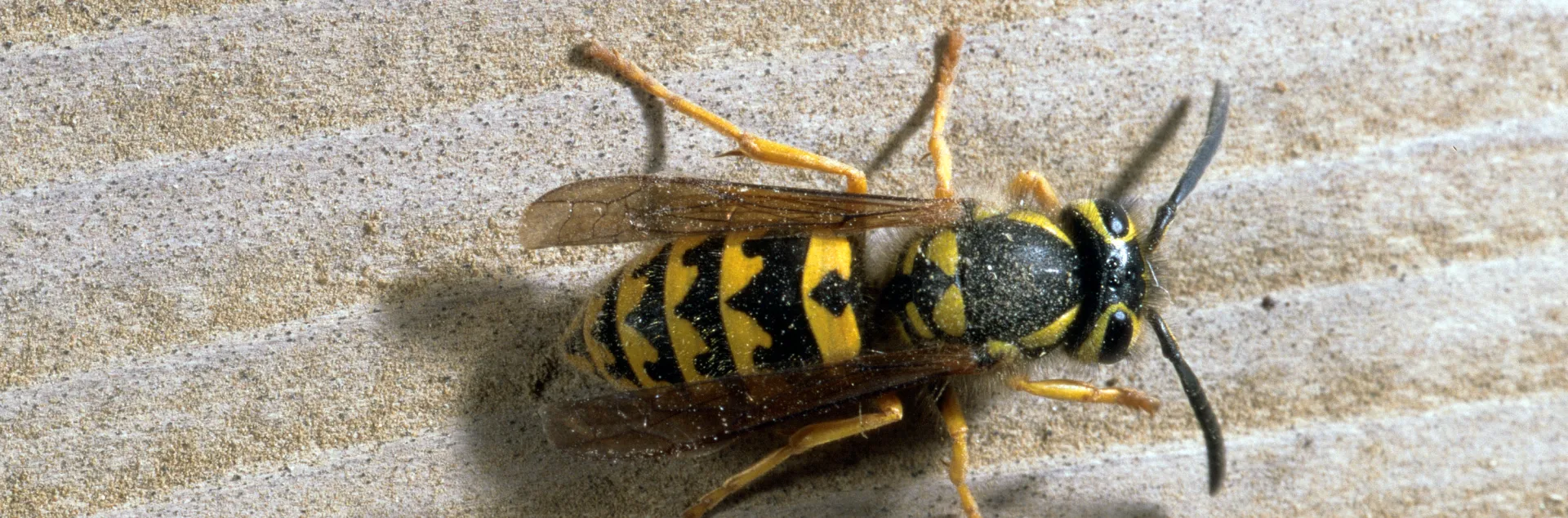
Are yellowjackets ruining your outdoor picnic or gathering? Yellowjackets, sometimes called “meat bees”, prey on other insects and scavenge on human food and garbage. They are more likely to sting if disturbed while foraging. Avoid unpleasant encounters with yellowjacket wasps by following the tips below.
Stay calm to avoid stings.
If a wasp lands on you, don’t swat it or run. Wait for it to leave or gently brush it away.
Don’t disturb nests. Wasps flying from a hole in the ground or a building indicate a probable nest.
Remove attractive food sources.
Keep food, including pet food, covered or indoors.
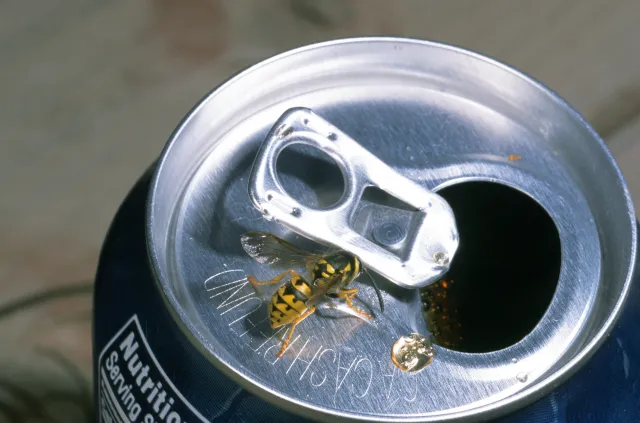
Outdoors, cover soda cans so wasps don’t crawl in.
Keep garbage in sealed cans and empty regularly.
Pick up and dispose of ripe fruit.
Use traps to reduce yellowjacket numbers.
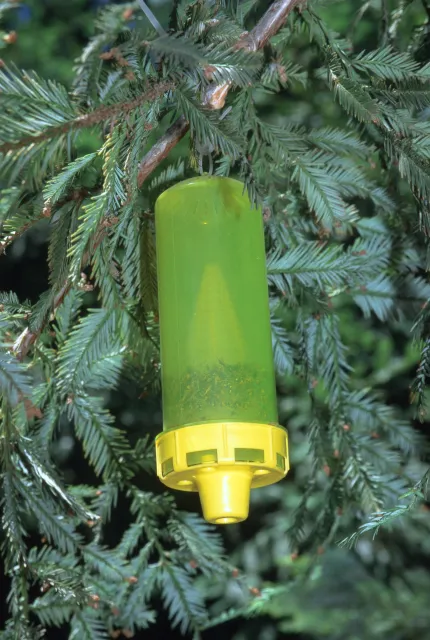
Yellow lure traps hung along the perimeter of a property can reduce foraging of some species around patios or picnic areas.
Homemade traps using meat bait hung on a string just above soapy water may also be used.
Place traps away from areas where people gather, such as picnic tables.
What should you do about a nest?
Ask your Mosquito and Vector Control District if they treat nests or locate a licensed pest control company. Nests might be far away and hard to find.
If you choose to treat nests yourself, wear protective clothing on your body, hands, and head. Use an insecticide that shoots a long stream into the nest entrance and is labeled for treating yellowjacket nests.
For more information and pest management tips, visit the Pest Notes: Yellowjackets and Other Social Wasps. Although yellowjackets can be a nuisance, some species do prey on plant-feeding insects and nuisance flies and are considered beneficial predators.