
Livestock grazing can help maintain grasslands, improve native species habitat, control weeds, and reduce wildfire fuels
Click here for the pdf fact sheet version of this article.
Biodiversity hotspots at risk
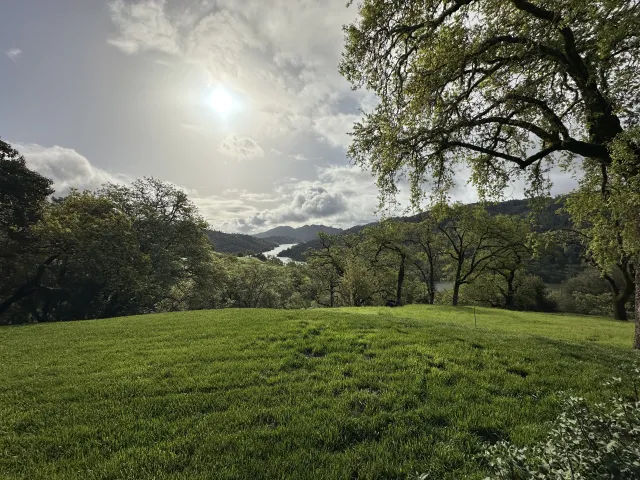
- California grasslands are often dominated by non-native European annual grasses. At the same time, they are renowned internationally as biodiversity hotspots,1 and support 75 threatened and endangered (T&E) species.2
- There has been substantial loss of grasslands in California, much of which is privately owned and continues to be at risk of development.3
Maintaining grasslands
- In addition to being threatened by development, grasslands are disturbance-dependent ecosystems, which means they need a disturbance like grazing or fire to maintain them.
- Without grazing or fire, in many cases, our California grasslands would convert to shrublands, woodlands, or forests.
- Eight of the federally listed T&E species that occur in Marin County are benefited by grazing, according to the US Fish & Wildlife Service.4
- If we want to have habitat for these grassland species, we need to maintain grasslands and grazing can help.
Improving native species habitat
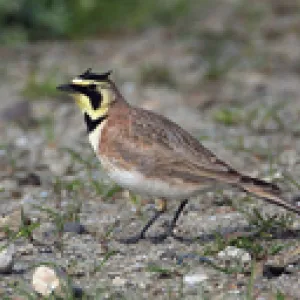
- A study in the East Bay showed that native plant cover was higher in grazed areas. The main native species were purple needlegrass, different clover species, Johnny jump ups, and dwarf checkerbloom, all of which occur in Marin County.5
- In the same study Western Meadowlarks and Grasshopper Sparrows were neither harmed nor benefited by livestock grazing, but horned larks benefited from grazing.
Controlling weeds

- Yellow starthistle is a widespread weed in Marin County. It is spiny, can take over fields, and outcompete forage plants.6
- Sheep, goat, and cattle grazing can help control yellow starthistle. Sheep and cattle will graze it when it’s young, has lots of protein, and has not yet developed spines. Goats and sheep7 will continue to eat it even after the spines have developed.
Reducing wildfire fuels

- Wildfire has become a serious concern in California in recent years.
- Grass is a fire fuel, but livestock eat grass. Thus, in many scenarios, grazing can decrease fuel loads enough to reduce flame lengths and make fires more manageable to fight.8
References
1. Bartolome, J.W., Allen-Diaz, B.H., Barry, S., Ford, L.D., Hammond, M., Hopkinson, P., Ratcliff, F., Spiegal, S. and White, M.D., 2014. Grazing for biodiversity in Californian Mediterranean grasslands. Rangelands, 36(5), pp.36-43.
2. Jantz, P.A., Preusser, B.F., Fujikawa, J.K., Kuhn, J.A., Bersbach, C.J., Gelbard, J.L. and Davis, F.W., 2007. Regulatory protection and conservation. California grasslands: ecology and management, pp.297-318.
3. CalPIF (California Partners in Flight). 2022. Version 2.1. The grassland bird conservation plan: a strategy for protecting and managing grassland habitats and associated birds in coastal and valley grasslands in California (M. Hammond, lead author).
4. Barry, S., and L. Huntsinger. Rangeland Land-Sharing, Livestock Grazing’s Role in the Conservation of Imperiled Species. Sustainability 2021, 13, 4466. 2021.
5. Gennet, S., Spotswood, E., Hammond, M. and Bartolome, J.W., 2017. Livestock grazing supports native plants and songbirds in a California annual grassland. PLoS One, 12(6), p.e0176367.
6. DiTomaso, J.M., G.B. Kyser et al. 2013. Weed control in natural areas in the western United States. Weed Research and Information Center, University of California, 544.
7. Karol, A. 2025. Personal communication, August 4, 2025.
8. Ratcliff, F., Rao, D.R., Barry, S.J., Dewees, S., Macaulay, L., Peterson, R., Moritz, M.A. and Forero, L.C., 2022. Cattle grazing reduces fuel and leads to more manageable fire behavior. California Agriculture, 76(2-3).
