
Rationale
Agricultural career cluster is essential for ensuring sustainable food production that can meet the demands of a rapidly increasing world population. However, USDA-NIFA highlights a 39% talent deficit in agriculture, renewable natural resources and environment careers (Wilson et al., 2025). This means that about 4 in every 10 projected agricultural job openings may go unfilled annually or must be staffed by graduates from non-agricultural majors due to a severe shortfall in qualified applicants. More serious still, a recent national study by Bayer and National 4-H Council indicates only 36 % of youth were familiar with agriculture career choices beyond the traditional working on a farm. Perhaps, the biggest question to ask is How can they choose to be, if they don’t know? It is against this background that AgXplore program was innovated in the Central Coast. AgXplore is rooted in the occupational perspective of Super’s 1980 research. He theorized that career development occurs in five stages, with the 2nd stage (Exploration Stage) being the most critical. During Exploration stage, students engage in career awareness, information gathering, and experimentation to crystallize their career trajectory. The AgXplore program goal for 2026 was to expose Monterey 4-H youth to more than 20 ‘new’ agriculture career options in addition to traditional farm work.
Materials & Methods
At the beginning of 2026, AgXplore program was designed. Workshop materials were developed and Agriculture career cards were procured from the National Agriculture in the Classroom online store. Agricultural career cards contain Agricultural career definitions, salary range, required educational level, kinds of employers and a typical day in the life of that professional. Times and places for the workshops were advertised through flyers, e-mails and social media. Seven sessions were delivered in King City, Monterey on a Fantastic field day. Guided by Kolb’s experiential learning model, youth were given the opportunity to experience, share, process, generalize and apply what they had learned. Each participant was offered random career scenario activity to complete using a set of 25 Agricultural career cards. Participants were guided through the entire learning cycle. Post tests/survey/evaluation were administered to assess the participants' gained knowledge about new agricultural career pathways and interests. Out of 144 participants, 83 responded to the paper survey yielding a response rate of 57.6%. Data was cleaned for missing or implausible values and analyzed in Excel 365.
Findings & Discussions
A total of ten 4-H clubs in Monterey County participated with the highest number of participants coming from King City Blue Ribbon (24.1%, n=20) and Greenfield clubs (20.1%, n=17). Out of the 83 AgXplore participants, nearly all of them (98.8%, n=82) reported that they had gained awareness about new Agricultural careers, with Agricultural Pilot (12.0%), Plant Breeder (10.8%), Entomologist (9.6%), Animal/Herd Nutritionist (9.6%) and Greenhouse Manager (6.0%) being reported as top new Agricultural careers by most of the youth (Figure 1). This is not any different from recent findings of Zanolini and others, who reported that the Texas 4-H Livestock Ambassadors became more aware of the diverse career opportunities in animal agriculture because of their program participation in career programs. This therefore signifies the success of AgXplore program in increasing Agricultural career awareness among the 4-H youth in Monterey County, CA.
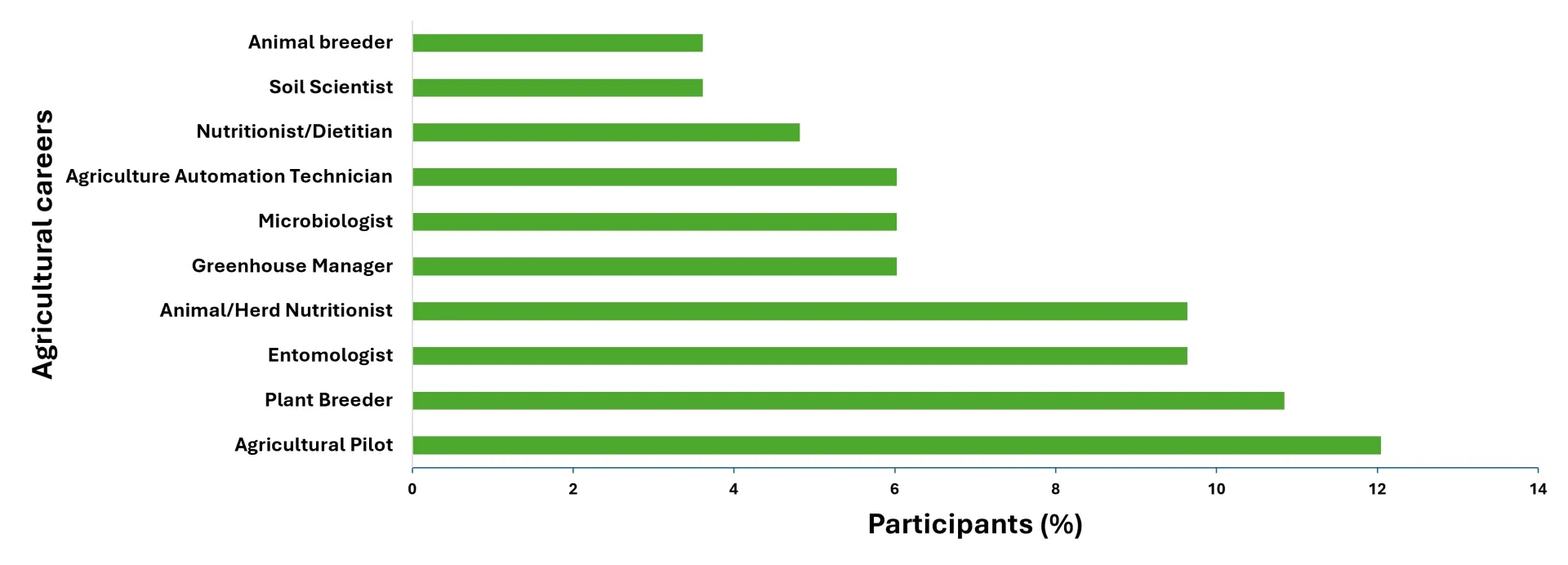
Figure 1: Proportion of the top 10 Agricultural careers around which AgXplore program participants reported awareness gain.
When asked about the Agricultural careers that they would be interested in perusing, Veterinarian (18.1%, n=15), Agricultural Pilot (15.7%, n=13) and Animal breeder (8.4%, n=7) were of top interest (Figure 2). One of the AgXplore participants testified “…. I hope to be a veterinarian because I live on a farm, and I want to be the family Veterinarian to help the lots of horses, cows, dogs, cats, pigs and sheep we have”. This resonates with a recent study by the American Association of Veterinary Medical Colleges (AAVMC) that 70,092 new veterinarians are required by the United States through 2032 due to occupational growth and replacement needs (Gitter et al., 2024). Applied research & Extension programs like AgXplore holds the potentials of expanding youth Agricultural Career awareness beyond the traditional working on farm by introducing them and allowing them to explore high-demand fields like Agricultural Pilot, Agricultural Sales Representative, Biosecurity Monitor, Irrigation specialist, Meat Inspectors and Veterinarians among others.
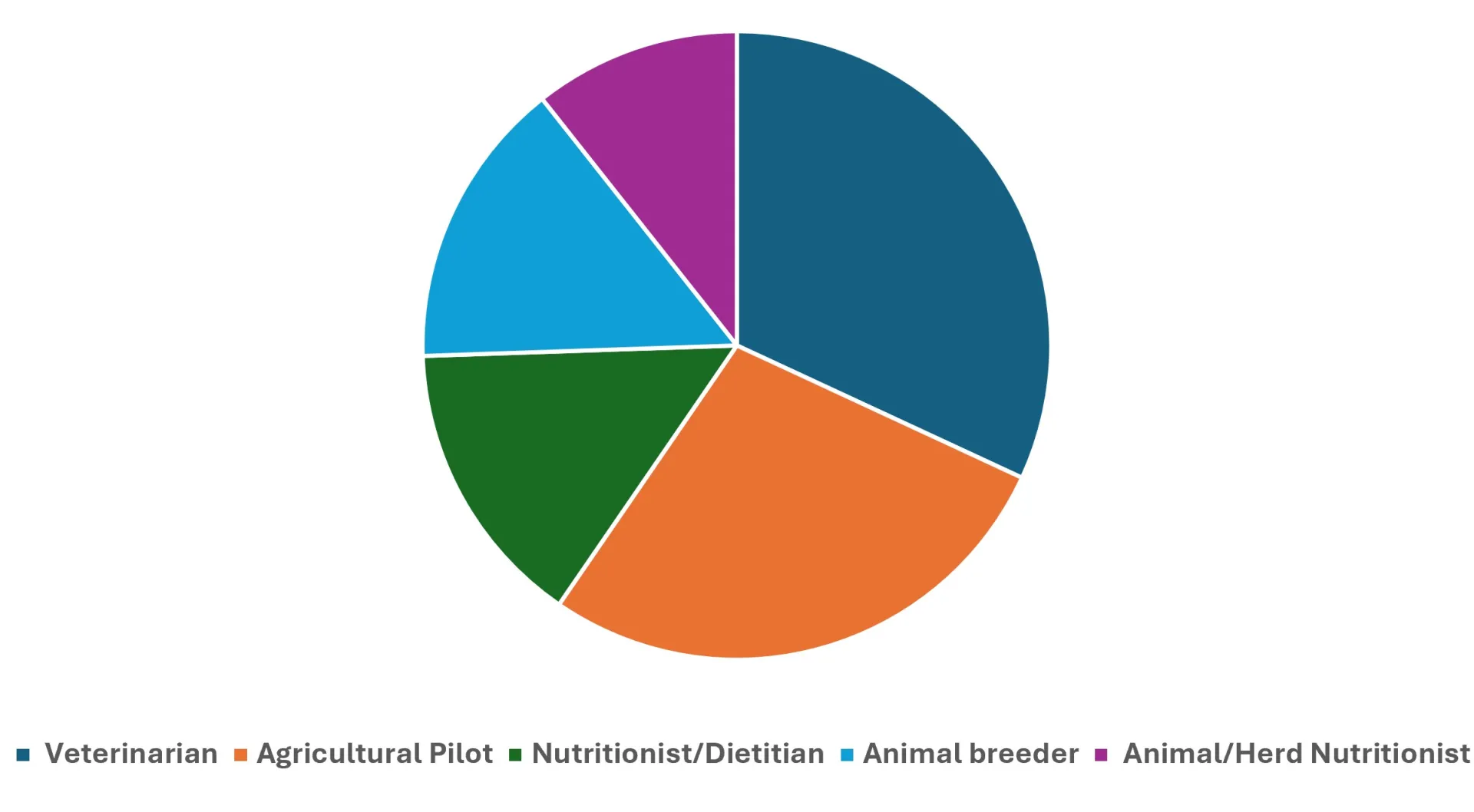
Figure 2: Top 5 Agricultural careers reported by AgXplore participants as being most interesting to them.
According to Super’s theory of Career Development, it is at this exploration stage that early career awareness and broad experience directly shape a student's self-concept, allowing them to make choices that align with their personal interests and values (Lile et al., 2021; Super, 1980). Through career exploration opportunities that 4-H offers, membership in 4-H clubs have been reported as a predictor of rural 11th grade agricultural science students’ choice of careers in agriculture in rural Indiana Adedokun & Balschweid, 2008). Murrah-Hanson and others (2022) suggest that it is through such opportunities that youth develop even more of their love for agriculture while opening doors to careers they haven’t ever considered.
Conclusion
The AgXplore program exposed Monterey 4-H youth to several agriculture career pathways, most of which were new to them. This applied research and Extension program is uniquely positioned to help address the Agricultural workforce shortage by acting as a critical, early-stage pipeline for future Agricultural professionals
Acknowledgement
The AgXplore program was made possible through generous donation from the Grower-Shipper Association of Central California. The teamwork and support from the 4-H program representative (Monterey), Area Director, 4-H club leaders, 4-H Volunteers and 4-H members is worth recognizing.
References