
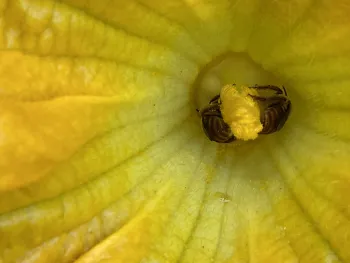
The summer this year has been a mix of seasonally expected highs with periods of cooler weather. As gardeners we appreciate moderate summer weather for ourselves and our gardens. We do need to continue to avoid overdoing our personal strength and energy supply. Working early mornings, staying hydrated, and enjoying a good book or long-put-off ‘inside’ project are ideal for hotter afternoons.
August is the time to begin our fall planning. As the summer vegetables, zinnias and sunflowers brighten each day, consider any changes you may want to make in the garden. Collect ideas, measure garden areas, design your efforts to complete a piece at a time, a small component of your grand plan. As each piece is completed, you can have the pleasure and satisfaction of watching it establish and grow as you move to the next project.
Ornamentals and annuals
Keep up the deadheading and deep watering; your garden will produce a floral display well into the fall. In our climate, it is no longer unusual to be able to gather roses for the Thanksgiving table. With good maintenance and a fertilizer feed now, the roses will bloom into late fall.
Grouping container pots makes watering easier and provides some humidity around the plants to ease the effects of the drying sun and wind of summer.
Diseases, pests and beneficials
You may find leaves tattered and torn; this damage is from the bird life in the garden. A few tattered leaves are a small price to pay for the quantity of aphids, scale, and insects that are consumed by our feathered friends. Finches are the most common culprits.
Make sure you provide good water sources for birds and bees. Birds love moving water; if you set up a sprinkler on a hot day, you will be able to observe finches, hummingbirds and bushtits cooling off and bathing. Bees prefer shallow water, a simple bee watering station can be made by using a shallow dish with a layer of marbles or stones across the bottom, not completely covered with water. This allows the bees to settle and drink without risk of drowning, as bees cannot swim. Refresh bird and bee watering stations regularly; clean and replenish.
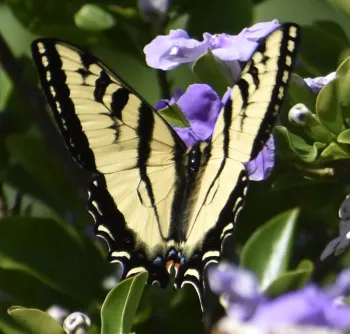
We tend to focus on what might be ‘wrong’ with insects in the garden, but we have many garden visitors that bring their beauty for us to appreciate. A common butterfly to delight as they visit our gardens is the Western swallowtail.
Bulbs
Bulb catalogues are fun to look through to see if you would like to add perhaps other colors to the garden, such as the brilliant blue of Ithuriel’s Spear (Triteleia laxa), a California native, for late spring color, or a variety of alliums that come in many shapes, sizes, and colors for both spring and summer. For more information see Bulbs, Corms, Rhizomes, and Tubers – What are the differences and when are they planted?
Fruits
This is the time to reap the rewards of grape vine care. Fruit ripening (veraison) shows as changing color in red and black grapes. Green grapes take on a lighter tone and appear translucent. Grapes do not continue to ripen after they are picked (non-climacteric); they will soften but not increase in flavor or sugar levels. Sugar content increases while on the vine; snip off those bunches and enjoy!
Check for heavy fruit production on citrus trees and thin fruit if needed.
Now is the time to summer prune fruit trees for shape and strength. Summer pruning does not encourage growth as dormant winter pruning does. Summer pruning will keep fruit trees at a manageable size and height for fruit care and open the canopy for better air circulation, a key to disease and pest control.
After fruit harvest is done for trees and vines, apply recommended fertilizer; this will support the bud development for the flowers and leaves of next year’s harvest. These buds are developed and established in the fall before the trees enter dormancy.
Now is the time to prune apricot and cherry trees. Dormant pruning in the winter months is not recommended for cherry and apricot trees, as the moisture-borne fungal diseases that affect these trees will enter through injury or pruning sites. Eutypa, a fungal disease in apricots, causes leaf, branch, cankers, limb dieback and eventual tree death.
Clean up any fallen fruit to prevent disease transmission.
Trees
Summer can be the time to take a look at landscape and ornamental trees. Is a tree interfering with power lines, overhanging a structure, or touching a roof? Reduction pruning of a too-tall or too-large canopy tree is focused on shaping and maintaining a strong structure for a healthy tree. Trees can ‘get away from us,’ and we realize that a tree may seem too big for our landscape. Canopy and reduction pruning rather than removing the tree can be a good solution. Tree topping is to be avoided as it only leads to weak, vigorous growth that will exacerbate the care needed to maintain the tree in the garden space. Remove no more than twenty percent to twenty-five percent of the canopy, and avoid harmful major cuts that leave stumps. Pruning a large tree may not be something you can undertake, but information at Trees Are Good should help in selecting a qualified arborist who will preserve the life and health of your trees.
Click August Vegetable Planting Guide for a list of Yolo County and Sacramento area vegetables recommended for planting during the month of August, along with how and when to plant them.
Photos by Peg Smith, adapted.