

Summer is the travel season for many, and as gardeners, we often see plants as we travel that we would like to add to our garden or indoor plant collection. Although it would be tempting to pinch off a piece or leaf to propagate when returning home, it is an urge we should resist. Much of the spread of invasive disease and insects can occur quite unintentionally if we unknowingly transport eggs, larvae, or spores to an uninfected region. Within California, there are regions that are under quarantine. This means it is forbidden to transport certain plants or plant materials to the city or county next door, from one end of the state to the other, or into other regions of the country.
The best approach is to take photos, identify the desired plant, and when returning home, find a local source or use an out-of-state nursery that is licensed and follows any quarantine or inspection requirements.
An example of an insect-borne disease that has had devastating effects on the citrus industry and citrus home growers is citrus greening disease, Huanglongbing (HLB). The vector for HLB is the Asian citrus psyllid, a sap-sucking insect that spreads the bacterium Candidatus Liberibacter asiaticus. First detected in 1998 in Palm Beach County, Florida, it is fatal to citrus, and there is no cure. If found, trees and orchards are destroyed as the only method of possibly containing the psyllid and the disease. In 2000, it had spread to Louisiana and Texas. By 2008, it was detected in Southern California (San Diego County), and eventually spread to the Central Valley, Central Coast, and the San Francisco Bay Area. See UC IPM’s article Asian Citrus Psyllid and Huanglongbing Disease for more information.
June Tips
Water
The daytime temperatures have already flirted with mid-90°F. Summer heat is a challenge for new spring plantings; they will need to be watered evenly and often. For any new plant, large or small, the plant will only be able to pull moisture from the surrounding soil in a region approximately equal to the size of the root ball, i.e., the size of the container from which it came. As the root system expands through the soil, the plant’s ability to pull moisture from a larger region of soil will help it withstand our summer temperatures. Supporting new plantings with adequate water through the summer months is essential. A layer of mulch will cool and reduce water loss from the soil. Deep regular watering for annuals and perennials will encourage root growth through the summer heat. Keep a good eye out for leaks in irrigation systems. The Northern California dams are in good shape for this time of year, but there’s no certainty of next winter’s rains, so care and conservation are important, especially during the hot summer months.
Ornamentals and annuals
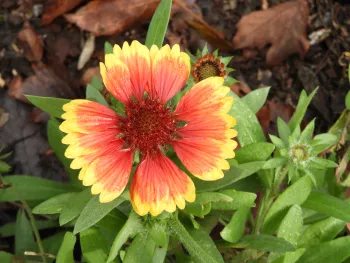
Summer annuals of cosmos, marigolds, portulaca, sunflowers, and zinnias can still be added for summer color. Summer blooming perennials to plant are daylily, daisy, blanket flower, gallardia, aster, sage, salvia, and yarrow. Please refer to the advice on adequate watering for new plants in the paragraph above.
Continue to deadhead roses as they fade. Cut stems at a forty-five degree angle one-quarter inch above a grouping of five leaves on the outside of the stem; this promotes continued bloom. As California poppies begin to fade, a second bloom can be stimulated if old flower stems are cut.
Potted plants and hanging baskets will develop well if they are consistently watered and are given an application of liquid fertilizer; follow the directions for timing and strength.
Diseases and Pests
Keep a close watch for damage from insects, slugs, or snails. Rolled up newspaper for earwigs and beer traps set overnight for slugs and snails will help reduce their populations. Watch for aphids, whiteflies, hornworms, and powdery mildew. To identify and treat a problem, refer to the UC IPM Website, which describes the least environmentally toxic solutions.
Bulbs and rhizomes
If bulbs are spreading and becoming crowded, dig some of them up and store them in cool, dry conditions to plant in the fall. If Iris are producing fewer blooms and their rhizomes are dense, dig them up and separate them into pieces, then replant them about a foot apart.
Mulching
To help control weeds and reduce soil moisture evaporation, apply a four-inch layer of mulch around plants, leaving space around the plant crowns. Watch for small holes in the dirt, which may be from ground-nesting bees. Wait and mulch that area later to allow the emergence of the next generation of native bees. For more information, refer to the Xerces Society article on Pollinator Conservation in Yards and Gardens.
If you are leaving any areas of soil fallow for the summer, a mulch cover will help with weed control. In unplanted soil, you might also consider planting a cover crop of summer buckwheat. There are many benefits, such as weed control, plus it also provides habitat and a food source for beneficial insects.
Fruits
Make sure fruit is thinned to approximately six inches apart for apples, peaches, and nectarines. Note any fruit tree branches heavy with fruit and support them with stakes to prevent limb breakage.
With the bloom period over and fruit set on grapes, there are recommended methods to balance a healthy canopy and good fruit production. In the Vinyard, a year-round guide for grape growing from the UC Master Gardeners of Sacramento County, gives monthly information and describes tasks to maximize the health and grape production of vines. This month, grape canopy management, a consistent routine for watering, and pest and disease management are important.
If your citrus is finished fruiting, June is a good month to prune for shape. Remove crossing branches and thin dense canopy for air flow. Trim all shoots below the graft line, also any vigorous canopy shoots (often called water shoots), easily identified by their rapid growth, thorns, and larger leaves.
Lawns
Be aware of your city’s guidelines for watering. Grass can survive on less water than you think. A deep soak twice a week through the heat will encourage deep root development that will help your lawn handle the summer temperatures. If you are considering removing the lawn, the summer is the ideal time to start the process. We classify lawn grass into three groups: green in winter, usually fescue and bluegrass; brown in winter, usually Bermudagrass, St Augustine, and Zoysia; and patchy grass with weeds, usually where most of our lawns graduate to as weeds opportunistically grow.
UC Master Gardeners of Sacramento County’s webpage on Beyond Lawn - Lawn Removal Methods gives a detailed guide for lawn removal.
Vegetables
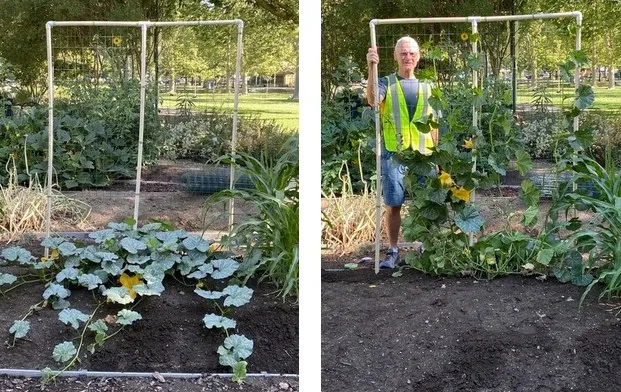
Plant melons, cucumbers, summer squash, and winter squash. If growing melons or winter squash on the ground, as the fruit develops, rest the fruit on a piece of board or layer of mulch to avoid any rot from direct soil contact. These plants can also be grown vertically on a simple trellis. As melons and winter squash become heavy, a sling of an old towel or torn sheet tied to the trellis will give added support. The big advantage of trellising these vines is that it allows more space for growing other vegetable favorites.
Corn can be planted from May through mid-July directly into the soil or started in pots and transplanted. To extend your corn picking season, plant seeds every two to three weeks. This will provide ears of corn for the pot or barbecue throughout the summer.
If you are fond of basil, there are wide, wonderful varieties from the slightly spicy Thai to the more common Genovese. If possible, a place where the plants will have late afternoon shade. As the blooms develop, nip or cut them off, so the plant’s energy goes to leaf production instead of seed production.
Follow the golden rule of vegetable growing through our hot summer: deep, consistent watering and a three to four-inch layer of mulch.
Click June Vegetable Planting Guide for a list of Yolo County and Sacramento area vegetables recommended for planting during the month of June, along with how and when to plant them.
Photos by Peg Smith, adapted.