
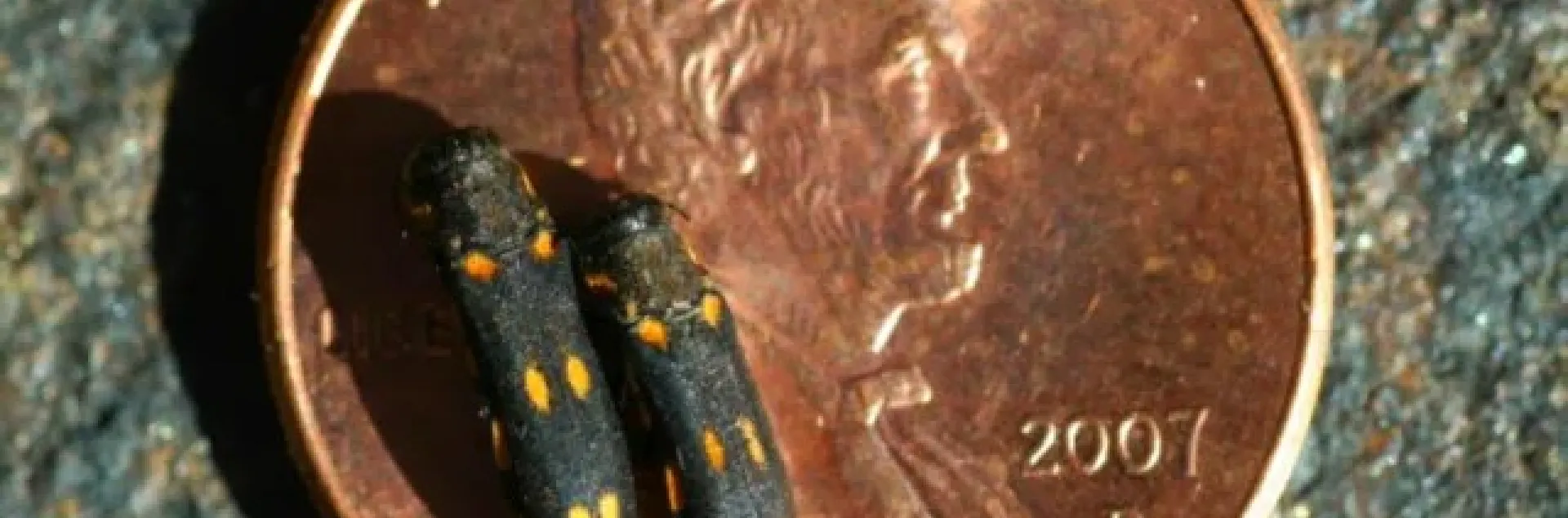
Invasive insects and diseases can have strong negative effects on our forests. It's important to be able to identify potential invasive insects and diseases to protect our forests. Please go over the the flyer from CalFire and the Board of Forestry and Fire Protection for information on how to identify and report sightings. Typical modes of spread include moving firewood from one place to another, green waste or plant material, wood and whole logs with an without attached bark, wood chips, and wood packing material. You can find more information on each of the four pests and diseases mentioned in the flyer at the links below.
Goldspotted Oak Borer: https://ucanr.edu/site/goldspotted-oak-borer
- This invasive insect is contributing to the on-going oak tree mortality occurring throughout several counties in Southern California. The link provides a reporting information and a map of current known sightings.
Invasive Shothole Borer: https://ucanr.edu/site/invasive-shothole-borers
- This invasive insect is also prevalent in Southern California, attacking a variety of tree species in agricultural, urban, and wildland environments. The link provides access to an online training and a detection assessment you can do to see if your tree is suffering from ISHB damage.
Pitch Canker: https://ufei.calpoly.edu/pitch-canker-task-force-publications/
- This invasive disease is a serious concern in coastal areas of California with Ponderosa Pine, Gray Pine, Knobcone Pine, Bishop Pine, Douglas-fir, and Shore Pine being particularly susceptible. The disease has been known to resist 4 weeks in dry and hot conditions and could therefore spread into the Central Valley or other dry and hot areas.
Sudden Oak Death: https://www.suddenoakdeath.org/about-california-oak-mortality-task-force/
- This invasive disease has resulted in widespread dieback of several oak tree species in California and Oregon, particularly tanoak trees, coast live oak, California black oak, Shreve oak, and canyon live oak. It prefers cool, wet climates - conditions which are often replicated in nurseries that allow it to grow and spread far from the coast.
Photo source: Tome Coleman, U.S. Forest Service Entomologist
