I love birds, raptors, corvids, sparrows, and chickadees. If it has feathers, I’m a fan. Birds are an asset to the garden. They eat insects and multiple seeds from our nemesis, the weed. They loosen soil with their scratching and bring joy with their songs and clever antics.
However, keeping your gardening thriving while creating an environment friendly to birds can be a challenge, especially around this time of year when our tender seedlings are breaking ground and reaching for the sunlight. So how do we make our gardens welcoming, yet safe for our new plants?
Here are a few ways I’ve been successful in keeping seedlings safe from our feathered friends.
Alternative Food Sources
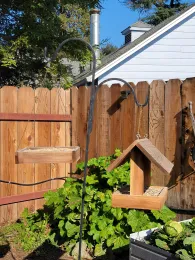
Birds are voracious. They eat one-quarter to one-half of their body weight a day! Whoever thought eating like a bird meant that you ate little certainly had that wrong. These hungry birds, especially the evil (just kidding) white-crowned sparrow, which grace our yards each season, love the fresh, tender shoots and leaves of our new seedlings. By giving birds an alternative food source, such as bird seeds or suet cakes, you may decrease the amount of damage to your new plants. Just remember, bird feeders need cleaning regularly to prevent the spread of disease among our hungry friends.
Reflective Tape
Another preventative measure is reflective tape. This shiny tape is relatively inexpensive, easy to use, and I’ve found it to be effective in keeping most flying things out of my raised beds and fruit trees. Tie your tape directly to trees and fencing or use long sticks with the tape tied or stapled to them. Both the reflectivity and the sound the tape makes as it flaps in the breeze and shoos the birds away. However, if you are serving our chirping guests seed or have a bird bath, you may want to use an alternative method as the tape will chase them away from their water and food sources.
The plus side of this method is that you can use the reflective tape all season, especially in your fruit trees. The only downside I’ve encountered is that you will need to replace the tape on occasion. Your tape can tear in the breeze or break because of heat damage. It may send light flashes into windows and can frighten some animals with the flapping sound. My friend had a small dog that cowered away every time it heard that snapping, crinkling sound.
Row Covers
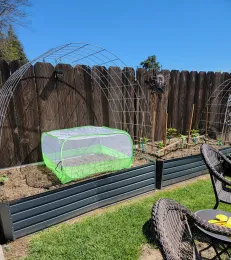
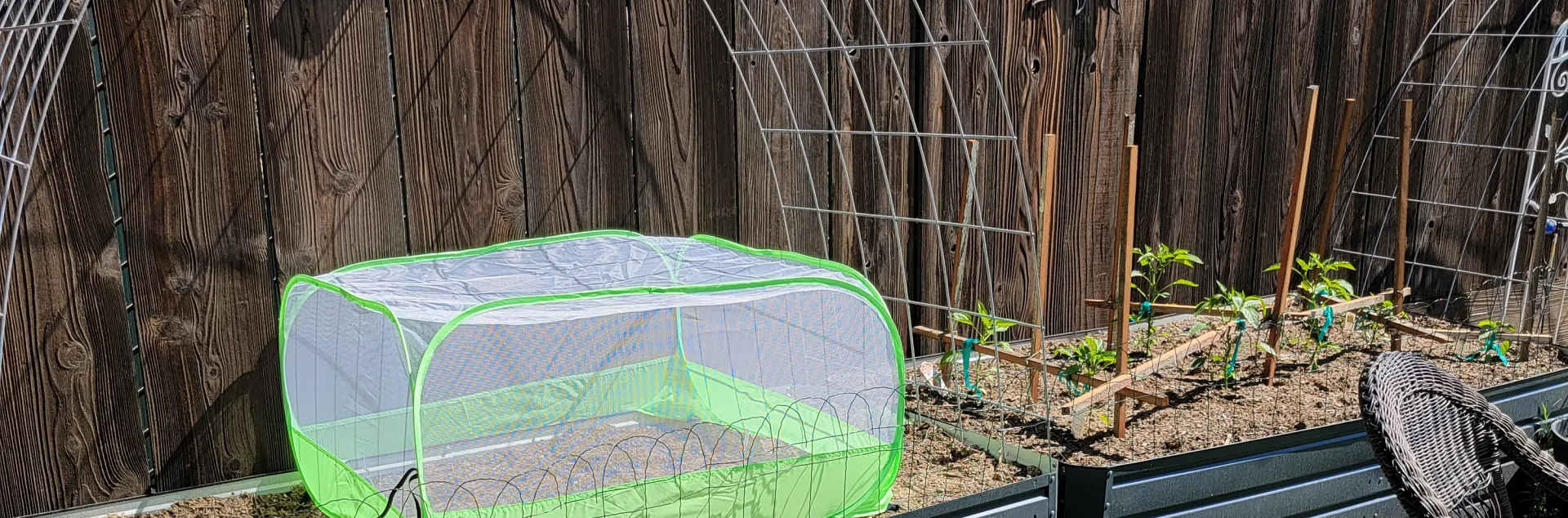
Do you have a larger area to cover? Try reusable row covers, easily purchased online or from garden centers. These covers give your seedling plenty of room to sprout, help to keep the birds from getting to your tender shoots, and, as a bonus, prevents cats from digging in your beds. Don’t want to buy covers? Create your own by using light mesh fabric stretched over a wooden frame then placed over the rows. Be certain to choose a fabric that allows plenty of sunlight to come through and allows you to water the seedlings easily.
One downside to the row covers is the mesh is difficult to see through to check on the plants’ progress. I need to lift them up then carefully replace them to gauge plant health and check soil moisture. Even with this issue, I find the covers to be the most effective in reducing birds munching on my plants.
Another bonus is they can be used year-round. You may need to adjust for the height of your plants, but the covers can be effective in continuing to keep out critters and birds as they grow to maturity.
The “Mini Fortress” method
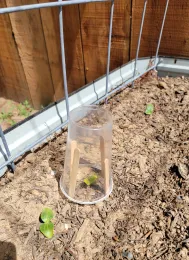
The next method I’ve used (and are currently using) is what I have dubbed my “mini fortress” form seedlings. Made by taking an inexpensive, transparent plastic cup, and four (4) craft (popsicle) sticks, you can keep the birds from pecking at your new baby plants and create a slight greenhouse effect to spur growth.
To create your own mini plant fortress, take your transparent plastic cup and cut out the bottom. Place the cup over the seedling and create a slight indentation in the soil with the cup. Remove the cup and place the four sticks around the circle that the rim of the cup created. Then pop the cup over the sticks so that the sticks are inside the cup. That’s it! You now have a mini greenhouse/fortress around your seedling that allows sunlight and water in but keeps the birds out. The craft sticks add stability and keep the cups from blowing away in the wind. We have clocked fifteen mile an hour gusts at our house and the cups stayed in place!
Discontinue use of the “mini fortress” once the seedling outgrows the circumference of the cup. Otherwise, it can stunt the growth of your plant. Also, since it does hold in some heat, when the weather turns towards summer, you risk sunburning your plants as well.
I’m certain there are many other creative ways to keep seedlings safe from our feathered friends. I’d love to hear about some of the ways you may have created a safe environment for both your plants and the birds in your garden. Visit us at one of our many Stanislaus County Master Gardener events or comment on our Facebook or Instagram pages. We look forward to hearing from you.
Resources on protecting seedlings from birds (and other pests):
Protecting seedlings and seeds, UC Master Gardener Program, Alameda County.
Easy Row Covers to Protect your Garden beds, UCCE Master Gardeners of El Dorado County
Terry Pellegrini has been a UC Master Gardener in Stanislaus County with UC Cooperative Extension since 2020