
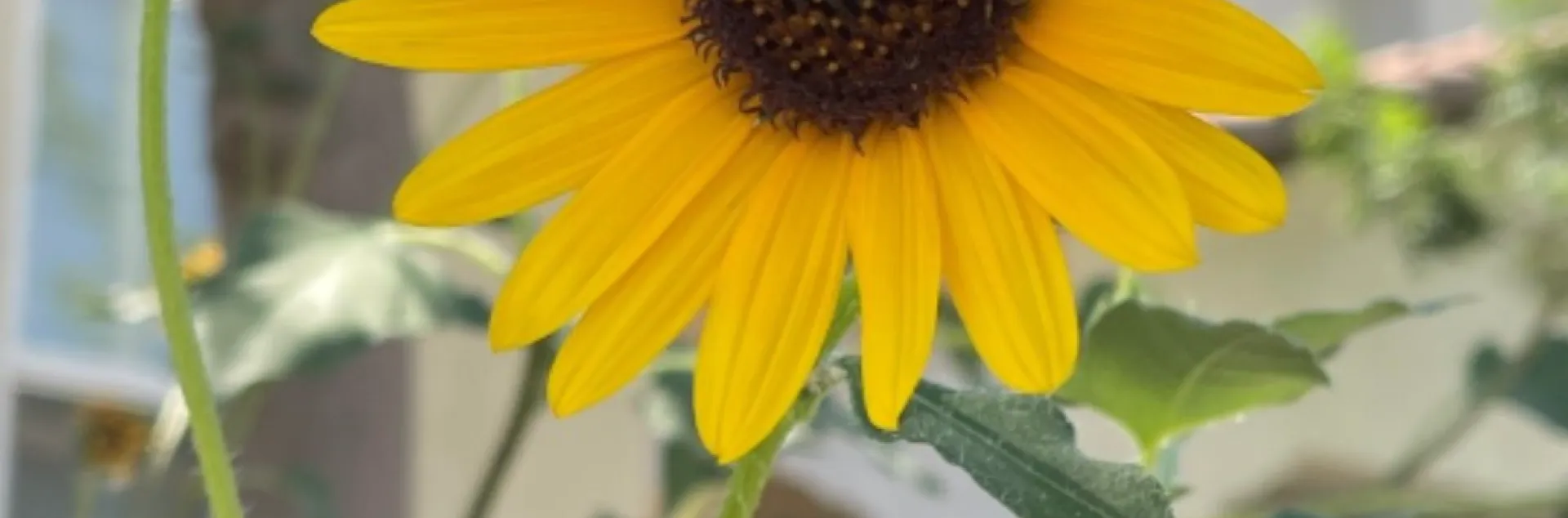
Seeing sunflowers always makes me happy. Summer is the peak season for sunflowers. In addition to bringing their smiley faces to our gardens, the nectar is a magnet for bees and butterflies. Birds, squirrels, and humans enjoy the seeds. They also make lovely cut flowers.
Members of the genus Helianthus (Helios means “sun” and Anthos means “flower” in Greek), sunflowers are native to North and Central America. Cultivated for hundreds of years in North America by indigenous people, they were used for food, medicine and oil.
Most sunflowers are annual plants (live one year) but some are perennials (live for several years). Most grow from seed but “Jerusalem artichokes” or “sunchokes” are planted from tubers.
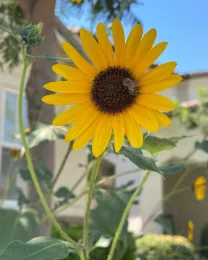
Coming in a wide variety of heights from one to twelve feet, sunflower blossoms range from two inches to the size of dinner plates. While yellow is the most common color, the colors can vary from light cream, orange, red to dark maroon. Some have a single bloom on the end of their stalk, while others are multi-branched with flowers all along each stem. Plants are tough and hairy, often with deep taproots and the flowers consist of a circular center of seeds surrounded by short yellow petals. Peruse online catalogs or visit a local nursery and garden center for interesting varieties.
Requirements
Plant sunflower seeds in early spring, once the danger of frost has passed. The soil should drain well and be nutrient-rich. Fertilizer isn’t required, but if desired, can add a product with numbers like 5-10-5 or 4-12-4.
As their name indicates, sunflowers need sun, so they generally thrive in our warm, sunny Central Valley. Plant them in area where they get at least 6-8 hours per day. They need regular watering until they are established. Soak the soil well and let dry a bit in-between waterings.
Planting
Seeds should be planted 1 inch deep. For varieties that are 2-4 feet tall space the seeds about 6 inches apart. Seeds for taller sunflowers (4-8 feet) need to be at least 1 foot apart, and giant varieties that can reach up to 10-12 feet should be planted 2 feet apart. Taller varieties may require staking to keep them from falling over.
Harvesting
Sunflowers produce flowers within three months of germination with seeds typically appearing 30-45 days later. Once they reach full maturity, they no longer follow the sun, facing east all day.
The heads are ready to harvest once the petals have fallen, the seeds look plump, and the back of the sunflower has dried.
To harvest, cut the flower off 1 foot below the head. Cover the head with a paper bag and keep it in a cool, dry place. When seed heads are dry, remove remaining seeds by rubbing two flower heads together. Use a bucket topped with a 1/2” screen to separate the chaff from the seeds. Allow seeds to dry for 1-2 months.
Storing
Once dried, keep seeds refrigerated in an airtight container for several months or toast them and enjoy!
So, along with the bees, butterflies and birds, enjoy these sunny beauties blooming in your garden this summer!
Sources
Sunflowers in Your Garden, UC Cooperative Extension, Stanislaus County.
Drying and roasting sunflower seeds, Oregon State University. https://extension.oregonstate.edu/catalog/sp-50-534-drying-roasting-seeds
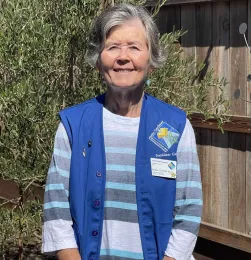
Denise Godbout-Avant has been a UC Master Gardener in Stanislaus County with UC Cooperative Extension since 2020.