
Tree wood decay after poor pruning, broken limbs or an accident that breaches the bark and cambium, can set in motion a range of responses. A well-made branch cut will heal over from the surrounding branch collar, as in this image:
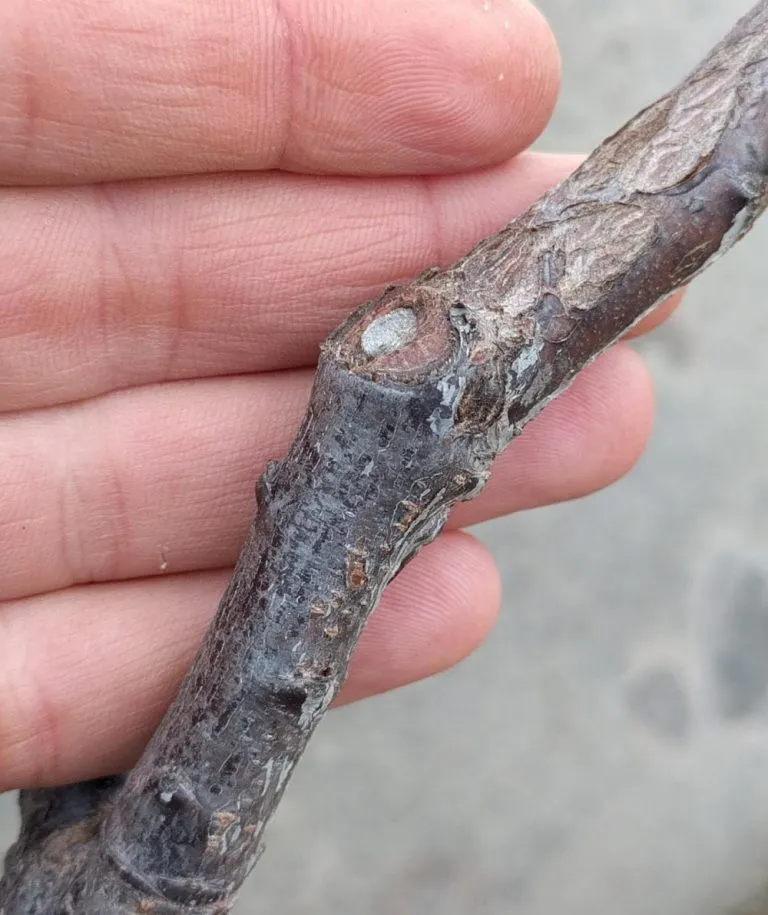
Notice the slightly lighter, raised round area around the white spot where the cut was made. Greg Alder photo
In a poor cut or damaged bark, it can start healing over, as in this image showing the inverted growth toward the branch center.
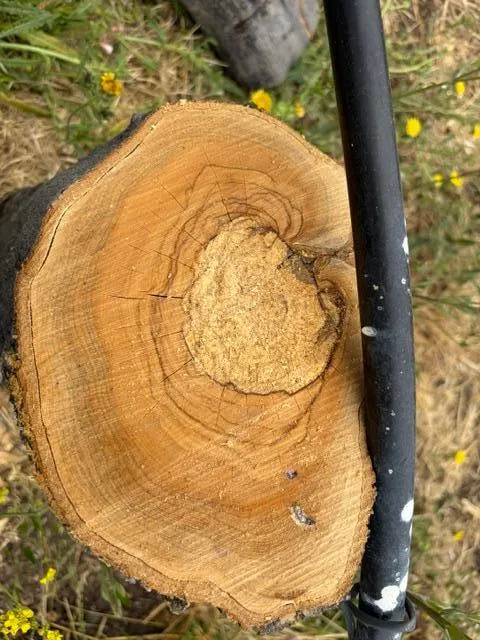
Notice the inverted growth and twisted growth “rings” where the tree is trying to cover over the wound.
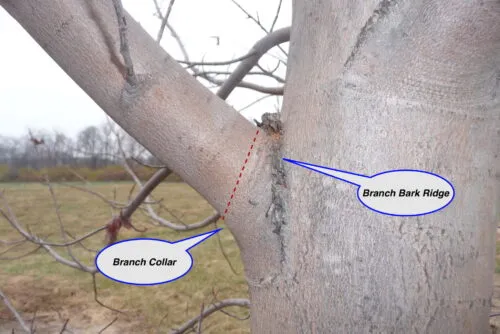
This is the tree’s response to cover the wound and protect itself from decay fungi. Most of a tree is dead, only the green parts - leaves, small branches, cambium – are living, the rest is “dead” and prone to rot. If a branch is cleanly removed, leaving the branch collar to begin to cover the exposed wood. If the cut is not too big and the cut is neatly done, the collar generates new cambium and bark to cover the exposed wood. The branch collar contains a protective chemical zone that inhibits the movement of decay organisms from dead or dying branches into healthy tissues of the parent stem.
If the tree has trouble covering the wound in sufficient time, it may leak at the wound point. The leakage is liquid produced by an initial infection by bacteria that feed on the sugars in the tree sap found in the cambium.
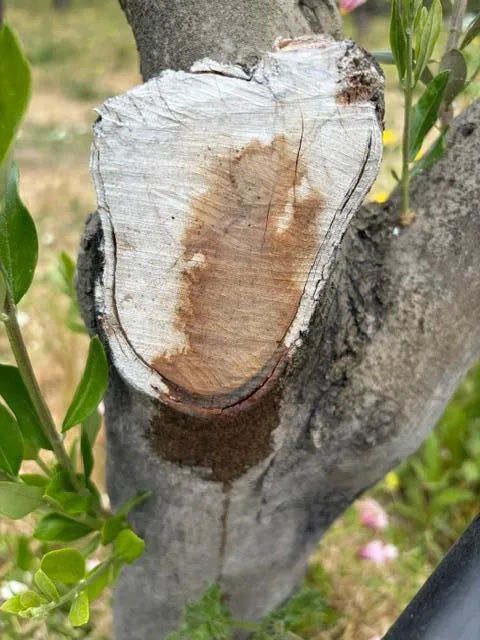
The first symptoms of damage is often the production of slime flux which is a bacteria-produced liquid that comes from the fermentation of tree sap.
Gradually over time a variety of decay fungi move in to consume the stored energy (sugars) that make up the wood. The decayed wood discolors and decomposes, often becoming soft and punky.
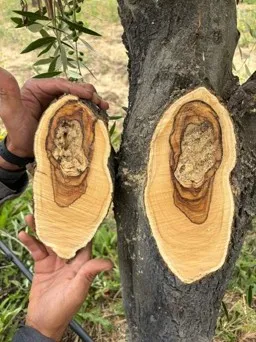
The wood can start decaying at the damage point on the bark and gradually causes a punky wood.
This punky, soft wood now becomes a beautiful environment for beetles and carpenter bees who find it an ideal reclusive from predators. In burrowing, they create galleries that extend the environment for further decay fungi, and the destruction of the tree goes on and on, up and down the tree as the decay extends far away from the initial damage point, to the point there is branch failure or even a whole tree failing in a strong wind.
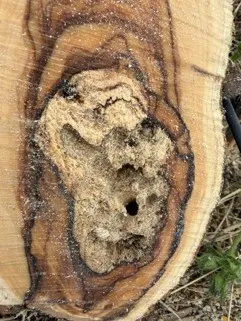
Galleries created possibly by carpenter bees
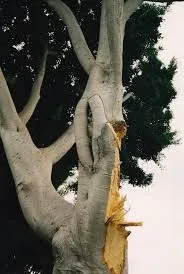
Let ‘er rip when a strong wind comes along. Ficus macrocarpa nitida (Indian laurel fig) branch failure. Photo: E. Slowik
All other images by Cindy Kron