
Last summer, I attended the Forest Institute for Teachers (FIT) workshop to deepen my knowledge of California forests and forest management practices. My fondest memories from the trip were meeting the facilitators and teachers from across the state. One leader, Dan Webster, had a special way of sharing his passion with the outdoors. A Yosemite naturalist and educator, Dan engages audiences by demonstrating how to connect with nature on a personal level. I was so inspired by his depth of knowledge, ease of conveying information and insightful commentary, that I decided to seek out ways to further captivate audiences with the outdoors.
I enrolled in the UC California Naturalist Program, hosted by a non-profit organization in Palo Alto, Grassroots Ecology. Through a combination of classroom sessions and field trips, the cohort develops a deeper understanding of the environment and designs a plan to engage audiences on ways to protect California's natural resources.
Course Overview:
- The eight-week course is divided into themes ranging from California geology to nature journaling.
- Each week the class meets for a 2.5 hour lecture and half-day field trips on Saturdays. The lectures were from a variety of scientists, professors and Grassroots Ecology staff. Field trips were to local parks and nature preserves (Jasper Ridge, Arastradero, etc.) around the Palo Alto and Cupertino area. Prior to each class, a corresponding reading is assigned from The California Naturalist Handbook.
- In order to graduate, naturalists develop and implement a capstone project to share knowledge from the course.
- Naturalists require 40 volunteer hours to complete certification after the course is complete.
Course Highlights:
iNaturalist and Citizen Science
A large component of course is sharing observations and connecting with others through iNaturalist. This app uses crowdsourcing to identify and record observations. Users can search and contribute to projects or start an original project. Each week, naturalists were expected to upload field trip observations to the app. I enjoy using iNaturalist because it becomes a digital scrapbook of all my locations and observations.
(Bay Checkerspot Butterfly, Mount Diablo, Recorded on iNaturalist April 2019)
Stevens Creek Water Quality Monitoring
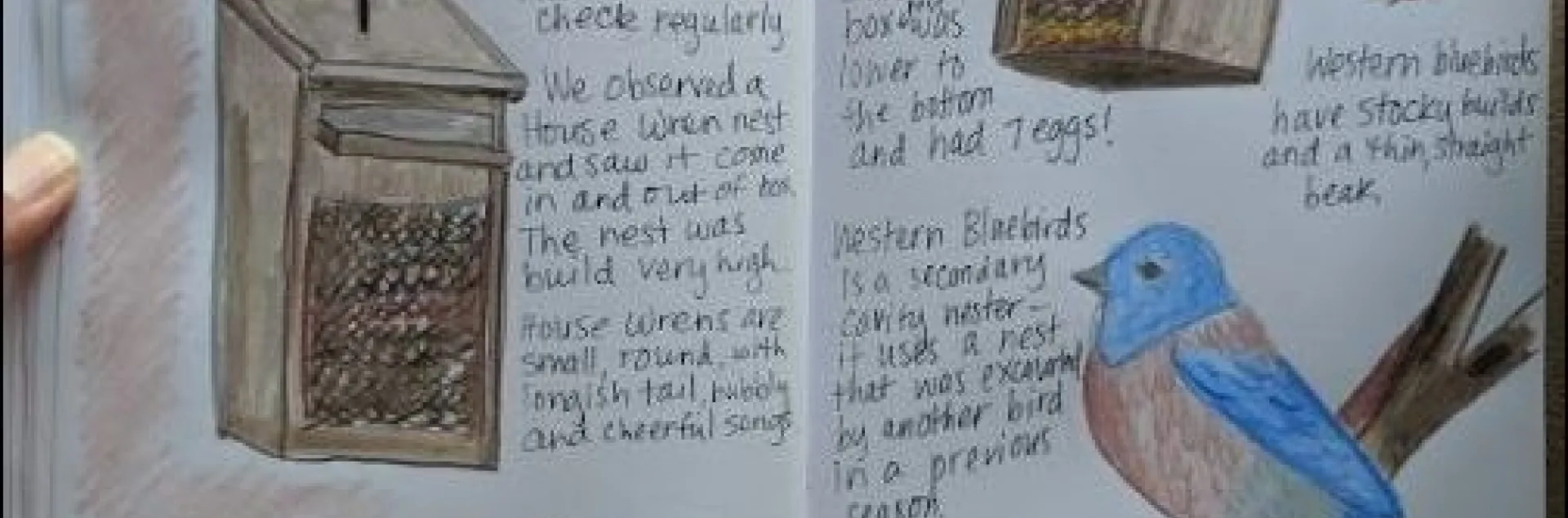
Nature Journaling with John Muir Laws
Jasper Ridge
Community Building
The best part of the course was meeting people with similar interests and goals. I met activists, gardeners, docents, environmental professionals and students who were all passionate about the same things. To continue my education after graduation, I take part in BioBlitzes, where people participate in a biological survey to record as many living species as possible in one area within an assigned length of time. BioBlitzes are held in parks, preserves or any other outdoor space that needs attention. Keep Coyote Creek Beautiful is an organization hosts BioBlitzes in the San Jose area.
My Capstone
To graduate, naturalists design and implement a capstone project that explores topics from the course in greater depth. The estimated capstone time commitment is eight hours. Being a middle school teacher, I decided to design a series of lesson plans to use in the classroom. Students complete a scavenger hunt (using Goosechase) to explore the outdoor elements of our campus. Groups will search and record native and non-native plants, trees and insects/birds that they find. Inside the classroom, students will analyze maps to identify local watersheds, bioregions and indigenous tribes that once occupied the area.
A few questions I want to explore:
How can exploring our community help us appreciate it?
What did you learn/notice about the outdoors that you haven't before?
The ultimate goal is to use the campus exploration to create an art project (either nature journaling or other environmental activism art) to communicate the importance about our environment.
Next Moves
I highly recommend becoming a part of the CalNat community! The best part of the California Naturalist Program is that any person living in California can apply and there are over 45 partner organizations around the state. Don't forget to ask partner organizations if they offer scholarships!