
My husband and I walk in the neighborhood by the fire road. There are many trees in the area. Today, as I was walking, I noticed someone picking the fruit off one of the trees. When asked what it tasted like, she stated it was a loquat tree, and she just peels off the skin and eats the fruit. Never heard of this type of tree, so did some research.
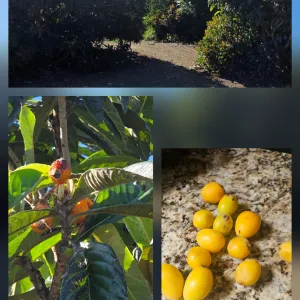
The Loquat (Eriobotrya japonica), a subtropical tree of the rose family (Rosaceae) grown for its evergreen foliage and edible fruit. The loquat is native to central eastern China. It was introduced to Japan more than 1,000 years ago, where it was developed horticulturally and is still highly valued. However, it was brought to California in 1870 as an ornamental plant. Some superior Japanese varieties reached Europe, the Mediterranean, and a few other regions. The plant is grown commercially (usually on a rather small scale) in many subtropical regions. Ornamental in appearance, it is frequently planted in parks and gardens. The fruits are high in fiber, vitamin A, and antioxidants, and are commonly eaten fresh.
Discovered many recipes[1] using this fruit, specifically known for tea, jams, and salsas. For making teas from the leaves of the loquat, from the magazine Edible Santa Barbara and Wine Country (below)
Biwa-Cha (Loquat Leaf Tea)
Ingredients
- 2 loquat leaves, glossy green on top, furry on the bottom
- 10 ounces of water
- Sweetener of your choice (optional)
Instructions
- Pick 2 fresh, unblemished loquat leaves. Ensure these are free of pesticides or other chemicals.
- Using a knife or a clean scouring sponge, scrape off the soft fur from the underside of the leaves. In addition to clouding your tea, the fine hairs can irritate. If your skin is sensitive to contact dermatitis, wear gloves for this task.
- Using a knife, cut away the central ribs of the leaves, then crumple the leaves to break them up, and slice them into slivers.
- In a small saucepan, add the leaf pieces and 10 ounces of water. Bring to a boil for 5 minutes, then steep 10–15 minutes. Strain into your favorite mug. This tea already has a light sweet flavor, but add an optional sweetener of your choice, like honey.
[1] https://ediblesantabarbara.com/recipes/biwa-cha-loquat-leaf-tea/