
It’s been six years since we removed a huge pool from our backyard. We have laid miles of buried electrical and irrigation conduits; dug hundreds of feet of main water line and underground drainage piping; pulled dozens of yards of electrical wire; poured 360 square feet of concrete; set a literal ton of flagstone and brick over concrete pathways; and built 3 concrete raised bed planters, an outdoor kitchen, storage shed and potting shed. We are exhausted!
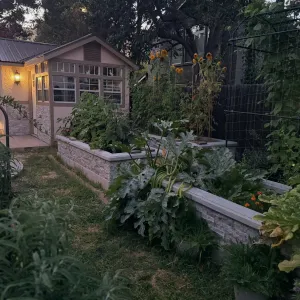
We have almost arrived at the moment that all this work has prepared us for: planting! The overall plan includes dedicated pollinator, native plant, succulent, and berry gardens, as well as herbs, flowers, and edible plants scattered throughout.
I’m most excited about the pollinator garden, which will be visible from my kitchen window. The space is oddly shaped, 17 feet long and 9 feet wide at the broadest section. We have installed underground irrigation in that area, and have purchased compost and soil amendments to work into the existing topsoil. It isn’t a large area, but in combination with other flowering plants in the yard, I hope it will nurture butterflies, bees, and hummingbirds. Each of these species has different needs in terms of the shape, color and timing of their preferred plants.
Butterflies
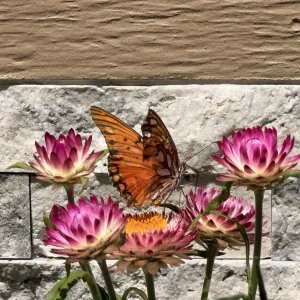
Butterflies prefer flowers that are pink, purple, yellow, or orange. They need a landing perch to rest upon while sipping nectar, so flat flowers such as daisy-shaped blossoms in the aster family, yarrow (Achillea millefolium), butterfly bush (Buddleja davidii), and lantana are ideal. I’ll also want plants to feed butterfly larvae in my pollinator garden, and have purchased a couple of milkweed (Asclepias speciosa) plants for that purpose. Milkweed is the only plant that monarch (Danaus plexippus) larvae will eat. While my backyard is currently filled with gulf fritillary (Agraulis vanilla) butterflies, who lay their eggs on the passionflower (Passiflora incarnata) vine, and the occasional western tiger swallowtail (Papilio rutulus), monarchs are rare. I hope to remedy that with the addition of milkweed. I’ve also been growing California Pipevine (Aristolochia californica), the only plant that pipevine swallowtail larvae will eat, for some years, but with little success. The plants are alive, but have never flowered, and I’ve yet to see a pipevine swallowtail near them.
The final consideration for selecting pollinator plants is finding those which flower throughout the year. Good plants for butterflies include California lilac (Ceanothus ‘Dark Star’), lavender (Lavandula stoechas), and California poppy (Eschscholzia californica) for winter/early spring; coreopsis, bee balm (Monarda), and yarrow (Achillea millefollium) for spring; and echinacea, scabiosa, Mexican sunflower (Tithonia sp.), and Salvia clevelandii cultivars for summer/early fall.
Bees
All bees are critical to the health of natural, ornamental and agricultural landscapes, but native bees are of particular importance. Native bees evolved with our native plants and climate, pollinate 75% of fruits, nuts, and vegetables in the United States, pollinate 80% of flowering plants, forage longer than honey bees, and tolerate cooler temperatures and wind. Because native bees differ in the seasons they appear, habitats they prefer and flowers they favor, its crucial to provide plants that flower throughout the year.
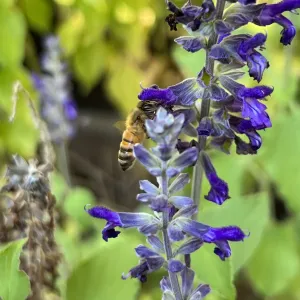
Plants preferred by bees vary, from shallow tubular flowers with landing platforms to deep, wide flowers they are able to enter. The only flowers difficult for a bee to pollinate are those with a long, narrow, tubular profile, but that’s where the hummingbirds come in. Excellent plants for bees include rosemary (Rosmarinus officinalis), Brandegee’s sage (Salvia brandegeei) and catmint (Nepeta sp.) for winter/early spring; blanket flower (Gallardia x grandiflora), dwarf germander (Teucrium chamaedrys), and Russian sage (Salvia yangii formerly known as Perovskia atriplicifolia) for late spring/summer; and autumn joy sedum (Hylotelephium 'Herbstfreude'), and autumn sage (Salvia greggii cultivars) for late summer/fall.
Hummingbirds
Hummingbirds are a sentinel species, meaning that we depend on them to indicate the state of our environment. They are highly sensitive to environmental disruptions and act as an early-warning system for ecological health. Hummingbirds need plants for shelter, shade, and nesting materials, as well as food. Their nests are constructed from spider webs, cottony leaf hairs and silky fibers from airborne seeds. It’s important that we do not spray for spiders or knock down all the spider-web material so that it is available to the birds.
Hummingbirds require twice their body weight in nectar and tiny insects daily. They prefer colorful, tubular, nectar-filled flowers, with red flowers being their favorite. Flowers sought after by hummingbirds include manzanita (Arctostaphylos sp.), Australian fuchsia (Correa cultivars), and fuchsia-flowered gooseberry (Ribes speciosum) for winter/early spring; sticky monkeyflower (Mimulus aurantiacus), hummingbird sage (Salvia spathacea), and coral yucca (Hesperaloe parvifolia) for late spring/summer; and cardinal flower (Lobelia cardinalis), California fuchsia (Epilobium canum cultivars), and hummingbird mint (Agastache cultivar) for late summer/fall.
My husband finally convinced me to remove our backyard pool six years ago by agreeing to build the backyard of my dreams in its place. We naively believed that we could accomplish the task in six months to a year. The project has been challenging and has taken substantially longer than we ever imagined it would. Along the way, we’ve felt frustrated, stressed, impatient, overwhelmed, old, and tired. We’ve also learned to communicate better, have been impressed by each other’s work ethic, and have developed a sense of shared pride in our accomplishments. I’m overjoyed to be approaching the final stages of this project. It’s time for our yard to beckon the butterflies, bees and hummingbirds to come closer, sip nectar, inadvertently pick up a little pollen, and sustain generations of flowers and their pollinators.