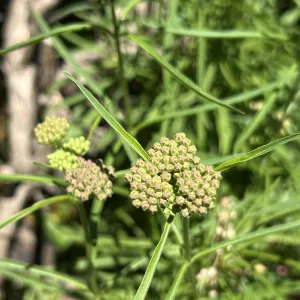
July 11th was a red-letter day in our garden. I made the weekend check of the side yard to see if anything there needed more water to tide it over until the sprinklers on Monday. I quickly scanned the milkweed plants as I do every time I am in the side yard. I hadn’t seen a Monarch butterfly yet this year, but I knew they had been spotted in Vacaville in early July.
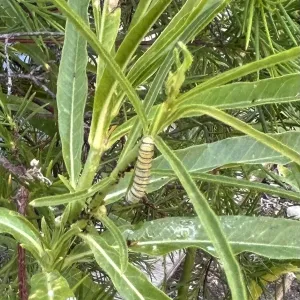
I’ve been growing milkweed for several years. I grow it as a host plant for the monarch caterpillar. I have two patches now that reliably return each year. Unfortunately, I had never seen a caterpillar on any of them. Other gardeners tried to cheer me up, telling me to hang in there. They said it would happen if I was just patient. And on July 11th, there it was, a tiny thing munching away. I took pictures to commemorate the occasion.
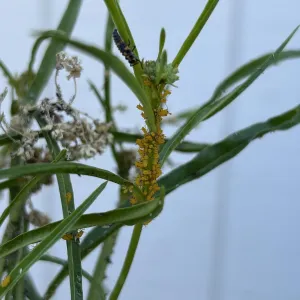
I have grown a few types of milkweed, but in my yard Asclepias fasicularis, or narrow-leaved Milkweed, has done the best. This type blooms from May to October and likes full sun. These plants are aphid magnets, particularly Oleander aphids. A few weeks after the aphids appear, the ladybugs arrive. The ladybugs and their larvae love to eat aphids. You learn to live with the aphids, as any treatment against them might dislodge monarch butterfly eggs or poison the young caterpillars.
The milkweed plants have a toxin in their leaves, stems, and flowers that apparently makes them less tasty to most herbivore predators. The monarch caterpillars don’t seem to mind it a bit. Biologists think that ingesting the toxin makes the caterpillar less attractive as a food source for many of their predators. Milkweed is the only food source that monarch caterpillars have.
I checked back a few days later, and I didn’t see the caterpillar. Either he has been eaten, or he has gotten better at hiding. The patch of milkweed he was in is growing up through a prickly Grevillea shrub. I am not willing to investigate it any more deeply. I will keep monitoring, though. Perhaps there are more eggs to hatch or more Monarchs to visit this year. I will definitely still be looking.
The Xerces Society has wonderful regional guides to Native Milkweeds on their website, xerces.org. The California guide was a great resource for this article.