
When I first got my city-subsidized $10 worm condo some years back (many years back), I got really excited about worm farming. Back then, we just called it worm composting. The only book of “authority” was “Worms Eat My Garbage” by Mary Appelhoff. I learned from the book the term “vermicomposting,” and most of what I learned about worms.
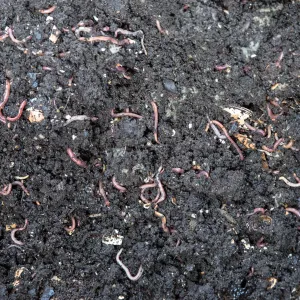
I was recently asked to talk about worm farming at our local library. I thought it might be good to brush up on my knowledge.
The link from Oregon State University talks about everything one needs to know to maintain a worm farm. https://extension.oregonstate.edu/catalog/em-9034-composting-worms
I learned that not much has changed since I filled up my first worm composting bin: definitely use redworms; the bin should be about 1 foot deep, regardless of the container's length and width, because redworms are surface dwellers. They don’t burrow deep like the earthworms we find in the garden. They breathe and expel liquid waste through their skin, and each segment of their body has 2 kidneys. One red wiggler worm can eat as much as its own body weight in decaying organic material every day.
This is just some of the information I gathered from the above link. Be sure to check it out.