
It was not my intention to be surrounded by spider plants in my home. I don’t dislike spider plants, but they aren’t my first choice for a houseplant, perhaps because I grew up in an era where spider plants were everywhere, from festooning macrame plant hangers to growing outside under a local Monterey cypress.
But here I sit surrounded by spider plants. And, actually, they are kind of cute with their bright, strappy, variegated leaves, long-stemmed tiny flowers, and clusters of plantlets dangling off the main plant. They add some cheer to the darker corners of my plant stands.
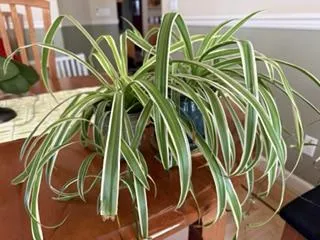
How did I get here? Two words - college students. My college-aged children have not yet caught my love of gardening. They appreciate flowers and pollinators, but no amount of child-friendly gardening over the years led to further interest. But this year, something changed and they asked for plants for their apartments. Something easy to grow, inexpensive to kill, and that would thrive despite neglect.
Their requests coincided with the Master Gardener fall plant exchange, where a donor brought spider plants and pothos cuttings. Perfect! Free cuttings of easy-to-grow plants! I started them in small pots to ensure they could survive the transition to the college apartments.
The spider plant (Chlorophytum comosum) has a well-deserved reputation as a good houseplant for beginners because it is easy to grow, can tolerate intermittent watering, and is easy to propagate. The plant is native to coastal areas of South Africa and can be grown indoors as a houseplant or outdoors in cooler coastal California locations. It has narrow, strappy leaves that may be either green or variegated. The main plant grows about 12-15 inches tall, but produces long stems up to 2 feet long. Small, white, star-shaped flowers bloom at the end of the long stems and small plantlets or offsets are formed at the end. Some sources say that the plant got its name because the plantlets resemble spiders suspended from a web. The plants have thick, fleshy roots that store water, which helps the plants survive inconsistent watering. It is a lovely hanging plant with its grasslike leaves and dangling plantlets. Additionally, studies have shown that the plant is effective in removing certain pollutants from indoor air in homes and offices.
The spider plant can be grown indoors in all-purpose potting soil, but since it grows quickly, it may need frequent repotting to avoid root crowding. The plant prefers medium to bright light indoors, but can tolerate low light and cool to average temperatures. The plant can be propagated by placing the plantlets in soil while attached to the main plant or by removing the plantlets once roots are formed. I’ve had good luck by removing the plantlets, starting them in water until the roots form, and then planting them in their own pots. The plant can be fertilized every three to four months. As with many houseplants, the leaf tips may brown due to a variety of causes, such as excessive fertilizing, low humidity, chemicals in the tap water, sunburn, or other causes. The brown tips can be trimmed off, although the condition may return until the underlying cause is addressed.
Happily, the young adults still come home for the summer and we squeeze clothes, kitchenware, camping gear, and other college detritus back into the house. And this time, spider plants and grocery store orchids (which are also thriving) made the trip back home. The plants and young adults will leave again, so I am squeezing spider plants onto many surfaces, including the kitchen counter, desks, and other places I don’t normally keep houseplants.
In the fall, I will take some plantlets to the Master Gardener plant exchange in September to share. If you know a young adult striking out on their own, a spider plant may be just the thing to give them!