Newsletters
- In-a-Nutshell - Nut Culture
- Dried Plum News - Prune Culture
- Olive Notes - Olive Culture
Newsletter Articles:

Links
- UC Statewide Integrated Pest Management Project
- National Weather Service - San Joaquin Valley
- UC Fruit and Nut Research and Information Center
- State Olive Day Presentations
- California Dried Plums
Publications
Pest Notes
- UC Pest Management Guidelines (UC Statewide IPM Project Web Site)
UC Cooperative Extension Cost and Return Studies
- Almonds
Double Line Drip Irrigation. Southern San Joaquin Valley. 2016 PDF - Almonds
Flood Irrigated. San Joaquin Valley North. 2011. PDF - Almonds
Micro-sprinkler. San Joaquin Valley North. 2016. PDF - Olive Oil
Super High Density. San Joaquin Valley 2007. PDF - Olives - San Joaquin Valley. 2005 PDF
- Pecans - Sacramento/San Joaquin Valley - 2005. PDF
- Pistachios
Low Volume Irrigation - San Joaquin Valley South. 2015. PDF - Walnuts
Late Leafing - Lateral Bearing. San Joaquin Valley North. 2017. PDF - Walnuts
Micro-Sprinkler Irrigation - San Joaquin Valley North. 2007 PDF
- Almonds
October 2024: Herbs Among the Edibles
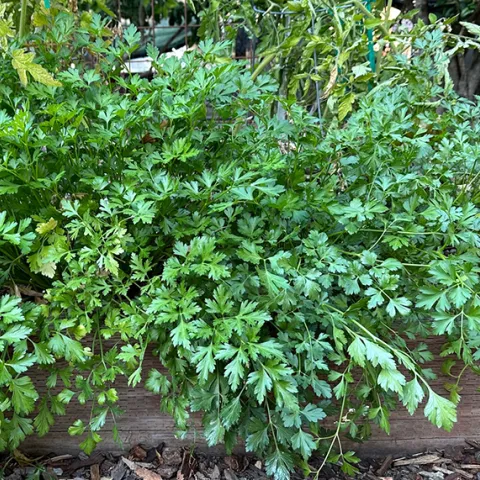

The supporting cast of herbs in the Edible Demo Garden includes basil, oregano, thyme, lemon verbena, chives, Mexican tarragon, anise hyssop, chocolate mint, lavender, pineapple sage, and rosemary. Some are harvested and sold fresh at the Indian Valley Organic Farm and Garden farm stand and others are dried and offered as seasonings and teas. They are among the most reliable plants in the garden.
What is an Herb?
The word “herb” can be applied to any non-woody plant with leaves, seeds, or flowers used for seasoning, medicine, or fragrance. It’s the culinary uses that most commonly interest home gardeners. Herbs are considered different from spices based on the part of the plant that is used. Spices are derived from the roots, bark, fruit, berries, and seeds of plants. Some plants can be both an herb and a spice. Coriandrum sativum, also known as Chinese parsley, is called cilantro when the green leaves are used as an herb and coriander when the seeds are used as a spice.
Why Grow Herbs?

- Herbs make good neighbors with other plants and can be easily integrated into both edible and landscape gardens. They are attractive enough to do double duty as ornamentals.
- Herbs are cost-effective. They are inexpensive to grow and can be harvested in the amounts required for a recipe. No need to spend money at the supermarket on packages of herbs.
- The blossoms on herbs attract pollinators and other beneficial insects.
- Herbs are usually not bothered by pests and diseases. Some herbs have been shown to repel pests affecting companion plants. An example is the ability of basil to deter thrips from invading tomato plants.
- Deer usually leave herbs alone, especially those with strong tastes and scents.
- Herbs grow well in containers and are a good choice when garden space is limited.
Tips on Growing Herbs

Some herbs are started from seed while others are easy to grow from cuttings. Information on the growing needs of common edible herbs can be found at http://marinmg.ucanr.edu/EDIBLES/EDIBLES_GROW_SHEETS/
Check the upcoming events listings on this website to register for a hands-on public workshop on growing and using popular edible herbs. There will be a workshop held on the College of Marin Indian Valley Campus on November 2, 2024, from 10:00 am to 12:00 pm.