UC ANR is committed to providing an accessible and inclusive web experience for all users. If you encounter an accessibility barrier or need content in an alternative or remediated accessible format, please contact anraccessibility@ucanr.edu.
In this issue: Processing Tomato Update Investigation of Possible ALS-Resistant Common Chickweed Populations in the San Joaquin Valley Investigating the Cause of Leaf Blotch and Fruit Spot of Apple Nitrogen Fertility in Common Beans Following Whole Orchard Recycling Updates on Botryosphaeria-Phomops...
Melody Kendall As a child, a bee sighting was usually accompanied by a lot of screaming and general chaos. As I matured bees were given a wide berth and usually avoided.
Who loves seeing butterflies in the garden? The Gulf Fritillary Butterfly range in the U.S. is wide. From North Carolina to Florida and the Southern states to the Midwest and into California. It was first seen and recorded in the Bay area in 1908.
An Overview of the California Vegetation Treatment Management (CalVTP) Program More than 18 months ago, the California Board of Forestry and Fire Protection approved the California Vegetation Management (CalVTP) Final Program Environmental Impact Report (Program EIR).
Reposted from the UC Davis News UC Davis Veterinary Emergency Response Team members help care for horse in the field during the LNU Lightning Complex fire.
Dear members of the Monterey County 4-H Leaders Council, On Tuesday, August 17th , the 4-H Leaders Council will hold its monthly meeting at 7pm. The location will be at the Spreckels Memorial Building in Spreckels.
A "Natural History Note" From UC California Naturalist's lead scientist, Dr. Cameron Barrows. Climate change is the greatest threat to our existence in our short history on this planet. Nobody's going to buy their way out of its effects. - Mark Ruffalo The environment is changing.
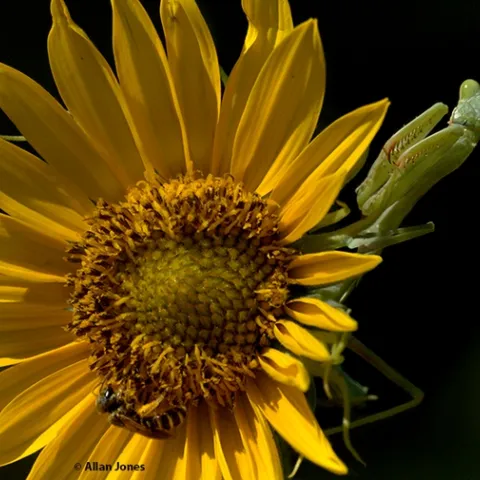
Dear Ms. Mantis, We see you. You're trying to camouflage yourself, but we see you. You're hanging out on a showy milkweed, Asclepias speciosa, trying to catch a butterfly or a bee.
Lilies are monocotyledons, plants which have flower parts in multiples of three, parallel leaf veins and fibrous, branching roots. They often have strap-like leaves in a clump at the base of the plant, and flowers on long stalks which tower over the leaves and wave in the breeze.