
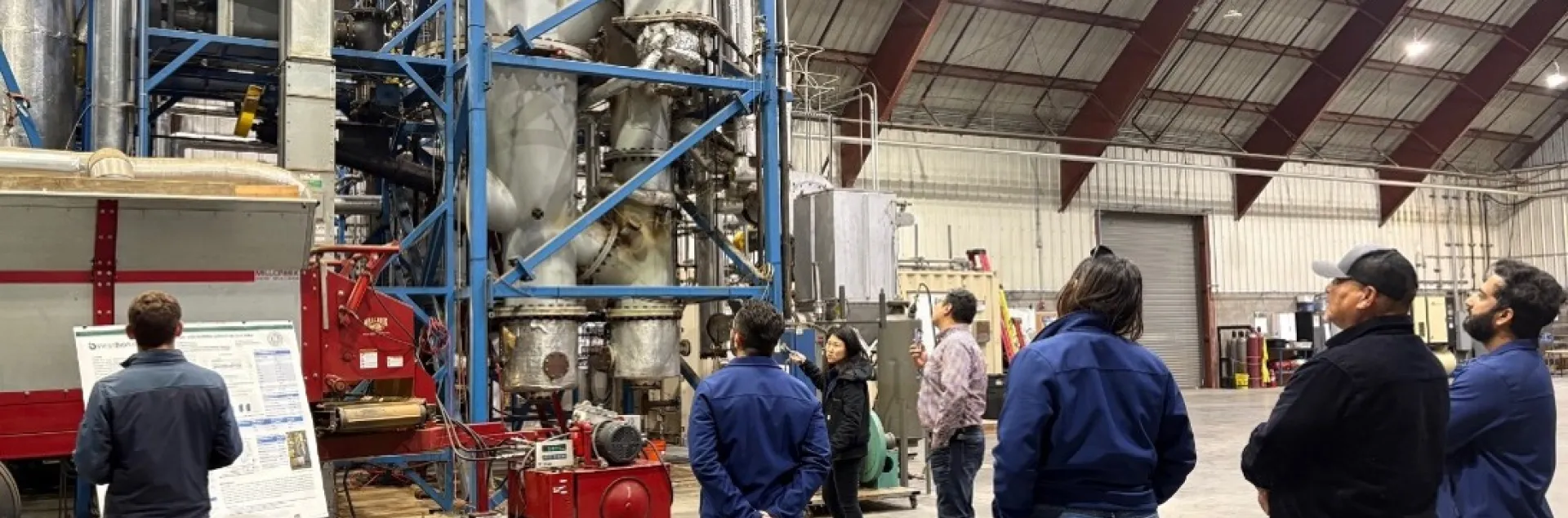
In April 2026, under the coordination of Woody Biomass and Forest Products Advisor, Dr. Cindy Chen, a team from University of California Agriculture and Natural Resources (UC ANR) had the opportunity to tour the facilities of West Biofuels — its Hat Creek Bioenergy Plant in Burney and the Research and Development (R&D) center in Woodland. The tour was hosted and guided by Chief Operating Officer, Matt Summers, and Business Manager, Mackenzie Castruita.
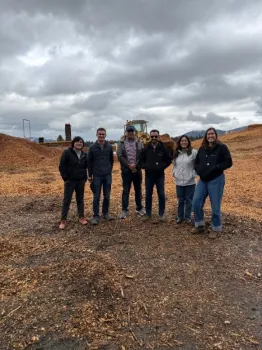
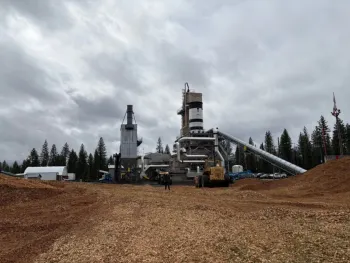
Hat Creek Bioenergy Facility (Burney, CA)
Hat Creek Bioenergy operates as a commercial biomass energy plant, utilizing primarily forest residues as feedstock, though it is experimenting with walnut shells to examine the feasibility of adding agriculture feedstock to the mix. The plant processes roughly 70 – 80 tons of biomass per day, delivered via about 10 truckloads daily, each carrying 14–16 bone-dry tons, or over 20 tons at typical moisture levels. Regarding feedstock, Matt Summers emphasized several key operational insights:
- Biomass accounts for about 50% of operating costs
- Ideally, biomass above 25% moisture content is needed to maintain optimal system performance
- It is the most efficient when feedstock is sourced locally, typically within 15 - 20 miles radius
- The facility is testing with less than 10% of walnut shells, which serve as a cost-effective seasonal supplement, especially in the winter
It is important to note that one of the key features of Hat Creek Bioenergy is its production flexibility – the plant can adjust its production of electricity and biochar to align with feedstock changes to ensure it remains cost-effective and meets market demand. As a carbon-rich soil amendment with growing value in the carbon markets, biochar produced at the Hat Creek facility is a carbon credit and has a market value at around $180/ton.
The Burney facility uses a thermochemical conversion process to generate renewable energy. Heat produced by the system is transferred through thermal oil to an Organic Rankine Cycle (ORC) turbine. Unlike traditional power plants that use steam to drive turbines, the ORC system runs on hydrocarbon working fluid that vaporizes at lower temperatures. This technology allows energy to recover efficiently from biomass-generated heat while reducing operational complexity. This approach is also considered to be cost effective.
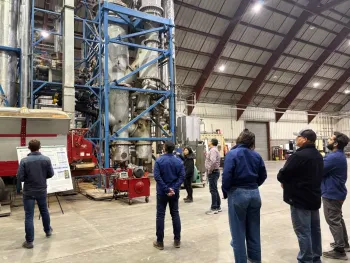
West Biofuels Research & Development Center (Woodland, CA)
While Hat Creek Bioenergy demonstrates commercial feasibility of bioenergy, West Biofuels’ Research and Development (R&D) facility in Woodland focuses on innovation. At this facility, West Biofuels runs tests using its gasification system and aims to explore technologies that can produce renewable energy more efficiently and safely. As a common process to convert biomass into biofuels, a gasification system typically operates at between 700 and 1,200°C to produce a gaseous matter known as syngas. Syngas contains hydrogen (H2), carbon monoxide (CO), methane (CH4), and other chemical compounds that can be further processed into natural gas, jet fuel, hydrogen, or other low-carbon products.
For testing purposes, the gasification system at woodland is smaller in scale compared to the systems used at an operational bioenergy plant and typically heats biomass at around 850°C. Through a carefully managed and engineered process, the Woodland facility uses a steam gasification system and produces a gas that contains higher hydrogen content and lower nitrogen content, making it more suitable for renewable fuel production. Complex organic compounds known as tars are formed during gasification, and instead of treating these compounds as waste, the engineer team at the Woodland facility was able to capture them using a specialized scrubber so they can be utilized for energy recovery through combustion, improving the overall efficiency while minimizing waste.
Expanding the Model: Future Projects
West Biofuels is actively scaling its model across California. For example, a planned project in Kerman, CA will use orchard removals and almond residues as feedstock. Additional projects include facilities in Mariposa County and Southern California.
The tour demonstrated that biomass utilization plays a critical role in supporting multiple California priorities, including improving forest health, mitigating wildfires, creating rural jobs, and reducing reliance on fossil fuels. As California continues to invest in forest restoration, developing markets for low-value woody material will be critical to the long-term success of these efforts.
The UC ANR Biomass Utilization Team was able to use this valuable opportunity to connect and exchange knowledge with industry partners while gaining insights into the technologies and workforce needed to support California's growing forest bioeconomy. We would like to express our appreciation to the West Biofuels team for hosting the tour and sharing their expertise and vision for the future of biomass utilization in California.