
By Mark Zigelman, UC Master Gardener
Tomato gardeners searching for new and great tasting tomato varieties may be hampered by limitations of their garden, namely disease, poor soil, salinity or temperature extremes. There is a possible solution to these problems: grafted tomatoes.
Advantages of Grafted Tomato Plants
- Increased plant vigor and tomato yield
- Disease resistance to common local diseases like Verticillium Wilt and Tomato Spotted Wilt Virus
- Tolerance to greater variations in temperature
What is a Grafted Tomato?
- A grafted tomato plant is created by combining a preferred variety to a hardy rootstock. The rootstock refers to the roots and lower portion of the plant while the fruiting tomato variety, the scion, is the top portion of the plant
- The rootstock is chosen for its superior and specific growth characteristics, and the scion is chosen for its desirable fruit qualities
Home Gardener Considerations
- Evaluate cost of purchased grafted plants vs. grafting supplies vs. hobby value
- Consider the number of grafted plants and varieties desired.
Basic Supplies
- Rootstock seeds and scion seeds
- Growing cells/flats and clean germination mix, bleach for cleaning flat, heating mat
- Grafting clips, razor blades
- Covered growing chamber with adjustable ventilation, thermometer, humidity meter and misting bottle
Grafting Tips
- Timing of planting: plant scions first then rootstock. The goal is for the stems of scions and rootstock plants to be same size at time of grafting
- Sanitation: Use high quality seeds to prevent seed borne diseases. Sanitize workspace and wash hands when working with seedlings
- Change grafting blades frequently to maintain sharp edges and achieve clean cuts
Post Graft Care
- Maintain plants in dark for 3-4 days
- 80-85°F at 80% humidity or greater and mist as necessary
- Remove and discard dead or dying plants to avoid contamination of remaining plants
- Harden off after 3-4 days by gradually decreasing humidity and increasing light. Return to “healing” conditions if necessary
- Transplant to larger containers or cells as vigorous growth resumes and graft appears tight
Planting in the Garden
- Make sure the graft union is well above ground level. Gardeners often plant tomatoes deep, but this cannot be done with grafted tomato plants. The graft union must be kept above ground.
- Expect a two week delay in harvest time with grafted tomatoes.
Grafting methods
| Type | Also Known As | Image | Advantages | Disadvantages |
|---|---|---|---|---|
| Side Graft | Side by side | 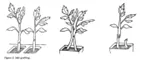 | High success rate and can use larger plants | Slower, more difficult technique |
| Cleft Graft | Wedge graft |  | Graft site more secure than top grafting | Technique needs more time |
| Top Graft | Splice graft tube graft | 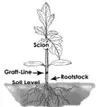 | Easy to learn and do | Requires grafting clips |
References
Grafting Tomato Plants. 2009. Video. Ohio State University. 01-0002 YT - YAMATO - Dakota - Intro2 - EN
Guan, Wejing and Steve Hallett. 2016. Vegetable Grafting: Techniques For Tomato Grafting. PDF. Purdue Extension. Techniques for Tomato Grafting
Heinz, Matthew and Monicah Weiganjo, et al. Tomato Grafting Guide: Preparing Grafted Tomato Plants Using The Cleft Graft Method. PDF. UC Davis. Tomato Grafting Guide | Feed the Future Innovation Lab for Horticulture
How To Graft Greenhouse Tomatoes. 2011. Video. University of Vermont. How to Graft Greenhouse Tomatoes
Hu, Bizhen and Stephanie Short., et al. A Pictorial Guide to The Cleft And Splice Graft Methods For Tomato And Pepper. 3rd ed. Ohio State University Extension. Grafting Guide | Vegetable Production Systems Laboratory
Johnson, Sacha and Patti Kreider. 2011. Vegetable Grafting: Eggplants And Tomatoes. PDF. WSU Extension. WSU Extension Publications|Vegetable Grafting: Eggplants and Tomatoes