
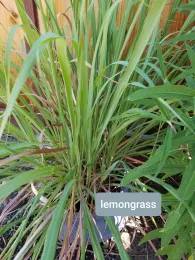
The most popular variety of lemongrass grown is Cymbopogon citratus, a native of southern India and Ceylon. The fast-growing plant has slender blue-green leaves that turn red in the fall. While lemongrass is widely used as a fragrance in perfumes and cosmetics, the focus here is on its culinary value. The most potent part of the plant is the bulbous base, which emits a lemony floral flavor when crushed. Lemongrass is very popular in Southeast Asian cuisines. Use lemongrass in curry pastes, soups, marinades, and tea.
How to grow
Lemongrass is frost-sensitive, so in colder microclimates, it may be convenient to grow it in a pot and bring it inside during winter. In early spring, cut the plants back to about a foot in height. Nurseries in Santa Clara County typically carry lemongrass, but you can also root your own from supermarket purchases.
- Type: Perennial, clumping grass
- Light: Full sun, tolerates partial shade
- Soil: Well-drained. Fertilize regularly with nitrogen during the growing season
- Water: Moderate; do not overwater to avoid root rot
- Size: 3 to 4 feet tall, 2 to 3 feet wide
When to plant/propagate
- Transplants: Set out transplants in spring after the last frost date
- Cuttings: Best propagated by division in spring
Harvesting
- Harvest anytime during the growing season once the stalks are ½-inch in diameter
- Harvest stalks by using a sharp knife to cut as close to the root as possible, or by bending the stalk and twisting. You may wish to wear gloves, as the leaf edges can be sharp
Indoors
Lemongrass can grow indoors with 6 hours of bright light from a sunny window or 12 to 16 hours of supplemental light from cool-white fluorescent or LED lamps.
Pets
Dogs and cats may develop an upset stomach if ingested
More information
- Lemongrass, UCCE Master Gardeners of Sonoma County
- Grow Herbs!, UCCE Master Gardeners of Sacramento County