
Invasive pests are an ongoing problem in California. This page highlights the pests currently of concern in Santa Clara County, discusses the measures being taken, and lets home gardeners know what they can do and where to find more information. Report the sighting of a plant that you suspect may be a new invasive species in your area to the California Department of Food & Agriculture.
There is currently one quarantine in effect in Santa Clara County. Following quarantine guidelines is particularly important for containing pests and preventing their spread.
Don’t Pack a Pest
Many invasive species are unintentionally introduced by travelers or illegal importers bringing fruit or other products into the country. Be sure to follow the Don’t Pack a Pest guidelines when you travel.
Invasive Pests
- Asian citrus psyllid Quarantine
- Black Fig Fly
- Guava Fruit Fly
- Invasive Shothole Borers (ISHB)
- Spotted Lanternfly
The Mediterranean Fruit Fly (Medfly) quarantine was lifted on July 9, 2026.
Asian citrus psyllid — Quarantine
County-wide quarantine on citrus fruits, leaves, and trees; also Indian curry leaf and other hosts
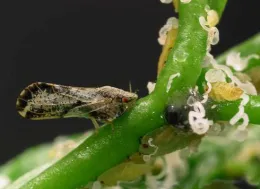
The Asian citrus psyllid (ACP) has been detected in Santa Clara County as well as other parts of California. This insect pest can carry the disease huanglongbing (HLB) that is devastating for all citrus trees. Efforts are focused on slowing the spread of this insect as much as possible. The disease has not yet been found in Northern California but has been detected in Southern California and other parts of the country. Much of California, including Santa Clara County, is under quarantine for the ACP insect.
Indian curry leaf (Murraya koenigii) can also host this insect, so it’s included in the quarantine as well. See a list of all possible hosts.
The UC IPM web page on the Asian Citrus Psyllid explains the relationship between the Asian citrus psyllid (ACP) and the HLB disease, how to recognize the different stages of the ACP insect how the HLB disease affects citrus and the many ways that the insect can accidentally be transported into California. See also Residential ACP Management Strategy for more details and photos.
If you think your tree has HLB or if you find the Asian citrus psyllid, call the California Department of Food and Agriculture (CDFA) Exotic Pest Hotline at 1-800-491-1899 to confirm a find.
What the Asian citrus psyllid quarantine means
If you’re trying to figure out what the quarantine means to you, follow these guidelines.
Clean fruits can be moved out of the quarantine zone
Homegrown citrus fruit totaling less than 25 pounds and that is clean of all stem and leaf material can be moved out of the quarantine area. Washing the fruit is a good extra precaution to take.
Plants and fruit can be moved within the quarantine zone
Plant material (whole plants, leaves) from backyard citrus or curry leaf plants may be transported within the quarantine area.
Plants can NOT be moved out of the quarantine zone
Plant material other than fruit (whole plants, leaves) from backyard citrus or curry leaf plants can NOT be transported out of the area. However, it CAN be put into local green waste collection.
Black Fig Fly
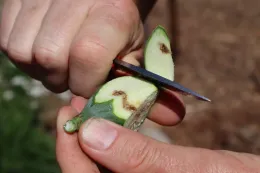
The black fig fly (BFF) is an invasive insect that targets figs and causes immature fruits to drop. It was first detected in southern California in 2021. Since then, the BFF has expanded into the Central Coast, Bay Area, and Central Valley regions. The UC Black Fig Fly Pest Alert has information about identification and management. While a quarantine is not in effect, movement of fig fruits or potted fig plants out of Santa Clara County is discouraged. Because the presence of BFF in Santa Clara County is known, there is no need to report detections.
Guava Fruit Fly

The invasive guava fruit fly has been detected in San Jose, prompting the CDFA to launch an eradication program running through at least May 17, 2026. While this is currently a treatment effort rather than a quarantine, a quarantine could be declared if more insects are found. Information about the treatment program and map can be found on the Santa Clara County Division of Agriculture’s website. The CDFA Guava Fruit Fly Project web page has links to a full pest profile and a partial host list.
Invasive Shothole Borers (ISHB)
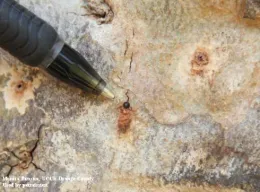
Invasive shothole borers (ISHB), a new insect pest, have been found in San Jose and in neighboring San Mateo and Santa Cruz counties. They attack hundreds of plant species and are known to kill at least seventeen types of trees. The ISHB Pest Note includes identification and management information. The ISHB website has an introductory video, maps, and more.
Spotted Lanternfly
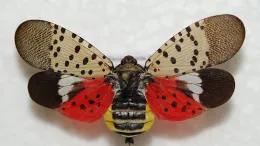
The spotted lanternfly is an invasive pest that poses a significant threat to California gardens and landscapes. It is currently established in the mid-Atlantic states and has the potential to invade California. This sap-sucking insect feeds on many plants, causing oozing sap, wilting, dieback, and plant death. Early detection is crucial, so the University of California and the CDFA encourage gardeners to learn how to identify it and to report sightings to the CDFA Pest Hotline. Visit the UC Spotted Lanternfly website for more information.
Last updated: July 2026